Uncertainty about what will happen next in the Strait of Hormuz and in Washington’s war on Iran continues against a backdrop of deepening rivalry and shifting alliances between capitalist powers worldwide, each looking to defend their own conflicting interests. The U.S. imperialist rulers aim to prevail and advance their plunder and domination of the region.
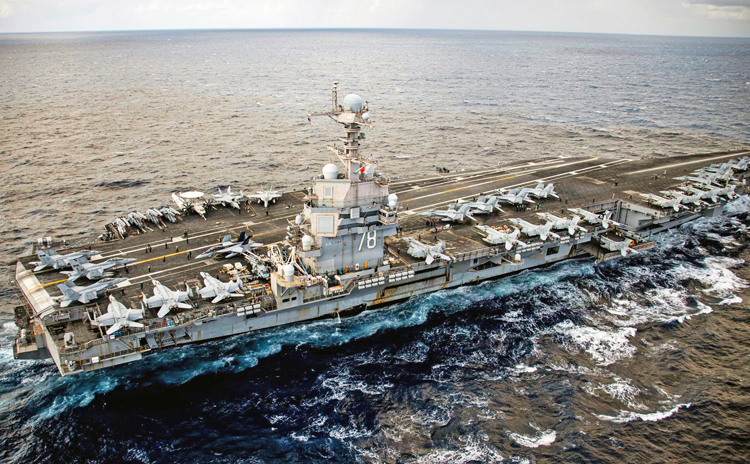
Two U.S.-flagged ships, protected by a U.S. Navy escort, exited the Arab-Persian Gulf through the Strait of Hormuz May 4. Only a handful of the 1,600 ships trapped since the start of the war Feb. 28 have risked attack by Tehran, which asserts its “right” to control all maritime traffic there.
Before the war some 20% of the world’s oil and liquefied gas — and other key commerce — passed through the strait.
President Donald Trump says the war on Iran, which he called “Epic Fury,” is over for now, as the U.S. rulers concentrate on tightening the economic noose around Tehran and enforce their blockade of ships heading to or leaving Iranian ports. Trump said May 6 he thought a deal was imminent, but threatens to restart the war if the Iranian regime does not accede to U.S. demands.
The U.S. rulers are using the crisis in the Middle East to bolster their leverage over world oil trade. Empty tankers from Europe and Asia headed to U.S. ports — instead of the Arab-Persian Gulf — to fill up with U.S. crude and liquefied gas.
Imported oil is key to China’s economy, despite the fact that most of its energy comes from domestically mined coal. Beijing buys similar amounts of crude oil from Iran, Saudi Arabia and the United Arab Emirates — but because of U.S. sanctions, the Iranian oil comes at a steep discount. Before the U.S. blockade of Iran’s ports, Beijing was the buyer of 90% of Iranian oil.
U.S.-Beijing tensions heat up
Before the Iran conflict Beijing had lost another source of cheap oil from Venezuela when the U.S. invaded and toppled Venezuelan President Nicolás Maduro. Venezuela went from exporting about 80% of its oil to China, with most now going to the U.S. and India.
The U.S. Treasury Department sanctioned five Chinese oil refineries and said April 24 that any financial institution that aided them would be locked out of the U.S. dollar financial system. Beijing retorted that it would take action against any institution operating in China that obeyed the U.S. prohibitions.
Iranian Foreign Minister Abbas Araghchi visited China May 6, where Chinese Foreign Minister Wang Yi made it clear to him that Beijing’s main concern is “restoring normal, safe passage” through the strait.
In another shift, the government of the United Arab Emirates announced that it was pulling out of the OPEC oil trade bloc. Formed in 1960, OPEC sought to unite Arab rulers and others with significant oil reserves to counter the domination of Washington and other imperialist powers by adjusting production to keep the price of oil high.
The UAE’s decision was “the opening bell for the new geopolitical order that the war with Iran is ushering in across the Middle East,” the Wall Street Journal wrote April 29. In reality OPEC, like NATO, had already been coming apart amid growing rivalries. The UAE and the government of Saudi Arabia — “allies” in OPEC — have backed opposite sides in the wars in Yemen and Sudan. By leaving OPEC, the UAE rulers are tying their future closer to U.S. imperialism, as well as deepening their ties with Israel.
The U.S. war on Iran has also deepened rifts between Washington and its “allies” in NATO. The German government refused to back the U.S. war and has complained that Washington has abandoned NATO.
Germany’s economy — like most of Europe — depends on oil transported through the Strait of Hormuz.
Tensions escalated April 27 after German Chancellor Friedrich Merz said that Washington has “no strategy” and that “very skillful” Iranians had “humiliated” the U.S. In retaliation, Trump announced that he would pull 5,000 of the 35,000 U.S. troops stationed in Germany out of the country.
Israel defends right to exist
With Tehran’s air force, air defenses, rocket launchers and arms factories decimated during the war, the most immediate threat to Jews in Israel is coming from airstrikes by Hezbollah in Lebanon.
Israeli troops have occupied a swath of southern Lebanon, up to 5 miles from the Israeli border, to prevent Hezbollah — trained and armed by Tehran — from launching attacks on civilians in northern Israel. Israeli troops there face daily drone, rocket and anti-tank missile attacks.
Israeli officials know that whatever deal Washington agrees to with Tehran, it will not be aimed at advancing Israel’s defense from deadly Jew-hating assaults by Tehran and its proxies, Hezbollah, Hamas and the Houthis.
Protests in Iran
With much of the central leadership of the reactionary regime in Iran killed during the war, officials of the Islamic Revolutionary Guard Corps have become the dominant faction there. The Guard Corps are not only the capitalist rulers’ main repressive force, but are also the owners themselves of a significant portion of industry in Iran. They’re infamous for their brutality against opponents of the regime, unionists and members of oppressed nationalities.
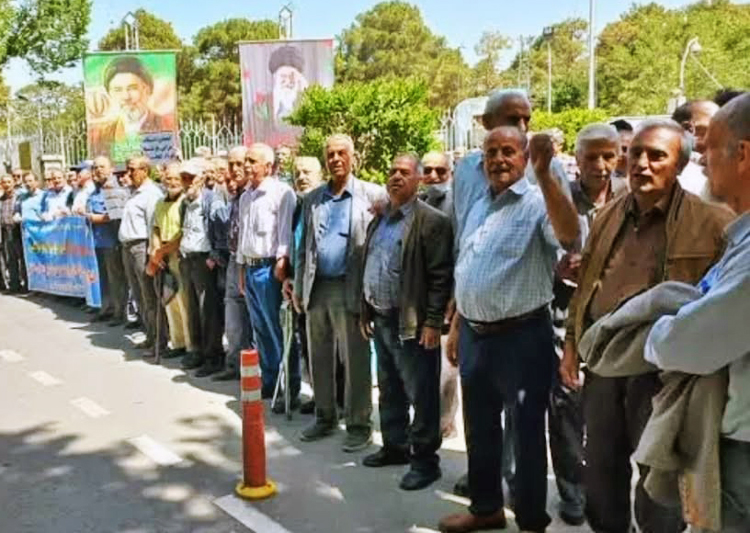
Despite a continuing internet blackout, stepped-up executions of both political and “common” prisoners and arrests of union activists, there is a modest but significant rise in protests by workers, retirees and political prisoners around the country since the start of the U.S.-Iran ceasefire.
“No to Execution Tuesdays” reports that seven women political prisoners at Evin Prison are being denied family visits for three weeks in retaliation for their participation in the groups’ weekly prison hunger strikes and protests. Prison authorities reportedly took the action to punish the seven for singing and chanting as part of the protest.
Railworkers in Lorestan province held four consecutive days of protest against delays in getting paid and other demands. Retired steelworkers demonstrated in Isfahan and Tehran April 29 over expiration of their health insurance.