NEW YORK — “We will continue to insist on the removal of Cuba from the State Sponsors of Terrorism list and demand with all our determination the immediate lifting of the U.S. blockade,” Daylenis Moreno Guerra, deputy permanent representative of Cuba to the United Nations, said at a celebration here on the 72nd anniversary of the attacks on the Moncada and Carlos Manuel de Céspedes barracks.
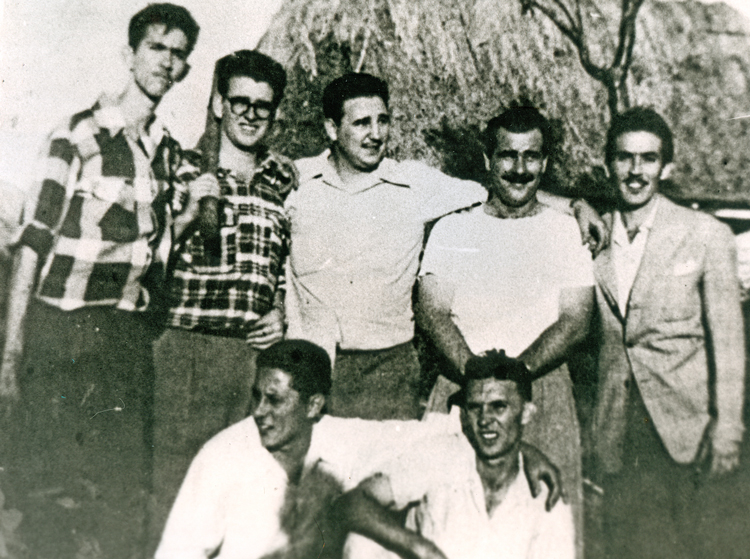
On July 26, 1953, revolutionaries, mostly workers, led by Fidel Castro, attacked the barracks, launching a growing revolutionary struggle that in 1959 overturned the U.S.-backed dictatorship of Fulgencio Batista and opened the road to a victorious socialist revolution. More than 60 people attended the program organized by the New York-New Jersey Cuba Sí Coalition and other groups.
The meeting was held at the Maysles Documentary Center in Harlem. Participants enjoyed a good meal beforehand and many stayed afterward to see a film sponsored by the center on world famous Cuban boxer Teófilo Stevenson.
For the last 65 years, the U.S. government has waged a far-reaching economic war against the Cuban people and government, seeking to crush the example their revolution sets for working people and the oppressed worldwide.
Since 2021, under Democratic and Republican administrations alike, Washington has kept Cuba on its State Sponsors of Terrorism list, penalizing businesses and banks anywhere that engage in trade or financial transactions with Cuba. This has made it extremely difficult for Cuba to import fuel, food, medicine, raw materials and other necessities.
Internationalist medical missions
Some 70,000 Cuban volunteer medical personnel are in 60 countries, especially in Africa, Latin America and the Caribbean. The U.S. government is waging a slanderous disinformation campaign claiming that Cuba’s international medical brigades are really “human trafficking.” In recent weeks, Washington has revoked the visas of government officials from some countries that have accepted Cuban doctors.
“Nothing can damage the prestige of our medical missions,” Moreno said. “We will continue to defend them in every forum.”
A short video produced by Belly of the Beast showed talks by the prime ministers of several Caribbean countries defending Cuban doctors. Mia Mottley, prime minister of Barbados, said, “What the Cubans have been able to do for us, far from approximating itself to human trafficking, has been to save lives and limbs and sight for many a Caribbean person.”
Ralph Gonsalves, prime minister of Saint Vincent and the Grenadines, noted Cuban doctors working there run a dialysis center providing care free of charge to some 60 patients. No one should expect that “to keep a visa I would let 60 persons from the poor and working people die. It will never happen.”
Two young women, Sohina and Camille, from a group called Carlota’s Warriors, spoke about their recent trip to Cuba, where they met with students attending the Latin American School of Medicine. For over 25 years Cuba has trained, at no cost, more than 30,000 youth from around the world. The only condition is that after they graduate, the new doctors return and serve in communities where they are most needed.
“The medical missions provide life-saving care,” Sohina said.
Peggy Gilpin, a member of Cuba Sí and of the board of Global Health Partners, reported on the ongoing campaign to raise money to send pacemakers to Cuba. Because of shortages caused by the U.S. rulers’ sanctions, some 2,000 people on the island are on a waiting list for the life-saving devices, which cost about $1,100 each. Some of the 550 devices donated by the campaign are already in use. Meeting participants kicked in $300 on the spot.
To contribute to the Saving Lives Pacemaker Campaign, make checks payable to Global Health Partners with “pacemakers” on the memo line. Mail it to 39 Broadway, Suite 1540, New York, NY 10006. To pay by debit or credit card, or for more information, visit ghpartners.org.