

LINCOLN, Neb. — The Militant published an article Aug. 17 on the escalation in deaths and injuries of rail workers caused by the bosses’ stepped-up push for profits that has made working conditions even more dangerous. Two more rail workers were killed in early September and another suffered severe leg injuries, all on the job.
The Norfolk Southern conductor with the leg injuries had been knocked off a tank car he was holding onto while his train was being shoved into the Conway Yard near Pittsburgh Sept. 8. He had to be flown to the hospital.
The National Transportation Safety Board took this tragedy into account in an ongoing investigation. The worker’s name wasn’t made public.
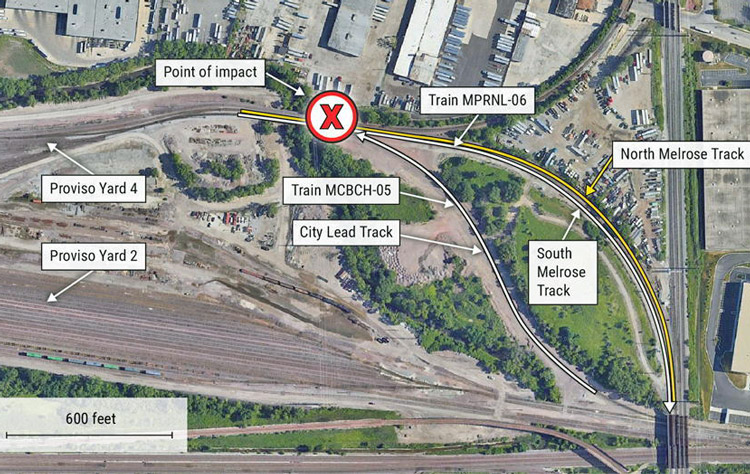
On Sept. 21 the NTSB released its conclusions, reporting it had investigated 16 “accidents” to rail workers during shove moves between October 2020 and December 2025. Fourteen of the workers were killed and the other two seriously injured. In issuing the report, the board noted it recently opened two more investigations.
Their proposal: “Prohibit railroads from allowing employees to provide point protection by riding equipment during shoving movements.” It would take a big fight by rail unionists to see this implemented.
Earlier this month there were two other deadly rail “accidents.” On Sept. 3, Moet McCullum, a 41-year-old mother of three and a member of Transport Workers Union Local 100 on the subway in New York City was killed after she was hit by a train while flagging to protect her crew.
And Luc Massie, a Canadian Pacific Kansas City conductor and member of Teamsters Canada Rail Conference, was struck and killed by a train in Montreal’s Ville-Marie borough Sept. 12. He had just gotten married and celebrated his 30th birthday.
Railroad workers know the relentless pressure of 15,000-ton trains running continuously, day after day. It means the tracks constantly need inspection, repair and replacement. Incredulously, CSX bosses are projecting to furlough over 1,000 members of the Brotherhood of Maintenance of Way Employes Division from now into at least next year.
In one typical case, CSX furloughs would reduce work crews from 12 to four to maintain “142 miles of mainline track and multiple yards,” BMWED General Chairman Brian Thompson responded. “The work does not disappear. The miles still have to be inspected, the defects still have to be repaired,” adding, “It is reckless.”
In addition, the union reported, CSX is permanently cutting 165 positions. The rail bosses are “making a conscious choice to have fewer railroaders, more territory, heavier workloads and less maintenance work being performed,” the union said.
At the same time, “CSX recently reported record quarterly revenue of $3.94 billion, a 17% increase in operating income and approximately $1 billion in quarterly net earnings.”
“CSX is choosing to cut the workforce and defer maintenance,” the union said. “BMWED is choosing to fight back. We will defend our members, expose the consequences and demand that CSX answer for its decisions.”
Is AI the answer?
The rail bosses claim they can cut away on jobs because they are substituting computers, “smart” devices and artificial intelligence to dispatch, keep track of and ultimately run their trains and repair equipment. But already the serious dangers to workers in this course are coming to light.
A few weeks ago SMART-TD local union members in Washington state released a statement saying BNSF Railway management has still not informed the workforce about the “serious software failure” in their dispatching system June 16.
Instead, it was the American Train Dispatchers Association that informed other rail unions and urged the Federal Railroad Administration to investigate how a train was routed by computer software into a track where a rail worker was working.
An alert dispatcher saw the software error and told the crew to stop the 146-car train, nearly 2 miles long and weighing some 6,500 tons, which included 20 or more cars of hazardous materials. It was the actions of a human being, the dispatcher, who prevented a disaster.
The SMART-TD statement explains that conductors, engineers, switchmen, brakemen, carmen, dispatchers, yardmasters, locomotive repairmen, track and bridge maintenance workers, signal maintainers, inspectors and the myriad of other rail workers are all needed to deliver freight safely.
And now management is rushing to use AI programs to run trains, replacing human crews altogether!
Rail workers have a different perspective. Stop cutting crews and reinstate the thousands you have cut. Run shorter, lighter and more manageable trains. Put control over rail operations, including use of new technology, in the hands of the unions.
“Our unions need to use union power to run the trains and maintain and inspect equipment and trackage safely,” Naomi Craine, a freight rail conductor and the Socialist Workers Party candidate for U.S. Senate from Illinois, told the Militant. “Trains should have a maximum of 50 cars and a crew of four, two on the head-end and two on the rear. These demands would extend protection both to rail workers and to those living, working or driving near the tracks — all in the interest of the working class.”