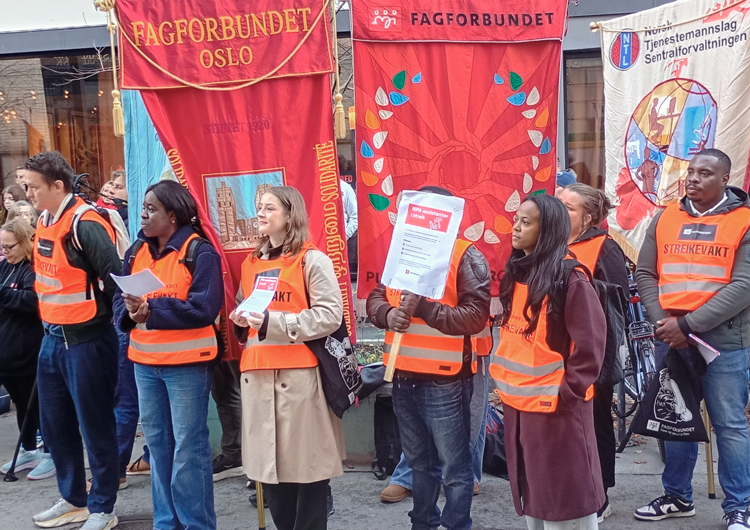
OSLO, Norway — Over 70 people from a range of unions rallied in support of healthcare workers on strike here Oct. 29. The protest took place outside a conference organized by NHO Geneo, a federation of bosses in the private healthcare industry.
Helene Skeibrok, leader of the Fagforbundet union, told the rally, “When the employers don’t pay similar wages for similar work, we have to use the strongest weapon we have,” that’s to go on strike. Speakers at the rally condemned the private employers’ denial of extra pay for evening, night and weekend work, which is standard in Norway’s industries.
Ina Libak, a leader of the union Fellesorganisasjonen, condemned the Labor Party government for forcing most strikers back to work, claiming their strike actions threatened public health and safety. Norway’s government has shut down a number of strikes over the past two years.
These strikes grow out of pressure from workers for their unions to press harder for some relief from the crisis conditions they face. They reflect the same frustrations as other protests unfolding across Europe.
Healthcare union member Synne Varnes told the Militant the support at the rally “was overwhelming. It’s important to stand together. It is fundamental that we all get the same wages” across the healthcare sector.
Flight attendants at SAS Link, the regional carrier of Scandinavian Airlines, had gone on strike the previous day, also demanding equal wages and working conditions as other SAS flight attendants.
And two days before that, the union representing cleaners, cafeteria workers and hotel workers on offshore operations of the state oil company Equinor announced they had reached agreement on a new contract after a 33-day strike by 253 workers. Like two earlier strikes in May, one in the hotel and service industry and another by cleaners that involved over 2,500 workers, the Equinor workers won higher wages and agreement the company would pay sick pay while workers wait for the government to process their sick-leave applications.
Locomotive engineers had conducted a four-week strike that shut down much of rail passenger service in the country. The walkout was against Vy, whose bosses had fused it with another, smaller company and were trying to keep separate wages and conditions at the two operations. Like the other strikes, Vy workers demanded equal pay for workers coming from both companies, and the same rules for rotating shifts, among other issues.
Locomotive engineers’ union leader Rolf Ringdal told TV 2 that even though they did not win all their demands, “we have secured our main issues: control of rotating shifts and equal wages for similar work. This is thanks to our members’ solidarity during the strike.”
These are just a few examples of the step up in working-class actions. More than 50% of Norway’s workers are union members.