Washington is utilizing a deadly gunfight between a Cuban border guard unit and a boatload of armed men trying to infiltrate the island Feb. 25 to step up its smear campaign and threats against Cuba’s socialist revolution.
The Florida-registered boat was spotted 1 mile from the Cuban coast along Villa Clara province, reported Cuba’s Ministry of the Interior. When the Cuban border patrol approached the vessel, its crew opened fire injuring the Cuban boat commander. The Cuban officers fired back, killing four and wounding the remaining six crew members.
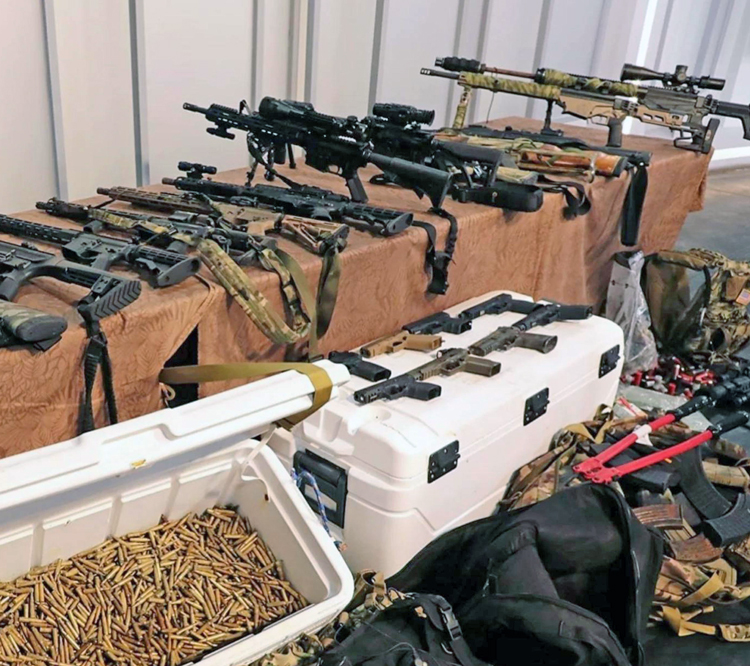
The boat was packed with weapons, including assault and sniper rifles, Molotov cocktails, as well as night-vision equipment, body armor and other tactical gear. The group set out for Cuba “to infiltrate, incite public disorder, carry out violent acts, and attack military units,” Cuban officers in charge of the investigation reported on television Feb. 27.
Cuban authorities have identified the boat crew, including one of the deceased, Michael Ortega Casanova. His relatives told U.S. media he’d fallen into an “obsessive and diabolical” quest to bring down the Cuban government. Accounts from family and friends of the other men support the Cuban government’s report that they were part of a group of Cuban counterrevolutionaries living in Florida who “set out on a mission to invade the island,” the Miami Herald reported.
Cuban Deputy Foreign Minister Carlos Fernández de Cossío reasserted Feb. 26 that Cuba has “the duty and responsibility to protect its territorial waters.” It is a mainstay of Cuba’s national defense, of its “sovereignty, as well as the lives, security, and well-being of Cubans.”
Fernández de Cossío explained that Cuban authorities have sought collaboration with the U.S. State Department and Coast Guard from the outset of the incident.
U.S. threats and slanders
But U.S. officials wasted no time cranking up threats and slanders against Havana.
Ignoring Cuba’s sovereign right to investigate and prosecute the perpetrators of the attack, Secretary of State Marco Rubio said Feb. 25 that Washington will provide its own version of what happened and then “we’ll respond appropriately.”
He asserted the shootout happened “on open sea.” But all the evidence shows it happened well within Cuba’s territorial waters.
Florida law enforcement officials have reported the boat used in the operation was stolen by one of the men killed in the shootout.
Fernández de Cossío said that Cuban authorities provided the U.S. government in both 2023 and 2025 with a list of individuals and organizations involved in activities promoting, planning and financing terrorist acts against Cuba from the U.S. Two of those detained in the Feb. 25 operation, Amijail Sánchez and Leordan Cruz, were on the list.
“The Cuban government is still awaiting responses” from Washington, Fernández de Cossío said. He pointed to the long history of activity by counterrevolutionary groups that have carried out violent attacks and provocations against Cuba with impunity from U.S. soil (see article below).
No ‘double taps’ against boat
“It is highly unusual to see shootouts on open sea like that,” Rubio said. “It’s something, frankly, that hasn’t happened with Cuba in a very long time.”
But as recently as June 2022 a U.S. speedboat entered Cuba’s territorial waters off the coast of Villa Clara. Its crew fired at Cuban border guards, wounding an officer. Shortly after, another U.S. boat was intercepted. When Cuban guards asked for identification, suspects on board began shooting. These boats were among 13 intercepted by Cuban authorities that year alone for human trafficking.
The Straits of Florida is also a major corridor for drug smuggling. Cuba has a long, public record of combating illegal drug trafficking, often in close collaboration with the U.S. Coast Guard.
Unlike the U.S. military’s “shoot-first-ask-questions-later” approach in blowing alleged drug boats out of the water in the Caribbean and Pacific since September 2025 — nowhere close to the U.S. — Cuban authorities use different tactics.
“We only respond with firearms when we are attacked,” said Col. Ybey Carballo Pérez, head of Cuba’s border guards. “It’s a rational and defensive model that prioritizes avoiding the use of weapons except in situations of direct aggression.”
Also, fortunately for the survivors of the speedboat that intruded into Cuban waters Feb. 25, the wounded were immediately taken to a hospital.
The U.S. targeting of boats, on the contrary, has included at least one incident involving a “double-tap” strike. Two men who survived an initial bombing Sept. 2, 2025, were killed by a second one ordered by the U.S. high command to ensure their deaths.