

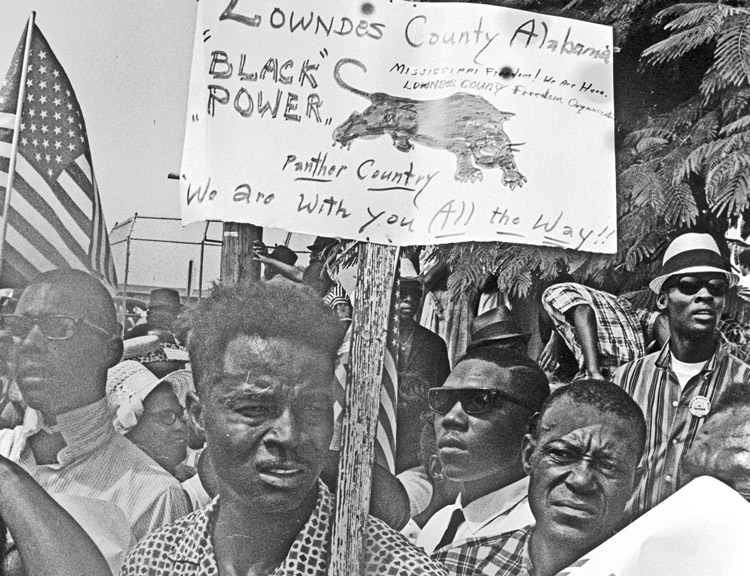
This is the second half of an article run last week, “1966 Mississippi ‘March Against Fear’ dealt new blows to bastion of Jim Crow,” marking the 60th anniversary of that march. It draws on an account by Stu Singer, who took part in the action. Singer was a Student Nonviolent Coordinating Committee volunteer who became a leader of the Socialist Workers Party.
The 220-mile march from Memphis, Tennessee, to Jackson, Mississippi, took place at the peak of the Black-led proletarian movement that brought down the system of Jim Crow segregation. It was the culmination of a yearslong battle there, spurring fighters around the country to carry the struggle against Jim Crow through to the end.
Singer and two SNCC staff members in Boston drove to Mississippi to join the march after James Meredith, who single-handedly began the march, was shot and wounded by a segregationist on the day after it stepped off. Many others responded the same way after an appeal for reinforcements by SNCC and other civil rights groups.
By the time the three-week protest marched into Mississippi’s state capital, it had grown to 18,000. “We would run a block or two off the march route and urge people to come off their porches and join in,” Singer said. “Many did, and thanked us for inviting them.”
In Jackson, the New York Times reported, “thousands of Mississippi Negroes in their Sunday best flocked into the column from street corners, churches and lawns. They argued with policemen, stepped in tune to a four-piece band and cheered when members of the Student Nonviolent Coordinating Committee burned a Confederate flag.”
A racist counterdemonstration estimated at 1,500 people was outnumbered 12-to-1. It had no purchase to attack the marchers and didn’t try to.
“Civil rights actions in the past were answered with waves of racist violence,” Singer said. “Nothing like that happened after the mobilizations of June 1966. The tens of thousands of African American workers and farmers who joined the march along its route permanently put their stamp on Mississippi politics.”
The final rally was addressed by Meredith, who was out of the hospital; SNCC’s Stokely Carmichael; and Martin Luther King. It was “loud and spirited,” Singer said.
In addition to dealing a powerful blow to Jim Crow and the Ku Klux Klan thugs, the success of the march drew in tens of thousands of Blacks in towns big and small across Mississippi. It posed a serious challenge to the Democrats’ decades-long bloc with the murderous segregationist forces that ruled the Southern states.
The NAACP had refused to back the action “because it could be viewed as critical of the Lyndon Johnson administration. Three years earlier the NAACP had called off demonstrations in Jackson under prompting from the Kennedy administration,” Singer explained. “That retreat led to an orgy of racist violence and the assassination of [civil rights leader] Medgar Evers on June 12, 1963.”
Few accounts of the 1966 march mention the joyful welcome marchers received afterward in the city’s Black community. Singer and other SNCC supporters were among those who dispersed into the community in what became “a kind of festival. Everyone was out on their porches. You couldn’t walk 10 feet without being invited in for food.”
At street corners Singer and others who’d been on the march were stopped and asked, “Where are you from? Tell us about the march. Was there trouble from the police and the Klan? How’s James Meredith?” They wanted to know what King and Carmichael had said at the rally. “Can we get one of those signs you’re wearing, with the black panther and ‘Move on over or we’ll move on over you?’”
The Black Panther was the symbol of the Lowndes County Freedom Organization in Alabama set up by Blacks there to challenge both the Democrats and Republicans. SNCC worked closely with what became known as the Black Panther Party in Lowndes County.
‘We gained confidence and courage’
The end of the march was a celebration, Singer said, “but a thoughtful one. How far we had come. What more we needed to do.” All stores and restaurants that were open that day had to do away with segregation, or shut down. “We all gained a new sense of confidence and courage. Thousands of Blacks had registered to vote, more than in all the previous voter registration efforts combined.
“Pressed by the intransigence of the marchers, federal registrars could no longer simply bow to the dictates of the Klansmen and White Citizens Council members running local registration offices,” Singer said.
Many Caucasians in Mississippi who “had never been part of night riding gangs but had been terrorized themselves under Jim Crow gained new confidence. Many began speaking out against racist discrimination and indignities, big and small.
“The only power that could begin changing Mississippi was the power that did begin changing it — the organized, disciplined mobilization of workers, farmers, sharecroppers and the young people and others who rallied to their cause. That’s who came out along the roads and in all the small towns and rural settlements as marchers made their way through Mississippi.”
And “that’s who welcomed and in many cases joined with the Deacons for Defense and Justice in providing needed self-defense” along the march route, Singer said.
The Deacons for Defense and Justice was formed by Black industrial workers during successful battles against Jim Crow in Louisiana. They offered the Mississippi marchers much-needed protection from deadly Klan assaults. SNCC had led a debate and won agreement from other march organizers to deploy the Deacons for Defense.
As the march arrived in Jackson, Singer said, its Black community turned it into “a celebration and a classroom to discuss and absorb the lessons not just of this march, but also of the decades of struggle. That’s who welcomed allies, wherever they came from and whatever the color of their skin.
“Racism and segregation didn’t end that day in Mississippi, far from it. But Mississippi never returned to the way things were before,” Singer said. And it transformed many thousands who joined the fight to end Jim Crow once and for all time.