
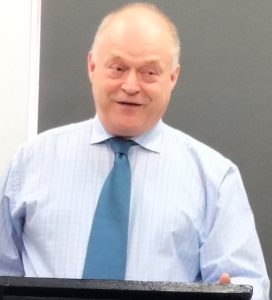
SYDNEY — “The bosses are driving to maximize their profits off the backs of working people, using everything from job speedups to rising prices,” Robert Aiken, Communist League candidate for the Legislative Council in the March 2027 New South Wales state election, told a Nov. 1 meeting here hosted by the Militant Labour Forum.
“Workers face greater challenges today in making ends meet in the face of a grinding cost-of-living crisis and a decline in real wages,” Aiken said. He presented a working-class road forward in the face of these escalating attacks by the ruling class in Australia.
Electric bills have risen more than 25% over the past year. Since 2020 prices of basic food items like milk and bread have risen by 30% and eggs by 44%. During the same period wages and salaries have increased by less than 20%.
To cover the high cost of necessities, more and more workers are forced to go deeper into debt, using credit cards to pay bills.
Under these conditions, Qantas airline ground workers, members of the Transport Workers Union, have waged two one-day strikes and a rally demanding better wages and conditions. “We build solidarity with all union battles,” the CL candidate said. “We call for automatic cost-of-living increases in all union contracts and pensions to assure our wages keep up with inflation.”
In the last 20 years, household debt in Australia has increased fourfold to the second-highest level in the world. Rents have surged 39% across the country in the past five years.
“We explain that what is needed is a fight led by the unions for a federally funded public works program to create jobs at union rate to build the thousands of decent, low-rent housing units that are needed, as well as hospitals and childcare facilities and to repair infrastructure,” Aiken said. “Actions by workers in defense of their unions point to what can be achieved through the mobilization of the power of a united working class.”
As fears of a recession mounted, the Reserve Bank of Australia lifted interest rates to 4.85% in early November, hitting the highest level in eight years.
Reserve Bank Governor Michele Bullock flatly declared in September that the unemployment rate needed to rise to lower inflation.
Workers looking for an alternative
Pauline Hanson from the right-wing One Nation and some conservative politicians have tried to win workers’ support by scapegoating immigrant workers, blaming them for the housing shortage.
“Our campaign demands permanent resident status for immigrants,” Aiken said, “with the same rights as other workers. This is the way to deal blows to those who try to pit us against each other and to unify the working class.”
Recent polls reflect there is increased support for Hanson, as working people and others seek an alternative to the Liberals and Labor, the two increasingly unpopular main parties of capitalist rule. Aiken explained that workers can’t rely on any of these parties, which all serve the interests of the propertied exploiters.
Australia’s rulers, seeking to advance their own interests against their rivals, are increasingly drawn into the sharpening political, economic and military conflicts around the world, Aiken said.
“Workers need to break with all the capitalist parties,” he said, “and forge an independent course to take political power from the war makers and join in the worldwide struggle for socialism.”