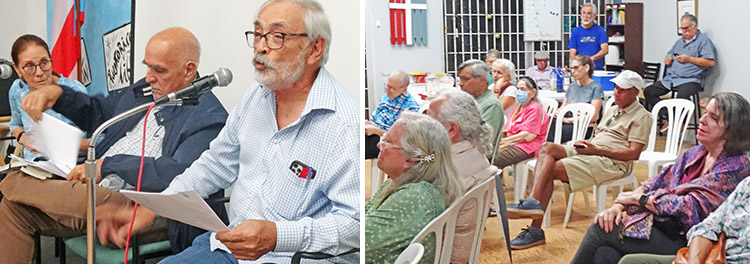
SAN JUAN, Puerto Rico — Cuba and the Independence War in Guinea-Bissau and Cape Verde: The Fall of the Last Colonial Empire in Africa by Cuban revolutionary Víctor Dreke was at the center of a lively and wide-ranging discussion here at the Casa Soberanista Oct. 21. The event was co-sponsored by the Hostosiano National Independence Movement and the Socialist Workers Party from the United States.
This is an opportunity “to have an exchange about a victorious people’s fight for freedom,” Sonia Cepeda, a professor at Albizu University, who chaired the meeting, said in her welcoming remarks.
Among those in the audience were many longtime fighters for Puerto Rican independence, supporters of the Cuban Revolution, opponents of U.S. military bases in Puerto Rico and activists in the fight against the death penalty.
The speakers took up the importance for the people of Puerto Rico of the fights for independence from colonial rule in Africa in the 1960s and ’70s, and the crucial role of revolutionary Cuba in these events.
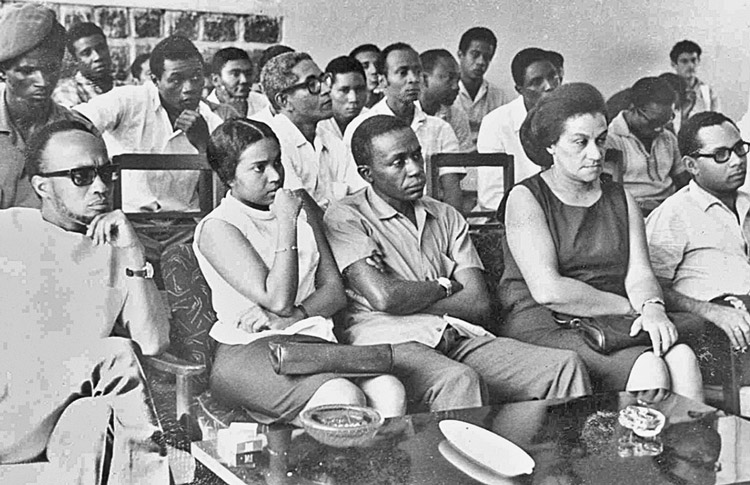
The book’s author, Víctor Dreke, headed Cuba’s military mission in Guinea-Bissau from 1967-68, where he worked closely with Amílcar Cabral, the central leader of the African Party for the Independence of Guinea and Cape Verde (PAIGC), which led the independence struggle.
The panelists were Rafael Anglada López and Julio Muriente Pérez, two longtime leaders of the Puerto Rican independence movement, and Mary-Alice Waters, co-editor of the book and member of the National Committee of the Socialist Workers Party.
Anglada and Muriente joined the independence movement as teenagers in the late 1960s. Muriente is a former co-president of the Hostosiano National Independence Movement and former editor of Claridad, a weekly pro-independence newspaper. Anglada, a lawyer, has helped in the legal defense of numerous fighters for Puerto Rican independence. He was also part of the defense team of the five Cuban revolutionaries arrested in the U.S. in 1998, framed up and given draconian sentences in prison.
Fresh winds blowing
Waters focused her remarks on the importance for today of the revolutionary course charted by Cabral, fully supported by the Cuban leadership.
Cabral led the fight to counter the tribal antagonisms, as well the division between Guineans and Cape Verdeans, that were fostered by the Portuguese rulers to maintain their rule. “He inoculated the cadres of the PAIGC against the falsehood that the color of one’s skin automatically defines one’s enemies or friends,” Waters said.
He promoted the fight for women’s emancipation, opening the door for them to take leadership roles in the struggle.
Though he was assassinated in January 1973, the organization he built was strong enough to continue the fight, winning formal independence for Guinea-Bissau in September 1974.
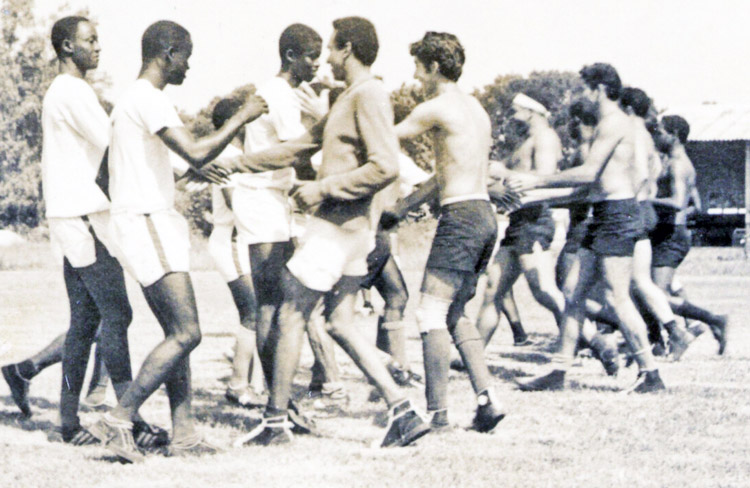
“There is no better moment than this to learn about — and study — the example of Amílcar Cabral and the humble men and women he led to victory over the Portuguese colonial empire,” she said. “No time more necessary to spread the truth about Cuba’s socialist revolution and its example of proletarian internationalism in action, led by Fidel Castro and Che Guevara.” (See major excerpts from her talk.)
Waters noted the “exceptional response” to the book, “not only in bookstores and online through Amazon, but even more by co-workers in factories and workplaces across the country” and when members of the Socialist Workers Party take it door to door in working-class neighborhoods.
“There could be no better sign that fresh winds are blowing as the world crises of the imperialist rulers deepen and working people everywhere are looking for answers,” she said.
‘Not an exercise in nostalgia’
“This book is an inevitable homage to Amílcar Cabral,” Muriente said in his remarks. “But this interview with Víctor Dreke is not an exercise in nostalgia.”
Muriente noted the significance of African nations gaining their independence, some without armed struggles, but for many, it took yearslong fierce battles against the dominant colonial powers.
“Why was the independence of Guinea-Bissau and other countries recognized by the great powers, but the audacity of wanting to construct something that goes beyond independence continues to be challenged?” Muriente asked, pointing to the 1959 victory of the Cuban people that opened the socialist revolution in this hemisphere. Ever since, the U.S. rulers have waged a punishing economic and political war on the Cuban people for daring to chart their own destiny.
The imperialist powers in essence told the newly independent countries, “Proclaim independence if you like. But we’re going to keep controlling your mines, your lands, your commerce, your economy, your loans, and all the rest.”
“That’s neocolonialism,” Muriente said.
Cuba demonstrates “the qualitative difference between winning your first independence and winning your definitive independence,” he added.
Countries of Africa, including ones much smaller than Puerto Rico, gained their independence, Muriente said. But Puerto Rico is still a U.S. colony.
“We have to learn from all these experiences,” he said. “Because they have to be part of the road that we will continue to travel until, like them, we win our national independence.”
Anglada has often represented the Puerto Rican Socialist Party and then the Hostosiano National Independence Movement at the U.N. and other international gatherings, where he worked with fighters against colonial rule on the African continent.
“I met Cabral once in 1972,” he said. “Less than eight months later he was murdered. And eight months after that the independence of Guinea-Bissau was proclaimed.”
Cabral must be studied
Anglada noted Cabral’s political clarity and working-class ethics, which he instilled in other fighters. He “knew a lot about the poor” in Portugal, having lived there, Anglada said. “He would look at the callouses on the hands of the Portuguese soldiers” and knew they were rural workers from the countryside. That the enemy was not the Portuguese people but Portugal’s colonial domination. Cabral insisted that captured Portuguese soldiers be treated with respect, he said.
“Cabral was also not a propagandist for armed struggle,” Anglada noted. “It was the Portuguese empire that made it a necessity.” Anglada pointed to the massacre at the port of Pijiguiti on Aug. 3, 1959, where the Portuguese secret police and army units gunned down more than 50 striking dockworkers who were demanding higher pay and better working conditions, and wounded more than 100.
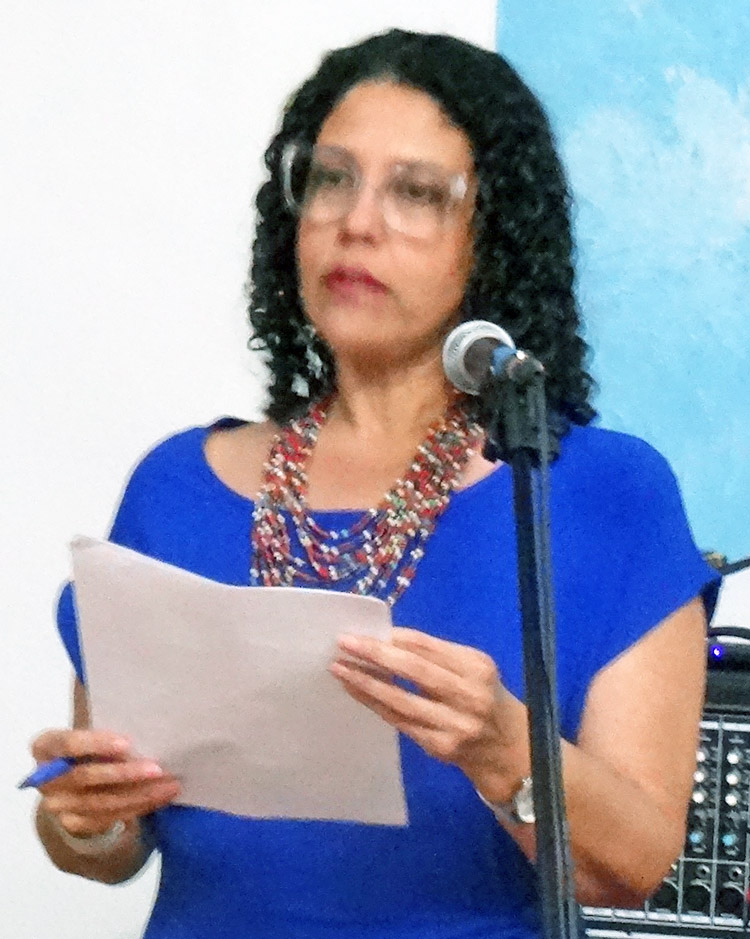
Anglada encouraged participants to study the book, and to read From the Escambray to the Congo: In the Whirlwind of the Cuban Revolution, also by Víctor Dreke. He referred to them as “Dreke Part I and Part II. You’ll see Dreke’s role in the Cuban Revolution.”
All three panelists referred to the long collaboration between the Socialist Workers Party and fighters for independence for Puerto Rico. “Their more than 60-year commitment to independence for Puerto Rico, which unites us, can be documented,” Anglada said.
During the discussion period, Cepeda underlined Waters’ point that “fresh winds are blowing. The positive things that the book puts forward and the fresh winds blowing means we need a fresh discourse, action and conduct,” she said.
During the discussion period, one participant pointed to the “failure of the left” to see working people in the United States as allies. At international political gatherings of the left, there are always resolutions passed in support of Argentina winning back the Malvinas, against the imperialist blockade of Cuba, in support of Puerto Rico’s right to self-determination, “but there is never a statement in support of the struggle of working people in the United States.”
This is especially important for us “because we have 6 million Puerto Rican compatriots in the United States” who are part of the working class there, he said.
“The United States, like every other country, is class-divided,” Waters said. “Neither the U.S. government nor the capitalist parties have anything to do with meeting the needs of working people.”
“Working people in the U.S. and Puerto Rico have common interests,” she said. “We have to reach working people in the United States and convince them on the question of decolonization.”