

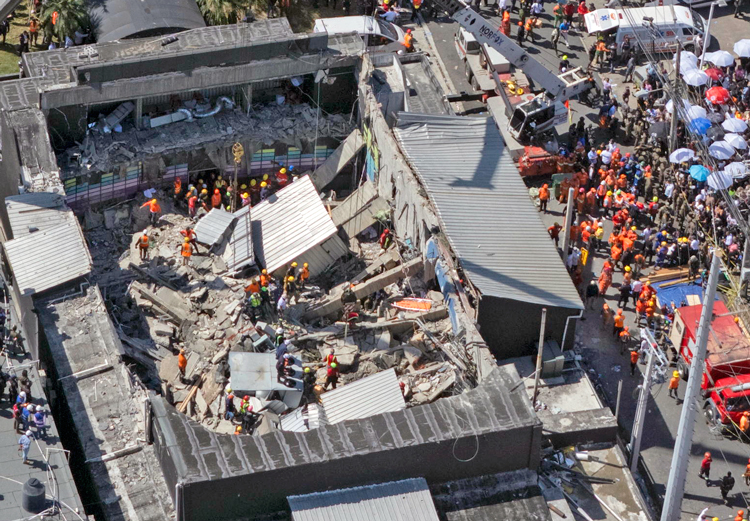
“The capitalist owners of that nightclub are scumbags who only care about their self-interests,” said Jesús Núñez, squarely putting responsibility for the roof collapse at a popular nightclub in the Dominican Republic where it belongs. Núñez is national coordinator of the Sugarcane Workers Union.
The iconic Jet Set club in the capital city of Santo Domingo was packed when dust began falling from the ceiling in the early hours of April 8, before the entire roof collapsed, killing over 200 people. Some 145 others were rescued from the wreckage. In a call to a radio program, singer Sergio Vargas described seeing Jet Set employees sweeping debris from the ceiling a night after his performance. When asked about it, the workers told him, “This happens all the time.”
“The falling dust from the roof was a warning, but the managers attitude was to keep their ‘party’ going,” Núñez said, pointing to bosses’ disregard for safety.
While much of the attention has gone to prominent victims — well-known musicians and professional athletes, as well as government officials and their relatives — very little has been said in the news about dozens of the establishment’s employees and other workers killed in the disaster.
Among the victims were 24 residents of Haina, a major industrial working-class district near Santo Domingo. They were fans of popular merengue singer Rubby Pérez and had managed to come up with the money to pay the steep cover. Pérez, who was killed in the collapse, also comes from Haina.
“Haina is in mourning,” said Núñez. Among the 24 were welders, pipefitters and electricians who were active in the labor movement and the community. Many had worked in major construction and refinery projects on neighboring Caribbean islands and in the U.S., Núñez said.
The losses of all the victims have been felt throughout the Dominican Republic and its diaspora in the New York region and other states. Many express their outrage about the causes of the tragedy, and their concern the club owners will get away with not taking responsibility because of their ruling-class connections.
“The children and grandchildren left without their parents should receive government compensation and benefits,” said Núñez. “The responsibility lies with the government for allowing building practices that lead to these disasters.” He recalled other similar incidents there, including an explosion and fire at a factory in 2023 that killed 38 people.
Dominican authorities have not yet started an investigation of the cause of the collapse. More facts will undoubtedly come out, but the conditions that led to the disaster are hardly a mystery.
Built in 1973, under a zoning permit for a movie theater, the structure’s walls and roof were made of T-Slab prefabricated concrete. Engineers speaking to El Diario Libre April 10 pointed to images of the collapsed infrastructure showing signs of major water leaks that had been improperly repaired, weakening the integrity of the building. They also pointed out signs of damage around large air- conditioning units and other heavy equipment placed on the roof, and the effects of the constant stress of pounding vibrations from the music at the club.
“They never remodeled the building properly, they only redecorated it,” Núñez said.