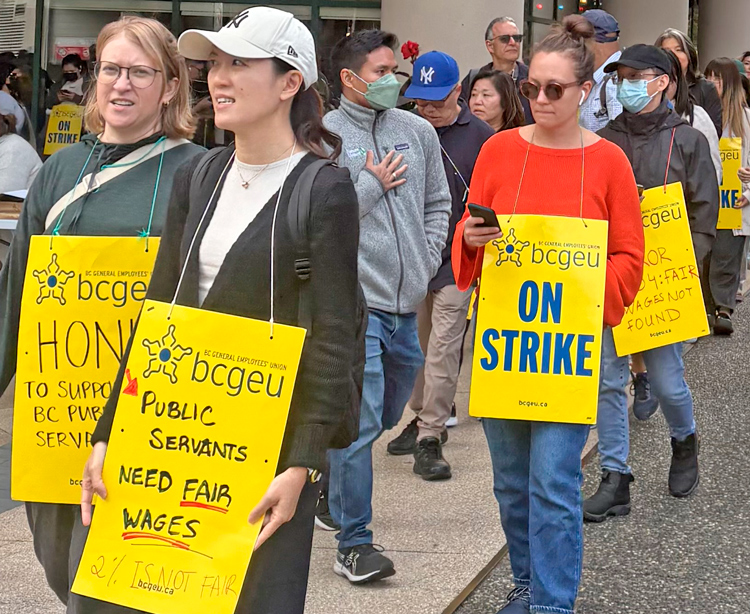
VANCOUVER, British Columbia — The British Columbia General Employees’ Union, which represents 34,000 government employees across the province, launched strike action Sept. 2, after the union’s members voted 92.7% to go out. Their contract expired March 31.
The central issue is workers’ need for higher wages. One popular placard said “2% is for milk,” a reference to the New Democratic Party government’s paltry offer for a raise. Strikers told the Militant that one half of the 60 pickets at the Ministry of Finances offices here were already working two jobs to try and get by, and living paycheck to paycheck. Drivers passing by honked their horns in solidarity.
More than 2,600 union members joined the picket lines in Vancouver, Victoria, Surrey and Prince George. And they grew larger throughout the week. The union’s members work in all branches of government, including social services, health care, firefighters, education, government liquor stores, courts and administrative jobs.
The union is demanding an 8.25% increase over two years, plus cost-of-living adjustments to counter inflation. “The employer’s refusal to put forward a wage proposal that meaningfully addresses the affordability crisis leaves us no choice but to escalate job action,” union President Paul Finch told CBC News.
British Columbia Premier David Eby rejected the union’s call to increase the wage proposal. Boosting wages would not be fair to taxpayers, he claimed, because the province is “facing big fiscal headwinds.”
The union explains the workers shouldn’t be forced to bear the burden of the government’s priorities. “We didn’t create the deficit,” Finch said. “Nor should the hard-working people in B.C. — that includes our members — have to forego cost-of-living increases in order to try and balance it.”
“What has created this deficit is poor governance,” he said, “overspending on capital projects, tax breaks for the wealthy, and tax breaks on key resource projects that every British Columbian should be receiving benefits from.”