HAVANA — A festival was held here Oct. 17-19 celebrating the 60th anniversary of Cuba’s two daily newspapers, Granma and Juventud Rebelde.
Visitors to the event, called the Granma-Rebelde Festival, browsed publications on display at booths representing a range of Cuban newspapers and publishing houses, as well as publications of Communist Parties and other organizations from different countries. The program included concerts and other cultural events.
A central theme of the festival was a tribute to Fidel Castro, under whose leadership the Rebel Army and July 26 Movement led Cuba’s working people to overthrow the U.S.-backed dictatorship of Fulgencio Batista in 1959 and open the first socialist revolution in the Americas.
The Communist Party of Cuba was founded in 1965, bringing together the July 26 Movement and other organizations supporting the revolution. At Castro’s initiative, Granma was launched as the party’s paper on Oct. 3, 1965, and Juventud Rebelde, the paper of Cuba’s Union of Young Communists, came out shortly afterward.
A panel at the festival titled “Fidel and the press” featured several Cuban journalists who had worked with and interviewed Castro, as well as Ignacio Ramonet, a Spanish-French journalist whose book-length interview with the Cuban leader was published in English in 2007 under the title My Life.
Randy Alonso, best known for anchoring the nightly television program “Mesa Redonda” (Round Table), highlighted Castro’s systematic efforts to educate the Cuban people, explain national and world events affecting their lives, and lead them on a revolutionary course. He saw the media as playing a key role in that process. “Fidel always insisted on telling the truth,” Alonso said.
Many speakers noted that 2026 will be the 100th anniversary of Fidel Castro’s birth, and events highlighting his revolutionary legacy will be held across Cuba throughout that year.
The second panel at the event featured leaders of the Communist Parties of Spain, Turkey and China, as well as Fernando Luis Rojas, coordinator of the Cuban chapter of the Network In Defense of Humanity.
Many of those attending the Granma-Rebelde festival had also participated in the Third International Conference of Theoretical Publications of Parties and Movements of the Left, held Oct. 15-17.
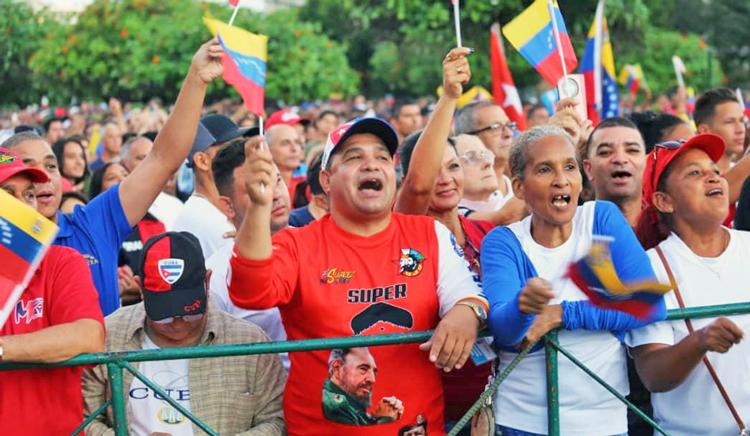
Speakers at the festival condemned increased U.S. military operations in the Caribbean and war threats against Venezuela — threats that are also aimed against Cuba. Many participants in the event took part in the Oct. 17 march of 50,000 in solidarity with Venezuela.
Jonathan Silberman contributed to this article.