ATLANTA — Fifty-one people attended a spirited meeting here April 19 to celebrate the life and political contributions of John Benson, a member and leader of the Socialist Workers Party for 64 years. Benson died March 6 after a brief struggle with aggressive leukemia. He was 84 years old.
After joining the SWP in 1962, Benson helped build and lead 10 different party branches and organizing committees, served on the party’s National Committee for 15 years, carried out responsibilities helping build the international communist movement and worked at numerous industrial jobs, where he worked to strengthen the union.
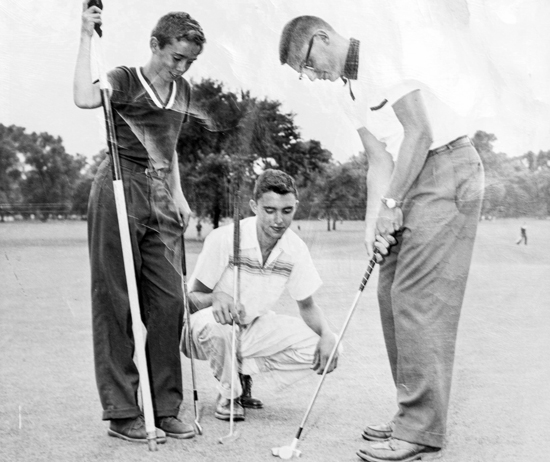
Along with party members, supporters and others interested in learning more about the party, members of Benson’s family attended the meeting. This included his brothers Ken and Steve, with whom John shared a lifetime love of golf, a sport he mastered growing up in Crete, Illinois, some 30 miles south of Chicago.
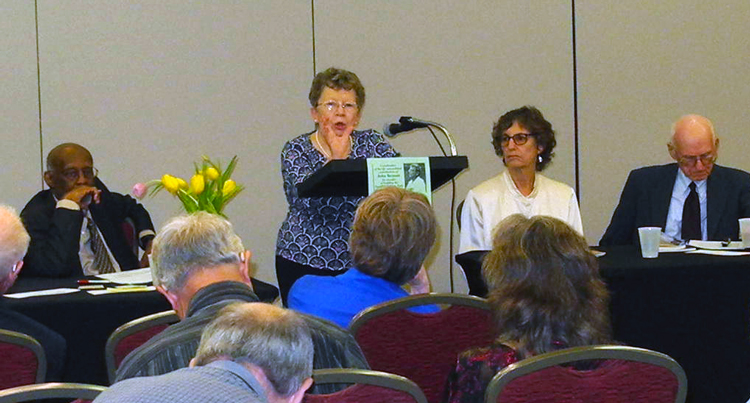
Sam Manuel from the Atlanta SWP chaired the program. After welcoming everyone, he read a message from SWP National Committee member Mary-Alice Waters, who first met Benson in September 1959, when they were both freshmen at Carleton College in Northfield, Minnesota, and not that interested in politics. “More than anything else, it was the world-altering class struggle that exploded around us those years — combined with the luck of coming to know men and women who introduced us to Marxism — that changed the course of our lives,” she wrote.
Benson joined the Young Socialist Alliance in 1962 and the SWP later that year.
The program’s speakers, the 28 messages received from around the country and internationally, and three attractive displays about the history of the SWP and Benson’s contributions throughout his long life of party-building underscored the meeting’s theme — that the fight for workers power and a socialist world is needed and realizable.
“It was while he was a student at Carleton that John was won to the Cuban Revolution,” Betsey Stone, SWP National Committee member from Oakland, California, told the audience. “I was also a Carleton student, two years ahead of John, and was part of building what became a very large chapter of the Fair Play for Cuba Committee on campus. A chapter that grew in size when Cuban revolutionaries defeated the U.S.-sponsored counterrevolutionary invasion at the Bay of Pigs in 1961.
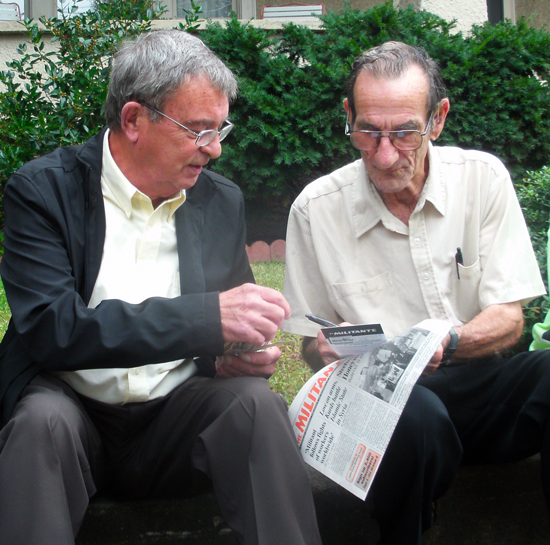
“John was one of the supporters of the Cuban Revolution who went on to become a communist himself, to join the Socialist Workers Party, dedicating himself to building the leadership needed to make a socialist revolution here,” Stone said.
“John’s support for the struggle of Black people that tore down the system of Jim Crow segregation in the South began in high school,” Stone said, “with the school desegregation fight in Little Rock, Arkansas, in 1957. He felt a moral revulsion at the sight of racist mobs threatening Black schoolchildren who were determined to go to the formerly all-white high school. John saw the dignity and courage of those young people and chose what side he was on. He remained true to that his entire life.”
Benson first joined the Minneapolis branch of the SWP, where he worked with and learned from working-class comrades who had long experience in trade union struggles and party-building, Stone said. Most important was Ray Dunne, a central leader of the Teamsters strikes in the 1930s who had gone to jail along with other party and Teamsters leaders for their efforts to advance opposition in the union movement to the U.S. war aims in World War II.
As a young party member, Benson went to Alabama in 1966 to cover the struggle of the Lowndes County Freedom Organization for the Militant. One of the poorest counties in the state, Lowndes was the site of a determined struggle by Black tenant farmers and other toilers to win the right to vote and advance their class interests. They formed their own organization, the Lowndes County Freedom Organization, independent of the Democratic and Republican parties. Benson’s articles in the Militant “answered the lies and slanders about their struggle by the capitalist politicians who hated and feared their example,” Stone said.
Built the communist movement
A number of messages to the meeting pointed to Benson’s work with comrades in the international movement.
Stone read from a message to the meeting from Mike Tucker, a leader of the Communist League in Australia, who said he first met Benson in New Zealand as he and others were looking to build a communist movement in association with the Trotskyist Fourth International in the early 1970s. “For many of us in this part of the world John has a special place in our memory,” Tucker wrote.
“We were revolutionary-minded workers and students, most of us still in our teens. While we were very serious, there was no pre-existing party from which we could learn. But spending time meeting and discussing with John in person was a big help.
“As rebellious teenagers, we tended to rebel in our appearance and dress,” wrote Tucker. “John set a different example. He was clean-cut and dressed in business-like attire, like a worker who expects to be respected and taken seriously. Despite our youthful inexperience, John discussed with us as equals.”
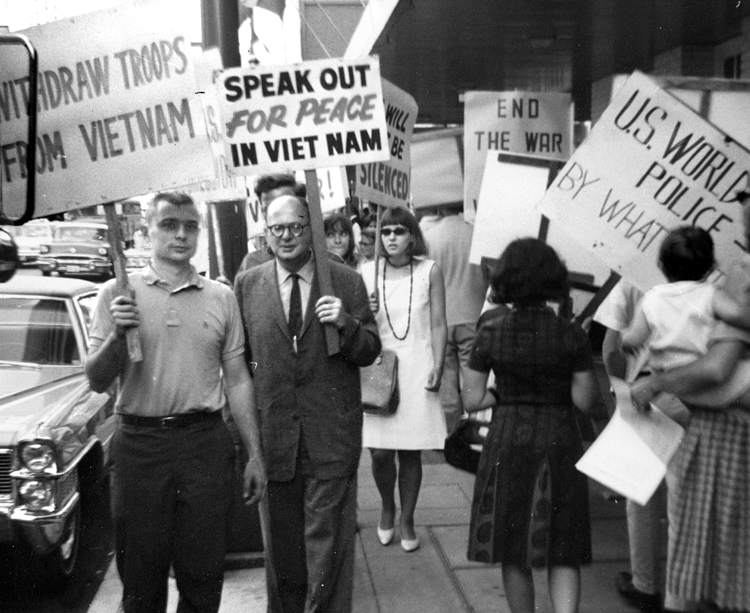
“From John we gained a better understanding of the continuity of the SWP with Lenin, Trotsky and the Bolshevik Party, and the Leninist strategy of party building,” Tucker said.
“Not every party in the Fourth International looked to the SWP and its continuity with Lenin and Trotsky as an example,” Stone said. “Some began to look for shortcuts around building parties composed of workers with a working-class program, seeing street fighting against cops and other ‘exemplary’ actions by small groups as the way forward to spark the working class into action from the outside.
“John brought to the debates over these questions his thoughtful manner, his grounding in Marxism and confidence in the revolutionary potential of the working class,” she said.
“Meeting John, a serious and humble worker and a leader of our world movement, made a deep impression on me,” Dag Tirsén from the Communist League in the United Kingdom wrote in a message. Tirsén joined the revolutionary movement in Sweden in the early 1970s. “Even if I didn’t agree with everything he said at the time, it increased my confidence in the SWP as a serious proletarian organization and helped keep my head cool during the period of faction fights raging in the world movement.
“Little did I know that more than 50 years later, I would see him as an inspiration and a refutation of the idea that old age prevents you from working at a union job,” Tirsén wrote.
Party stalwart wherever he went
After several years abroad, Benson helped lead many SWP branches around the country over the next 40-plus years. He was always ready to take any assignment in a new city to build the party.
Benson was an experienced Marxist who helped recruit to the SWP, as several messages to the meeting described. He was often called on to give forums and lead classes, which he enjoyed and always prepared seriously. Benson also enjoyed going door to door in working-class communities, week in and week out, getting to know fellow workers and introducing them to the SWP’s revolutionary world outlook.
Samir Hazboun, organizer of the Washington, D.C., SWP branch, spoke at the meeting, He recalled the impact of going door to door with Benson in Tennessee, and how it helped win him to the party.
Being new to the movement at that time, Hazboun was convinced they would run into hostility in an area where many people had voted for Donald Trump. One worker they met started to close the door on Benson, after learning they were from the Socialist Workers Party. He said he was in favor of Trump’s “wall” to keep out immigrant workers. But as Benson and Hazboun talked to the guy, he said he worked in a factory with many Latino co-workers without papers and agreed that the bosses used their “illegal” status to drive down the wages of all the workers.
Following more discussion, he said he thought he could get behind the demand for amnesty. “In one doorstep, Benson had shattered my long-held anti-working-class prejudices,” Hazboun said, “and won a new cadre to the SWP.”
Benson “was totally at ease just talking, starting up a conversation,” recalled Rachele Fruit, organizer of the Miami SWP branch, in her remarks to the meeting. “He would approach any door, undifferentiated. Even at a house with a Confederate flag, he was ready to find out who lived there and what they thought without a lot of prejudgment.”
SWP National Committee member Joel Britton described working with Benson in the Los Angeles branch in the 1980s and ’90s. By then, Britton recalled, Benson “had learned the skills required to work safely and effectively as a process operator in a big Chevron oil refinery where both of us were members of the Oil, Chemical and Atomic Workers International Union.”
Along with fellow union members, they fought against the company’s efforts to institute a 12-hour-shift schedule; successfully opposed Chevron’s moves to implement unjust drug searches and harassment of workers; and fought to win back a young woman trainee’s job,” Britton said.
They collaborated with co-workers and union officials to win union backing for actions demanding an end to U.S. intervention in Central America and the Caribbean and to protest U.S. support for South African apartheid, Britton said. “We also mobilized union solidarity for labor strikes during those years, for meatpackers, coal miners and airline workers.”
Benson helped lead an organizing committee in Carrollton, a small town of 25,000 in West Georgia, in 2007, where several immigrant workers from Honduras had joined the SWP. Maria Hernández, one of those workers, attended the meeting. At the same time, several workers from Guatemala had joined the party in the Atlanta area.
Led Atlanta branch for two decades
Benson helped lead the Atlanta branch over the past two decades, serving continually on its executive committee. For many years he organized the committee leading the branch’s work campaigning with our books and the Militant in working-class communities, Atlanta SWP branch organizer Susan LaMont told the meeting. “He could often be seen pouring over the thick book of Atlanta-area maps that became dog-eared from use, trying to find new working-class communities where we could campaign.”
Another responsibility Benson took on was leading efforts to get the SWP’s presidential ticket on the ballot in 2016, 2020 and 2024. These efforts involved party supporters of all ages from around the country, lasting for several weeks.
“John inspired comrades on the campaign teams to get out the party’s program with elan and expect a positive response from the workers we were meeting,” wrote Oakland SWP leader Maggie Trowe. “He made sure we were going to all kinds of different neighborhoods, talking to workers of different nationalities and different layers of our class,” she said. “I loved being teamed up with John, because he made every outing memorable and won the respect of workers he talked to.”
“Benson was an example of how to build the SWP,” National Committee member Alex Huinil from the Dallas-Fort Worth branch said in a message, noting he first met Benson in Atlanta. “Together with him I campaigned on the doorsteps of all kinds of working people. He had a passion to explain the party program.”
The meeting ended with a fund appeal to honor Benson’s political life. Participants donated $1,643 to build the party. Manuel thanked SWP supporters who prepared a delicious spread of food. Participants stayed for another hour, talking and browsing the displays and books of messages sent to the meeting.