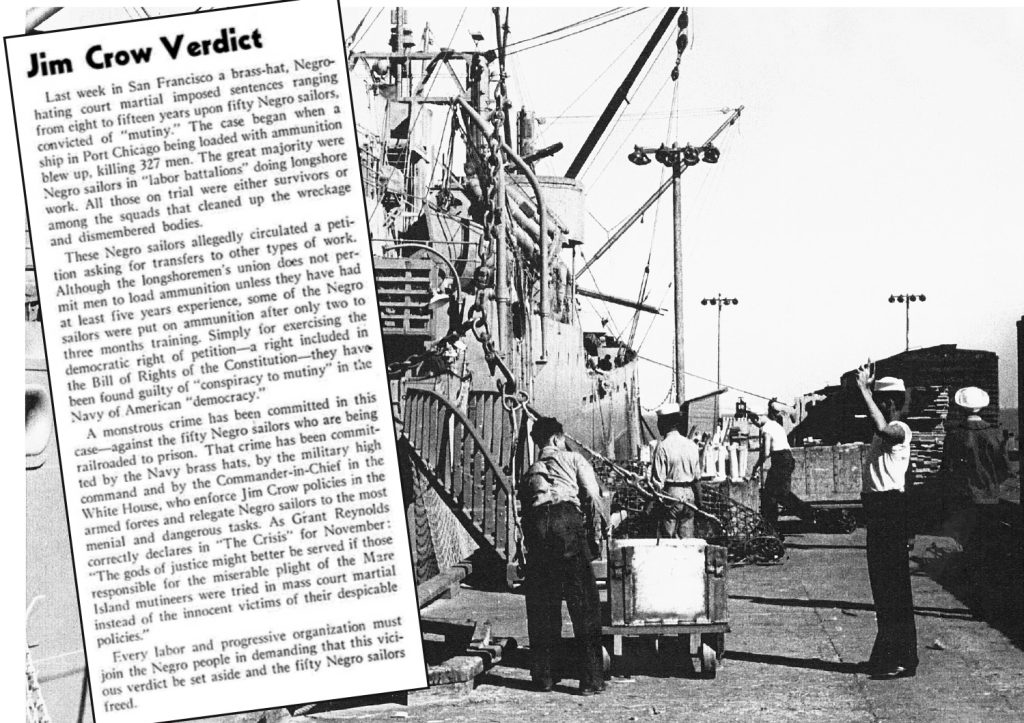
Fighting Racism in World War II: From the pages of the Militant is one of Pathfinder’s Books of the Month for August. It’s a week-by-week account from 1939 to 1945 of the efforts to advance the fight against Jim Crow segregation in the face of patriotic appeals to postpone resistance to lynch-mob terror and racist discrimination until after the U.S. rulers could emerge victorious in the second imperialist world war. The selection is taken from “Why Negroes should oppose the war,” published in 10 installments from Sept. 6 to Oct. 3, 1939. Run under C.L.R. James’ pen name, J.R. Johnson, it appeared in Socialist Appeal, then the Socialist Workers Party’s newspaper. Copyright © 1980 by Pathfinder Press. Reprinted by permission.
The war was a war for “democracy,” but the Negroes were segregated. There was not a single regiment consisting of white and Negro soldiers mixed. American “democracy” did not want to have even American colored officers, and it took a hard fight to have a few hundred. When they did agree, they trained Negroes as officers in a special Negro camp. And these men were informed by the State Department that when they visited the South, they should not wear their uniforms. “Democracy” was sending the Negro to fight for “democracy,” but could not bear the sight of him in the officer’s uniform of “democracy.”
The old lynch spirit continued. The Negroes were beaten up near the camps, they were stoned and jeered as they marched along the streets. When they were on leave and attempted to enter cafes and restaurants frequented by white people, they were driven out in many places.
When they went to France, the discrimination continued. American “democracy” forced most of the black soldiers to be common laborers. Of the 200,000 Negroes who went to France, some 160,000 were used as servants and in labor battalions. Even when fighting for “democracy,” the Negro was kept in his place. Negroes were made to build roads, wash clothes, cook food, clean up camps and trenches, and clean latrines, though they had enlisted as soldiers of the line.
Far from practicing any sort of democracy to Negroes, the American commanders did their best to make the French maltreat the Negroes. The French people are not as prejudiced as one would expect from their treatment of natives in Africa, and great numbers of French people in France do not make any differentiation at all between Negroes and whites. But when the American officers saw this and the friendly way in which Negro soldiers were being welcomed both by French men and women, they issued a military order, Order No. 40, instructing Negroes not even to speak to French women. For this offense against “democracy,” many Negroes were arrested, though the French people, men and women, had made no complaint.
The American officers, in this war for “democracy,” wrote a special document to the French commanding staff, telling them that Negroes were a low and degenerate race, that they could not be trusted in the company of white people, that although some Negroes were officers, the French officers should have nothing to do with them, except in matters relating strictly to fighting. The French, said this American order, should not eat with Negroes, nor even shake hands, and above all, they wanted the French to use their influence to keep the white women who worked in or near the camp from forming any associations with Negroes.
This was the way in which the American ruling class fought side by side with Negroes in the great war for “democracy.”
The Negroes, believing that by fighting bravely and showing that they were men as good as any other, they would gain freedom from their oppression, performed feats of distinguished bravery. Of all the American soldiers in France a Negro was the first to win the croix de guerre (war cross), and one Negro regiment, the Eighth Illinois, received more decorations than any other regiment in France. Another American Negro regiment stayed a longer spell in the trenches than any other regiment in the Allied forces. No one after that could say that Negroes were inferior. They had stood the stern test of modern war and came out with a great record.
What happened to the Negroes, after this fine showing, should be branded on the forehead of any so-called Negro leader who tries to thrust them again into war. For as soon as the war was over, there was such a desperate series of race riots in America as had not been seen for many years. In Washington, in Chicago, white mobs, inspired and encouraged by American employers and American capitalist police, shot down Negroes, many of whom had lost relations in the great war for “democracy.” The southern whites were so anxious to put the Negro back in his place that they lynched Negroes who dared to wear the uniform of a private. The great war for “democracy” and the bravery and the sacrifices for “democracy” of the Negro people ended with thousands of them having to fight desperately not for “democracy,” but for their lives in “democratic” America.