LINCOLN, Neb. — On July 9 Norfolk Southern conductor Scott Shoemaker, a 67-year-old experienced rail worker only weeks from retirement working out of Toledo, Ohio, was struck and killed while inspecting a passing train in East Chicago, Indiana. That 110-car train was so heavy it took over a quarter mile to come to a stop.
Rail workers for over a century have routinely got off their engines to inspect passing trains for mechanical defects. But up until the 1990s most rail crews had three workers on the ground to help keep each other out of harm’s way. Now conductors on the ground work alone. The bosses’ drive for profits is the reason for rail deaths like this today.
No worker should die on the job! All work on the railroad can be performed safely. The working class and our unions are the only force with the power to enforce safety on the job and in all aspects of production and transport.
As usual, the rail bosses cried crocodile tears for Shoemaker, claiming safety “is priority number one at Norfolk Southern.” In reality, railroad workers are viewed by bosses and their company stockholders as easily replaceable pieces of equipment.
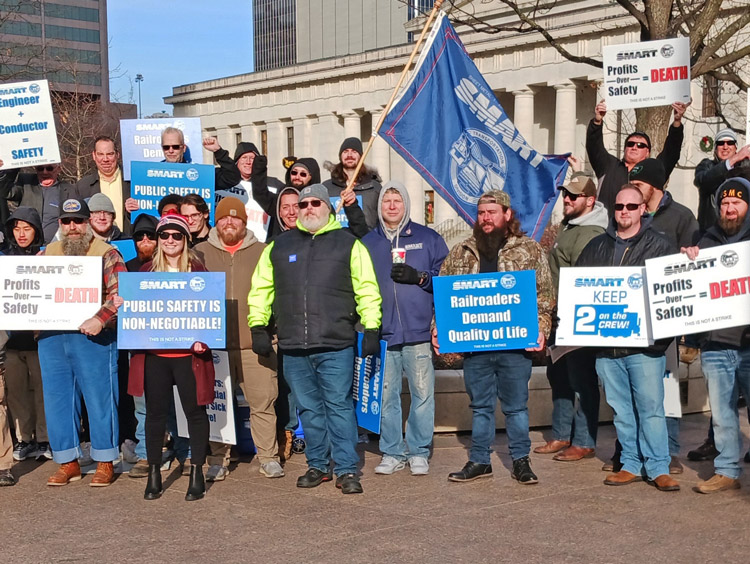
CSX rail officials mouthed the same platitudes after a conductor suffered a shattered pelvis May 24 after getting struck by a moving train car in the Selkirk Yard near Albany, New York. The SMART-TD Local 212 conductors union correctly put the blame squarely on the company. It told the Albany Times Union that CSX is rushing workers through safety training and qualifying them to work in both rail yards and on the road before they are experienced enough to be able to work safely.
“The conductor involved in the incident had recently transferred from Collinwood Yard in Cleveland raising serious questions about whether 10 days is enough time to qualify on a facility reportedly covering 1,250 acres,” the union said in a statement posted on the SMART-Transportation Division website.
The union also made public a scathing letter SMART-TD New York State Legislative and Safety Director Luke Deleskiewicz sent to CSX management. Rail workers “have repeatedly raised concerns about understaffing, fatigue, inadequate time to perform work safely, pressure to move equipment before issues are properly addressed, and the erosion of experience in the field due to cuts, consolidations and forced changes.”
Technology used to cut jobs
Railroad workers support the use of improved technology to make working conditions safer, but the profit-hungry rail bosses, pushed by investors on Wall Street, are using technology to abolish jobs, even though it endangers the safety of workers and the people who live and work near rail tracks.
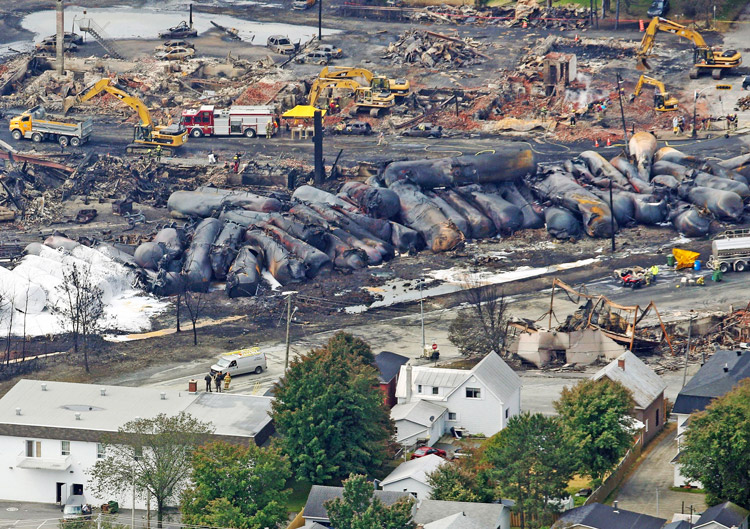
Two examples are the deadly July 6, 2013, disaster that struck Lac-Mégantic in Quebec and the derailment and massive toxic fire in East Palestine, Ohio, in February 2023. In Lac-Mégantic, the engine on a safely parked train caught fire, which was put out by local firefighters who were called along with a company official. But they also turned the power off on the engine, which bled out its brakes, letting the train carrying 72 cars filled with oil roll downhill into the town, where it derailed, exploded and started a massive fire that destroyed most of downtown, killing 47 people.
The derailment in East Palestine put 50 cars on the ground, including 14 carrying toxic vinyl chloride as well as others carrying dangerous chemicals. A massive fire broke out, and rail bosses pushed for a burn off that spewed a giant cloud of toxic carcinogens into the air, which fell all around the area. The fight over healthcare for residents there is still going on.
A recent narrow escape was brought to light by members of the American Train Dispatchers Association. They called on the Federal Railroad Administration to investigate what the union calls a “serious software failure” in the BNSF Railway’s dispatching system. On June 16 automated computer programs involved in routing trains near Connell, Washington, “failed, allowing a train to enter track that was already occupied by a railway worker,” the dispatchers association stated. By luck, an alert dispatcher saw the software error and alerted the crew to stop the 146-car train, nearly 2 miles long and some 6,500 tons, which included 20 or more cars of hazardous materials.
Today all of BNSF’s train dispatching over nearly 33,000 miles of track in 28 states and three Canadian provinces is organized through just one Network Operations Center in Fort Worth, Texas. At any given time there are 100 to 150 dispatchers there working to manage 1,400 trains and 205,000 rail cars.
This is a dangerous change from when I worked on the Burlington Northern, when dispatchers on each division worked in a local depot in their area. They learned the lay of the land first hand, including the trackage ascents, descents, curves, signal systems, sidings, yards and more.
What is needed is a union-led fight for workers control of production — crucial to enforce safer conditions — that will inevitably come into direct conflict with the capitalist bosses’ profit drive. To control our working conditions, the working class must organize in our millions to take the political power out of the hands of the boss class.