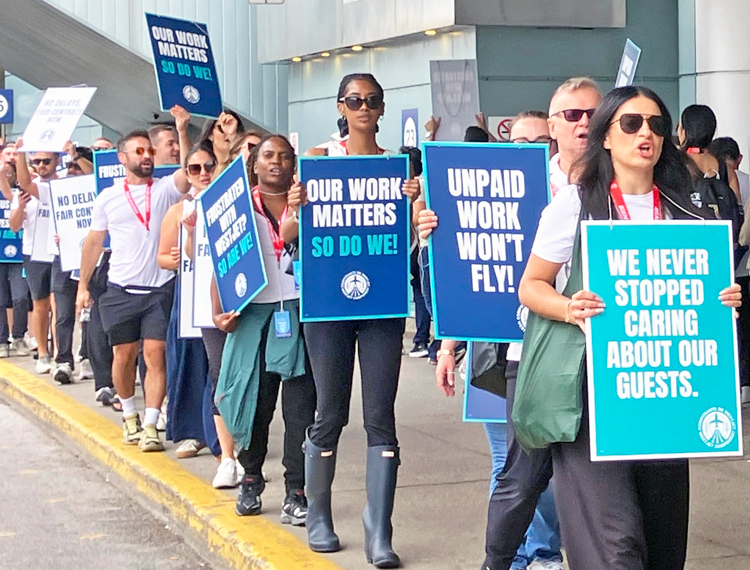
MONTREAL — On Aug. 2 more than 4,000 flight attendants at WestJet, Canada’s second largest airline, went on strike, setting up picket lines at airports from coast to coast. After little more than 24 hours, their union, Canadian Union of Public Employees Local 8125, announced an agreement had been reached.
When the union issued a 72-hour strike notice July 30, WestJet responded by filing a lockout notice.
“We tried until the very last minute to get a fair deal that recognizes the value of the work cabin crews do,” CUPE Local 8125 President Alia Hussain said. “WestJet’s offer did not go far enough.”
At the airport here some 100 workers picketed, carrying union placards reading, “Unpaid work won’t fly,” and many homemade signs expressing their determination to win pay for working before planes take off and after they land. Last August more than 10,000 Air Canada flight attendants, fellow members of CUPE, won a strike over the same issue.
“The coffee is free, not our work,” read signs in French. They also rang bells and blew horns urging people in passing vehicles to “honk your support.” Many did.
More than 200 strikers walked the picket line at Toronto’s Pearson airport. They chanted, “If they won’t pay us, shut it down!” and “From gate to gate, compensate!”
On Aug. 16, 2025, Air Canada flight attendants went on strike and defied a government back-to-work order. Emboldened by widespread labor support, they kept up picket lines across the country, returning to work three days later after the union announced it had won important gains.
That was the fourth time in a year the federal government used anti-labor laws to rule a strike illegal, having earlier sent tens of thousands of striking postal, port and rail workers back to work.
“This tentative agreement represents meaningful progress,” Hussain said after announcing the deal. It recognizes “more of the work cabin crew are required to perform and with general increases to compensation for that work.” The union will now set a ratification vote.