

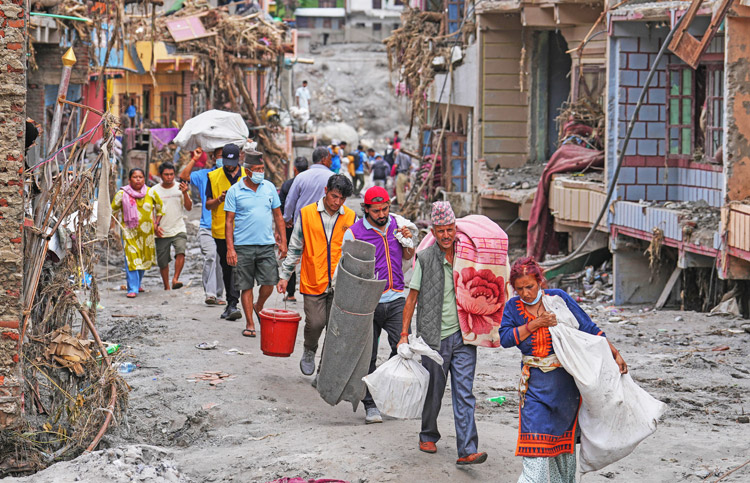
After a landslide in the Gorkha district in the Himalayas about 60 miles west of Kathmandu blocked the Budhi Gandaki River, causing downstream flooding Oct. 11, authorities in Nepal urged villagers to move to higher ground. Rapidly rising river floodwaters swept away a dozen houses, two suspension bridges and a highway bridge, leaving five people missing and 49 rescued.
“We have asked villagers living along the river banks downstream to evacuate,” a local official said. Authorities belatedly dispatched army and police rescue personnel to the area. The event was a stark reminder of the effects of ongoing tectonic shifts in the mountains there that can translate into dangerous landslides and floods. It’s just a few months since the Aug. 26 catastrophe upstream from here where a glacier collapsed, causing a deadly tsunami-scale flood that killed 1,427 people, with thousands still missing. Above, survivors with salvaged belongings three days later.
Both of these events — the catastrophe and the more minor destruction Oct. 11 — were man-made disasters caused by the for-profit capitalist system.
Capitalist developers, looking to build inns, hotels and other structures for tourism as well as hydropower construction in this mountainous region of Nepal and neighboring China-ruled Tibet, have brought more people to live and work in these flood-prone areas. The number of buildings sitting in harm’s way increased by nearly half from 2016 to 2023.