The reactionary regime in Iran arrested some 21,000 people during and after the 12-day war with Israel in June, setting up more than 1,000 roadblocks across the country in a crackdown on “crime” and political dissidents, a police department spokesperson there told the press Aug. 12.
The cops said hundreds had been arrested for supporting Israel, including 30 whose online comments had been monitored. This is a backhanded admission that there is deep opposition in Iran to Tehran’s longstanding drive to destroy Israel and eliminate Jews living there.
But the staggering number of arrests failed in the regime’s goal of intimidating working people and preventing new protests in the wake of the war.
The Aug. 16-18 weekend in Iran saw more than 65 protests by oil workers, miners, retirees, truck drivers and others, over issues ranging from demands for higher wages, pensions and safe working conditions; calls for government action to relieve the severe water and electricity crisis working people face; and an end to the death penalty. Iran has one of the highest execution rates in the world.
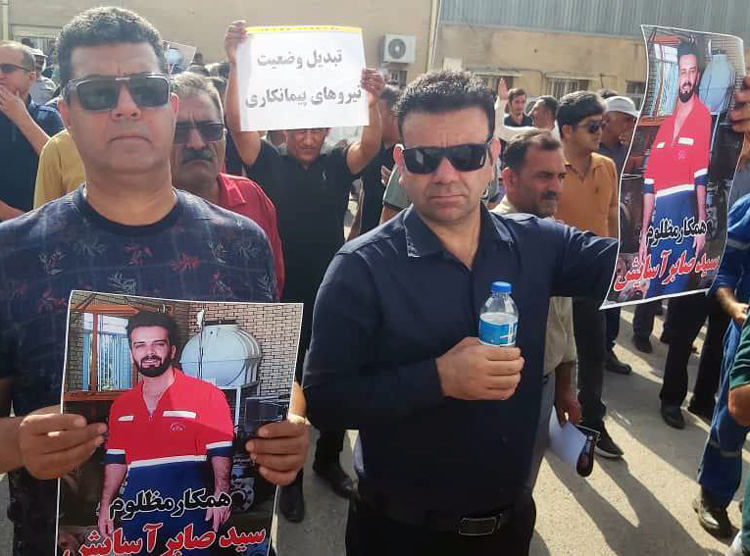
On Aug. 17, hundreds of oil workers marched to the headquarters of Gachsaran Oil and Gas Exploration Company in southern Iran. They carried pictures of Saber Asayesh, a contract worker who died July 26 after a pipe fell on his legs. Workers are angry that the bosses delayed hours before calling an ambulance, ignoring his co-workers’ pleas. Then the first hospital they took him to refused to treat him because he was a contract worker, not a direct employee for the oil company. By the time he got to another hospital, he was dead.
The protesters also demanded equal wages for contract and permanent workers, and for contract workers to be made permanent. Only a minority of workers in Iran are hired directly by the companies, most are hired through contractors.
The weekly Sunday and Monday protests by retirees that took place all across Iran before the war are once again picking up steam. Retirees protested this week in Isfahan, Ahvaz, Rasht, Shusha, Sanandaj, Bijar County and Tehran.
Opposition to the regime’s reinstatement of the death penalty against Sharifeh Mohammadi was a central demand at the retirees’ protest in Rasht, where she is imprisoned. Mohammadi, a former member of the Coordinating Committee to Help Create Labor Organizations, was arrested in December 2023, accused of armed rebellion and being a member of Komala, a banned Kurdish political party. Her family insists the charges are false.
Mohammadi has been tortured and beaten in prison. In October 2024 the Supreme Court overturned her death sentence on the grounds of lack of evidence and other flaws and ordered a retrial. The sentence was reinstated a month after the 12-day war.
The death penalty is an “inhuman punishment issued to suppress and spread fear in society,” long-time union and retiree leader Ismail Gerami said Aug. 18. It doesn’t “affect the determination of fighters for justice and freedom nor solve social problems.” He joined other unionists in calling for freedom for Mohammadi.