Chinese President Xi Jinping presided over a massive parade of weaponry Sept. 3, alongside Russian President Vladimir Putin, North Korean leader Kim Jong Un, Iranian President Masoud Pezeshkian and representatives of 23 other governments.
The display was aimed at projecting Beijing’s rising reach, its expanding firepower and sharpening challenge to the decadeslong domination of U.S. imperialism. And it comes amid today’s increasingly violent capitalist competition for markets, resources and profits worldwide.
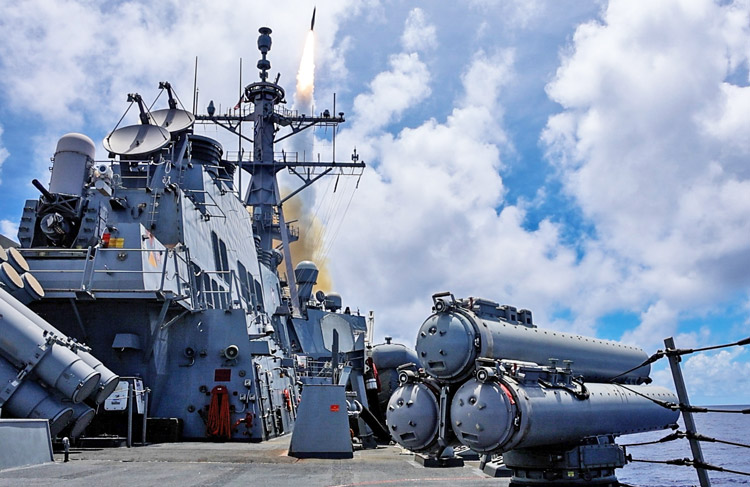
The U.S. imperialist rulers are enlarging their own military forces and seeking to reshape alliances while they’re still top dog. But they’re less and less capable of stabilizing the capitalist world order they put together after their victory at the end of the second imperialist world slaughter in 1945.
Washington sees the Chinese rulers’ growing influence as its number one threat. This was captured when President Donald Trump posted a message to Xi on Truth Social, saying, “Please give my warmest regards to Vladimir Putin, and Kim Jong Un, as you conspire against the United States of America.”
The White House has been involved in a monthslong series of tariff skirmishes with Beijing over control of natural resources, technologies and access to markets. It seeks to expand its manufacturing base, a key necessity in preparing to turn rapidly to a war economy in the future.
Neither Beijing nor any other power comes close to matching Washington’s military might. But over the past decade China’s state capitalist rulers have doubled their military budget and the number of nuclear weapons they hold. Beijing is currently expanding air force and naval bases along its coastline, just miles from Taiwan, which it claims as its own. In recent years Beijing has expanded naval patrols and claimed islands and waters in the South China Sea.
Beijing’s military expansion has gone hand in hand with a massive increase in Chinese manufacturing over recent decades as it moved to secure markets for these products abroad.
The Sept. 3 parade marked the 80th anniversary of the end of World War II. In his address, Xi praised the Chinese people’s victory ousting occupying Japanese forces, a struggle that ended decades of colonial rule and oppression. Xi then appealed for support for his regime’s expansionist course today, including the need for Beijing to “speed up the building of a world-class military.”
Flanked by Putin and Kim, Xi told participants China “is a great nation that is never intimidated by any bullies.” It was clear to all his target was Trump and the U.S. rulers.
On show were the latest weapons for modern war — Chinese hypersonic missiles, long-range intercontinental ballistic missiles and new underwater drones that function as unmanned submarines. The procession included laser weapons intended to counter enemy drone attacks. China’s most up-to-date jet fighters and bombers flew overhead.
Xi touts ‘peaceful coexistence’
As rivalry between Washington and Beijing sharpens, both are looking for capitalist governments to try to draw into their orbit.
Prior to the military parade, Xi hosted the largest-ever meeting of the Beijing-led Shanghai Cooperation Organization in Tianjin. It has grown from six governments at its 2001 founding to 27 today. Like the BRICS bloc, set up by the government’s of Brazil, Russia, India, China and South Africa, the Chinese rulers hope to use the SCO to expand their influence.
Xi told the meeting that his regime is leading opposition to Washington’s imposition of tariffs on some 90 countries. These protectionist measures are aimed at bolstering the U.S. rulers’ expansion of production, trade and weaponry.
Attendees at the Tianjin summit included Indian Prime Minister Narendra Modi, Turkish President Recep Tayyip Erdogan and officials from Pakistan, Egypt, Armenia and Azerbaijan.
Xi began his address extolling the Chinese Communist Party’s “original commitment to peaceful coexistence.” The Stalinist-molded regime in Beijing has used that term for decades to signal its support for maintaining capitalist exploitation and oppression, while quelling revolts by working people anywhere that threaten Beijing’s interests and its expansion.
Without directly calling out Washington, Xi said Beijing would “unequivocally oppose hegemonism.” He reiterated calls for a “multipolar world,” as opposed to the U.S-led world order, and touted China’s efforts to “narrow the North-South gap.”
Few concrete initiatives came out of the gathering. Many governments represented there are also seeking trade deals with Washington, and aren’t ready to throw themselves all the way into Beijing’s arms. Modi’s attendance was his first visit to China since a deadly border clash between India and China in 2020.
India was hit with an extra 25% tariff by the Trump administration in August to punish its government for buying oil from Moscow. While Modi tries to play both sides, he has shown no sign he intends to stop the oil purchases.
Just before attending the meeting, Modi displayed his government’s ongoing military cooperation with Washington by making an official visit to Japan. The Indian government is part of the Quad military alliance with the imperialist rulers of Australia, Japan and the U.S. It’s aimed at countering Beijing’s influence in the Indo-Pacific. Modi also left after the conference, skipping Beijing’s military parade.
As conflicts between Washington and Beijing sharpen, with both advancing preparations for new wars, Trump changed the name of the U.S. Defense Department to the War Department Sept. 5. “We won World War I, and we won World War II, not with the Department of Defense,” War Secretary Peter Hegseth said, “but with a War Department.”
Washington, its imperialist rivals in Europe and Asia, as well as Beijing and Moscow are all on a course to march humanity toward a third world war. That horrific prospect can only be prevented by workers taking political power into our own hands here in the U.S. and worldwide.