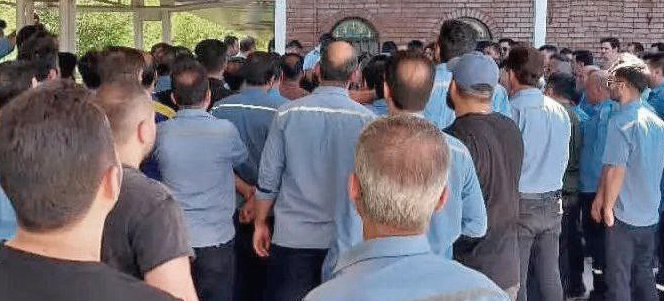
Some 4,000 workers at the Arak Aluminum Company in Iran’s Markazi province have ended 43 days of hunger strikes, sit-ins and other protests demanding better wages and work conditions. The hard-fought battle was closely watched by workers across Iran.
The head of the Islamic Labor Council at the complex and the company CEO signed an agreement Sept. 11. The bosses agreed to overturn the suspensions of 13 workers and pay them back wages, review wage levels at a meeting of the board of directors, and to drop criminal charges against five workers accused of “disturbing public order,” “spreading falsehoods” and “damaging company property.”
Workers demanded timely payment of wages, a review of job classifications and wage rates, job safety, modernization of antiquated equipment and an end to harassment by bosses.
The recent deaths of two co-workers at the complex fueled demands for job safety. Workers publicized photos of other serious injuries, caused by the company’s refusal to properly maintain equipment, such as ladles for molten metal and overhead cranes.
Workers say that conditions deteriorated significantly over the last year after the majority of shares in the state-owned company were privatized. Like job actions and protests elsewhere in Iran, the fight at Arak was fueled by growing opposition to the regime’s war moves against Israel.
A Sept. 8 statement by organizations of oil workers, nurses, retirees, miners, teachers and others notes that the “regime’s warmongering and interventionist policies” are having an impact on “the already meager lifeblood of the people.”
As word about the Arak workers’ fight got out, they began winning solidarity. Retirees at a weekly protest in Gilan province chanted, “Arak Aluminum workers we support you.” Retired sugarcane workers in Shush declared their support.
The government-funded Iranian Labour News Agency reported that “it is unclear how many workers agree with or have hope” in the agreement, although they have returned to their normal work schedules. “It remains to be seen how much the company will fulfill its commitment.”
As the job actions ended at Arak, workers at the Ahvaz National Steel Group began daily protests to demand the immediate payment of overdue wages and that the company restart stopped production lines.