
President Donald Trump cancelled an attack on Iran set for Aug. 3, then immediately threatened to “decapitate” its rulers, hitting Iran harder than any strike “since World War II,” if Tehran does not give in to U.S. demands.
At the same time, the U.S. president keeps demanding Israel refrain from launching new defensive military operations against the Iranian regime and its key proxies — Hamas in Gaza and Hezbollah in Lebanon.
At first glance, the on-again, off-again, U.S. war on Iran, as well as the U.S. pressure on Israel, can seem illogical.
Trump, like every Democratic and Republican president over the last 125 years, defends the interests of the propertied U.S. ruling capitalist class. He does not seek the total destruction of the Iranian regime’s military capacity, or the regime’s overthrow. The Pentagon has deliberately refrained from attacking many of Tehran’s military sites, despite near-total control of the skies above Iran.
From the standpoint of the U.S. rulers, this makes perfect sense. Trump is trying to put together a “Pax Americana” in the Middle East, like the U.S. rulers tried — but failed — to impose across the entire globe after they emerged from World War II as the dominant imperialist power. This would require regimes throughout the region to bend a knee to U.S. superiority.
The Trump administration is trying to deepen its relations with capitalist regimes in Turkey, Saudi Arabia, Egypt, Jordan, Syria, Qatar, the United Arab Emirates, Kuwait, Oman, Bahrain, Iraq and Iran, all of which have their own rivalries. Washington wants stability and the acquiescence of these regimes to the U.S. rulers’ “right” to plunder the oil and gas resources of the region and exploit the labor power of working people there.
One U.S. goal: Push back Beijing
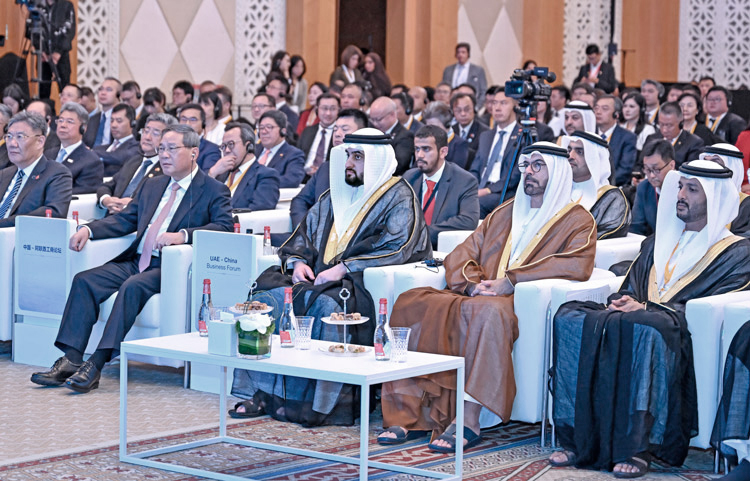
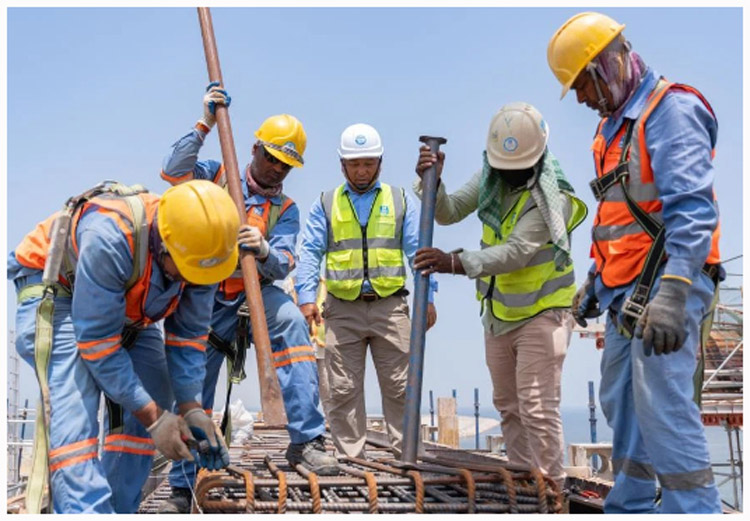
And they want to push back inroads by their main rival, Beijing. Chinese investment in the Middle East was growing faster than anywhere else in the world. Before the war, some 370,000 Chinese workers were based in the United Arab Emirates alone. Beijing has invested some $270 billion in the region over the last 20 years, reports the American Enterprise Institute.
Washington says Tehran must renounce getting nuclear weapons. But in reality, U.S. negotiators have pushed only for Tehran to agree to dilute already enriched uranium and to two decades of restrictions on future enrichment.
Despite the blows it has taken, the Iranian regime still holds two ships — and their crews — that it hijacked on April 22 and continues to threaten maritime traffic through the Strait of Hormuz.
The U.S. military dominates the strait and the seas of the Arab-Persian Gulf. Some 75% of the sailors and ships that had been trapped by the 40-day war have been able to set sail. Though much less than before the war, dozens of vessels are passing through the strait every day, carrying an average of 4 million barrels of oil.
The reimposed U.S.-Navy blockade of Iranian ports, in contrast, has forced Iran’s maritime trade to grind to a halt. Like with the U.S. financial sanctions, it’s working people in Iran who pay the biggest price.
Rising prices, fuel and water shortages and widespread layoffs have forced many working people and layers of the middle class to sell some of their possessions, including home appliances, to get enough money just to survive. This has also fed protests across the country by people fed up with Tehran’s wars.
Trump: ‘I call all the shots’
The Trump administration is also unable to impose its will on Israel. Israeli Prime Minister Benjamin Netanyahu “won’t have any choice,” Trump said in June, referring to Washington’s demands that Israel back off from its attacks on Hezbollah — a key demand by Tehran — and Hamas. “I call all the shots. He doesn’t call the shots.”
But no matter what the U.S. government says, the Netanyahu government refuses to sit back while Tehran, Hamas and Hezbollah prepare new pogroms, like the massacre Hamas carried out on Oct. 7, 2023. Israel continues to strike Hamas operatives in Gaza and maintains control of a wide swath of southern Lebanon, preventing Hezbollah from establishing new bases from which to bomb Israel or overrun the border.
Israel is a tiny country, just 260 miles long and 10 miles wide at its narrowest point and 70 miles at its widest, with a population of just over 10 million, including some 7 million Jews, nearly half the world’s Jewish population, as well as some 2.1 million Arabs. Iran is 80 times larger than Israel in land area and has over 93 million people.
Israel is not looking to plunder Iran, it’s fighting to defend its existence as a refuge for Jews against the reactionary capitalist rulers in Tehran who have never stopped threatening to destroy Israel — they call it a “cancerous tumor” — and eliminating the Jews there.
Saudis, Turks compete
Washington’s use of its deadly firepower has dealt serious blows to Tehran. Despite the Iranian regime’s bluster that it has defeated U.S. imperialism, its military and economic power — and that of its proxies — is severely reduced. Its rivals, especially the Turkish and Saudi rulers, see its weakness as an opportunity to bolster their fortunes and influence.
The Turkish regime, with the second-largest army in NATO and its own sophisticated military industry, hopes it can fill the vacuum by building on its ties with the new regime in Syria and extending its power into both Gaza and Lebanon. Turkish Prime Minister Recep Tayyip Erdogan has hosted Hamas leaders and has stridently attacked Israel for defending Jews from Hamas.
The Saudi government has sought to raise its profile by joining with Washington in carrying out military attacks on Tehran-created militias in Iraq.
With passage from its eastern ports through the Strait of Hormuz riskier because of the war, the Saudi regime began shipping more oil to the west on the Red Sea and through the Bab el-Mandeb Strait. Now that route is threatened by the Tehran-backed Houthis in Yemen, which have been involved in on-and-off combat with the Saudis.
The Saudi government hosted representatives from 43 governments July 30 to discuss confronting Houthi attacks on shipping. They created a Multinational Maritime Defense Coalition with plans to base its military operations on Saudi soil.
Amid the shifting alliances propelled by the war and the disruption of traditional maritime routes, some capitalist companies are doing well from the volatile oil and gas prices.
U.S.-based Exxon Mobil and Chevron and Europe’s biggest oil companies, from Equinor of Norway to Shell, have all made record profits. Even Saudi Arabia’s Aramco, most directly affected by the war, reported a 33% increase in profit.