President Donald Trump’s administration has backed away from threats of new and larger airstrikes on Iran — for the moment — while intensifying its suffocating economic warfare, including a naval blockade of Iranian ports. It’s working people and oppressed nationalities in Iran who face the biggest blows from Washington’s attempts to strangle Iran’s economy.
As of Aug. 10, the U.S. Central Command had forced 55 ships to change course, and disabled two others. A U.S. military helicopter fired, hitting the rudder of a Panamanian-flagged vessel Aug. 11, after it ignored orders to halt.
The reactionary capitalist regime in Iran insists that it must have control over shipping through the Strait of Hormuz. It’s demanding that Washington lift all economic sanctions and release frozen Iranian funds.
Tehran’s own drone and missile attacks on ships there have caused a steep drop in maritime traffic. As have attacks by the Tehran-backed Houthis in Yemen on an alternate route through the Red Sea. While the regime’s threats give it momentary clout, in the long-run this could strengthen its regional rivals.
Knowing that “freedom of the seas” is no longer guaranteed, even if a U.S.-Tehran deal is reached, regimes in the United Arab Emirates, Saudi Arabia and Iraq are accelerating the building of pipelines that would allow oil shipments to bypass the Strait of Hormuz.
There are two sharply different wars against Iran’s rulers: An imperialist war by the U.S. rulers to impose a “Pax Americana” to plunder the oil, gas and labor of the region and to deal blows to their competitors. And a defensive war by Israel to prevent the Jew-hating regime in Tehran from developing nuclear weapons and the missiles to launch them to extend its regional power and to be able to destroy Israel.
Tehran has suffered big blows to its military capacity and to steel, cement and other factories. Along with the maritime blockade and new U.S. financial sanctions, this has accelerated inflation and deepened shortages of many goods. Drivers report waiting all day in intense heat to buy just two gallons of gasoline.
Indebted workers
“The indebted life of the working class: Workers have turned to ‘credit purchases’ for their meals!” was the headline on an Aug. 10 article in the government-funded Iranian Labour News Agency. It notes that “a significant portion of wage earners face a shortage of cash only a short time after receiving their salaries.” On top of this, wages are often paid months late.
“The cost of living has increased by more than 100% in a single year for food alone” the article says, while the “wages of minimum-wage workers have increased by only 60% at best” and for others by even less.
The combination of low wages, mass unemployment, unpaid wages and rising prices has forced many workers to take out loans just to be able to eat, with interest and other fees taking another bite out of their income.
The debilitating conditions working people face are of no concern to the capitalist rulers of Iran, the Islamic Revolutionary Guard Corps, their main instrument of repression, and the Basij paramilitary force under its control. The Guard Corps also profits from owning key industries — from telecommunications to construction contractors.
Execution of protesters
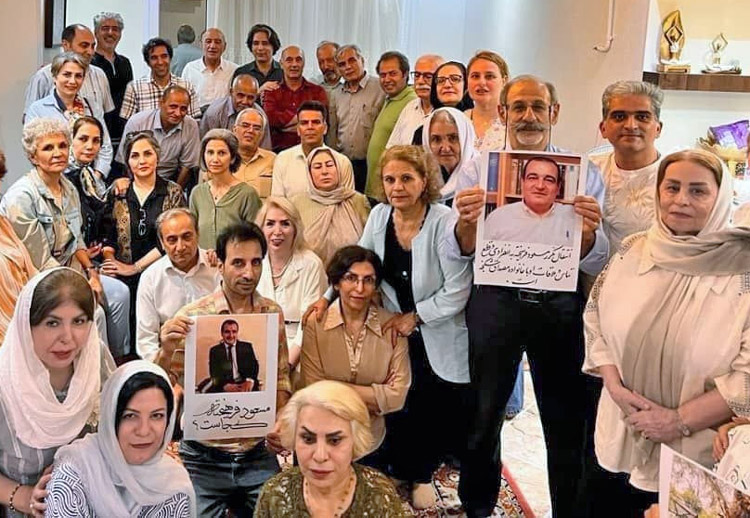
But the regime fears the growing opposition to its rule. That’s why it keeps arresting leaders of teachers and oil workers unions and others, and has sentenced dozens of participants in the wave of anti-regime protests that swept Iran earlier this year to stiff prison sentences or death.
The No to Execution Tuesdays campaign, led by political prisoners, organizes a weekly hunger strike against the death penalty that has spread to 59 prisons. It noted in an Aug. 4 statement that the regime “is not afraid of war” and considers the threat of foreign intervention almost a “blessing.”
“Despite their many differences, the greatest fear of all the various ruling factions is the emergence of an internal uprising,” the statement said.
That’s why the regime has executed over two dozen people just because they joined the mass anti-regime protests in January, with dozens more on death row, and is now bringing criminal charges against journalists, actors and human rights and civil activists for publicly opposing the executions.