Lenin’s Struggle for a Revolutionary International, Documents: 1907–1916; the Preparatory Years is one of Pathfinder’s Books of the Month for August. It records the political battle Lenin led within the leadership of the international workers movement to oppose imperialist war by a revolutionary course of organizing to lead the working class to overthrow the capitalist rulers. “The historical destiny of the doctrine of Karl Marx,” was published March 14, 1913, the 30th anniversary of Marx’s death. Copyright © 1984 by Pathfinder Press. Reprinted by permission.
The chief thing in the doctrine of Marx is that it brings out the historic role of the proletariat as the builder of socialist society. Has the course of events all over the world confirmed this doctrine since it was expounded by Marx?
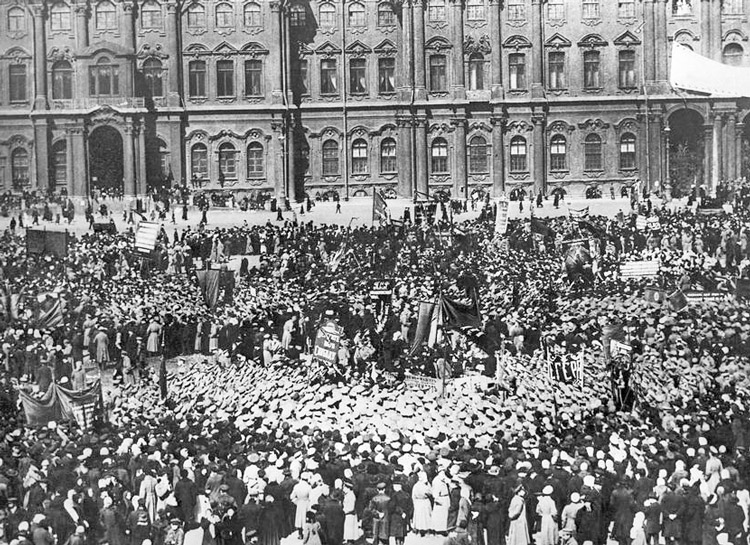
Marx first advanced it in 1844. The Communist Manifesto of Marx and Engels, published in 1848, gave an integral and systematic exposition of this doctrine, an exposition which has remained the best to this day. Since then world history has clearly been divided into three main periods: (1) from the revolution of 1848 to the Paris Commune (1871); (2) from the Paris Commune to the Russian revolution (1905); (3) since the Russian revolution. …
At the beginning of the first period Marx’s doctrine by no means dominated. It was only one of the very numerous groups or trends of socialism. The forms of socialism that did dominate were in the main akin to our Narodism: incomprehension of the materialist basis of historical movement, inability to single out the role and significance of each class in capitalist society, concealment of the bourgeois nature of democratic reforms under diverse, quasi-socialist phrases about the “people”, “justice”, “right”, and so on.
The revolution of 1848 struck a deadly blow at all these vociferous, motley and ostentatious forms of pre-Marxian socialism. In all countries, the revolution revealed the various classes in society in action. The shooting of the workers by the republican bourgeoisie in Paris in the June days of 1848 finally revealed that the proletariat alone was socialist by nature. The liberal bourgeoisie dreaded the independence of this class a hundred times more than it did any kind of reaction. The craven liberals grovelled before reaction. … All doctrines of non-class socialism and non-class politics proved to be sheer nonsense.
The Paris Commune (1871) completed this development of bourgeois changes; the republic, i.e., the form of political organisation in which class relations appear in their most unconcealed form, owed its consolidation solely to the heroism of the proletariat. …
Towards the end of the first period (1848–71), a period of storms and revolutions, pre-Marxian socialism was dead. Independent proletarian parties came into being: the First International (1864–72) and the German Social-Democratic Party.
The second period (1872–1904) was distinguished from the first by its “peaceful” character, by the absence of revolutions. The West had finished with bourgeois revolutions. The East had not yet risen to them.
The West entered a phase of “peaceful” preparations for the changes to come. Socialist parties, basically proletarian, were formed everywhere, and learned to use bourgeois parliamentarism and to found their own daily press, their educational institutions, their trade unions and their cooperative societies. Marx’s doctrine gained a complete victory and began to spread. The selection and mustering of the forces of the proletariat and its preparation for the coming battles made slow but steady progress.
“All doctrines of non-class socialism and non-class politics proved to be sheer nonsense.” —V.I. Lenin
The dialectics of history were such that the theoretical victory of Marxism compelled its enemies to disguise themselves as Marxists. Liberalism, rotten within, tried to revive itself in the form of socialist opportunism. They interpreted the period of preparing the forces for great battles as renunciation of these battles. Improvement of the conditions of the slaves to fight against wage slavery they took to mean the sale by the slaves of their right to liberty for a few pence. They cravenly preached “social peace” (i.e., peace with the slave-owners), renunciation of the class struggle, etc. They had very many adherents among socialist members of parliament, various officials of the working-class movement, and the “sympathising” intelligentsia.
However, the opportunists had scarcely congratulated themselves on “social peace” and on the non-necessity of storms under “democracy” when a new source of great world storms opened up in Asia. The Russian revolution was followed by revolutions in Turkey, Persia and China. It is in this era of storms and their “repercussions” in Europe that we are now living. No matter what the fate of the great Chinese republic, against which various “civilised” hyenas are now whetting their teeth, no power on earth can restore the old serfdom in Asia or wipe out the heroic democracy of the masses in the Asiatic and semi-Asiatic countries.?…
The Asiatic revolutions have again shown us the spinelessness and baseness of liberalism, the exceptional importance of the independence of the democratic masses, and the pronounced demarcation between the proletariat and the bourgeoisie of all kinds. …
After Asia, Europe has also begun to stir, although not in the Asiatic way. … The frenzied arming and the policy of imperialism are turning modern Europe into a “social peace” which is more like a gunpowder barrel. Meanwhile the decay of all the bourgeois parties and the maturing of the proletariat are making steady progress.
Since the appearance of Marxism, each of the three great periods of world history has brought Marxism new confirmation and new triumphs. But a still greater triumph awaits Marxism, as the doctrine of the proletariat, in the coming period of history.