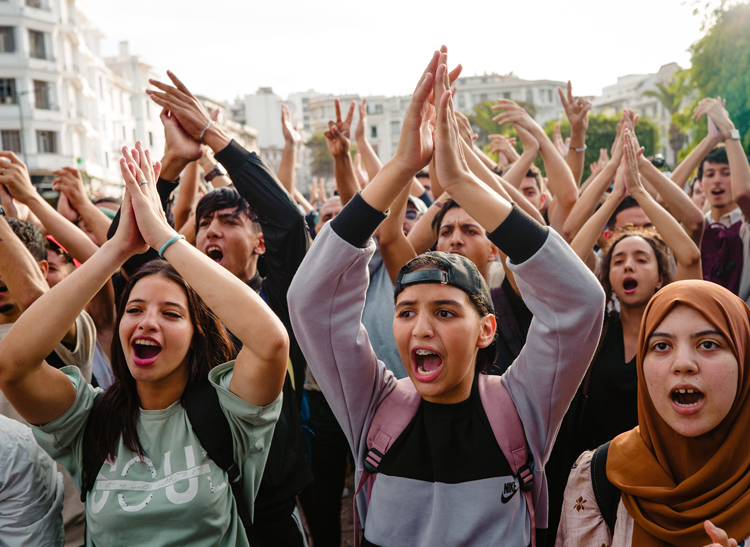
Protests over dire economic and social conditions, lack of jobs and little confidence in a better future facing working people, especially youth, have erupted throughout the North African country of Morocco. The demonstrations, which began Sept. 27, quickly spread to at least a dozen cities, including Rabat, the capital; Casablanca; and the port city of Tangier, as well as smaller towns, with daily actions taking place over the course of the week.
The unemployment rate in Morocco is at 12.8%, government reports say, with youth unemployment over 35%.
The actions are the most significant to erupt in Morocco since 2011 when “Arab Spring” protests against autocratic rule spread across a number of countries in North Africa and the Middle East.
Protesters are demanding jobs and that the government put more resources into public health care and education. They are particularly angered over the fact that eight pregnant women had died at a public hospital in Agadir because of inadequate facilities.
The protesters oppose the government’s plan to spend billions of dollars upgrading stadiums and other steps to prepare for cohosting the 2030 FIFA World Cup soccer match, instead of dealing with the decrepit state of public services affecting toilers throughout the country. “Stadiums are here, but where are the hospitals?” they chanted.
Authorities have moved to clamp down on the protests. Three people were killed when cops fired on demonstrators near Agadir Oct. 1. The next day the Moroccan Association for Human Rights reported that 1,000 people have been arrested in the nightly protests throughout the country. Hundreds have been injured, along with some police, Agence France-Presse reported.
As the protests spread, Moroccan Prime Minister Aziz Akhannouch went on national television to say his government was ready for “dialogue and discussion.” But many demonstrators instead demand he step down.
Workers and farmers in semicolonial countries are being hit hard by the deepening worldwide capitalist crisis and threats of war. Protest actions like those in Morocco have broken out in a number of countries in Africa and Asia.
Demonstrations over water cuts, power outages and other difficulties broke out in Madagascar, an island off Africa’s east coast. They forced President Andry Rajoelina to dissolve his government Oct. 2. Three-quarters of the population face a life of grinding poverty.
Days earlier, thousands of Filipinos filled the streets of Manila to protest corruption, including misappropriation of billions of dollars designated for flood relief projects. In Nepal youth-led protests in September against worsening living conditions brought thousands into the streets and toppled the government.
In Indonesia mass demonstrations erupted in August over the devastating impact of inflation and unemployment on working people. Protests spread to over 110 cities.
Youth in all of these countries are following what is unfolding elsewhere, looking for a way to fight as effectively as possible.