WASHINGTON — “Today, I want to speak with you about an urgent crisis, a remarkable story and an opportunity we can no longer afford to ignore,” said Alejandro Pila, deputy ambassador at Cuba’s embassy here, welcoming some 50 participants to a Nov. 18 screening of “Teresita’s Dream.”
The short film, made by Cuban director Daniel Montero and the U.S. production company Belly of the Beast, is a documentary on Cuba’s path-setting fight against the ravages of Alzheimer’s disease. Montero addressed the meeting and answered questions from Cuba by Zoom. Busboys and Poets, a well-known restaurant and political meeting space, hosted the screening.
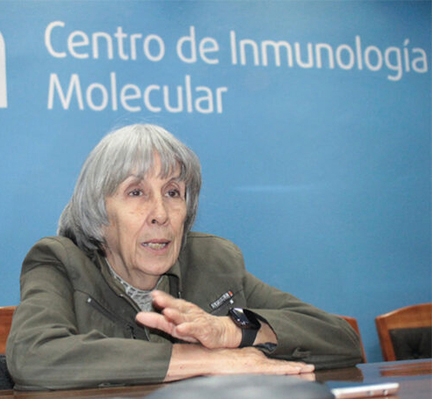
“Teresita’s Dream” tells the story of Dr. Teresita de Jesús Rodríguez, who discovered a promising drug in fighting the disease after her mother was diagnosed with Alzheimer’s. The drug has been effective in arresting the development of the devastating disease, and reversing its effects in some patients. The film also documents how despite a six-decade-long embargo of Cuba by Washington, under both Democratic and Republican administrations, Cuba continues to play a leading role in scientific research and development of important medical treatments.
Considered the most common form of dementia, Alzheimer’s currently affects more than 50 million people worldwide. The World Health Organization projects that will increase to 80 million by 2030.
“We are nothing without our memories, which is what makes Alzheimer’s such a terrible disease,” Dr. Rodríguez says in the film. It includes photos and videos of her mother, her research, and progress made by recipients of NeuroEpo, the name of the drug she pioneered and which is now produced in Cuba. “Sometimes the science done in a small place like Cuba is underestimated,” she modestly explains.
While the drug is being used in Cuba, where an estimated 10.2% of people over 65 have been diagnosed with Alzheimer’s, Pila said the U.S. government has neither tested it nor explored it in government research institutions.
“They have never opened the door to see whether this nonamyloid mechanism could help millions of U.S. citizens,” he said. “In the U.S. the stakes are rising, as Alzheimer’s disease hits hardest among the most vulnerable — African American, immigrant and rural populations here.
“It is time for the U.S. to reimagine what is possible. It is time to say yes to science, yes to collaboration, and yes to the millions of families who deserve better than the status quo.”
The short documentary is an important new tool, both for explaining new possibilities to fight Alzheimer’s and advancing the fight against the U.S. government blockade of Cuba and pressing Washington to take Cuba off its “State Sponsors of Terrorism” list.
Speaking on behalf of Belly of the Beast, Sanjna Selva said the film has already been screened in several cities, with plans underway to expand its distribution in 2026.