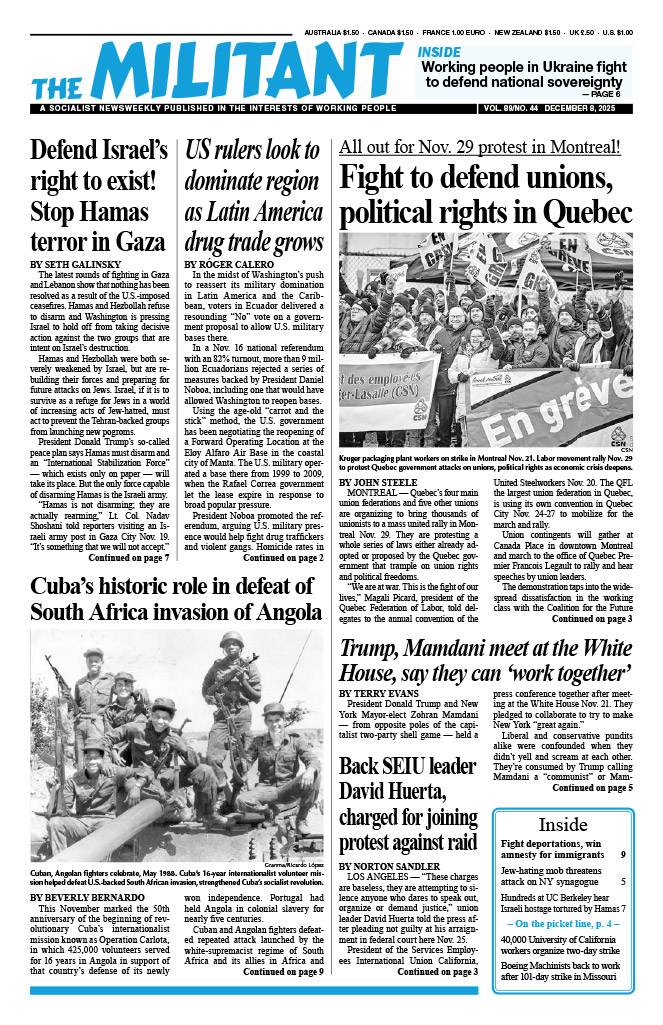
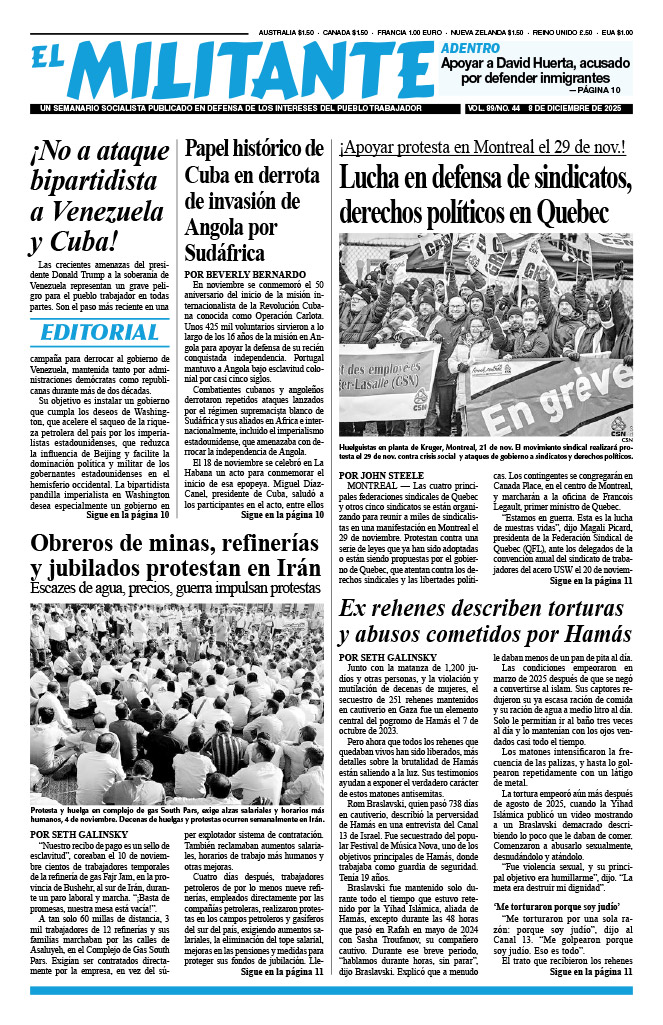
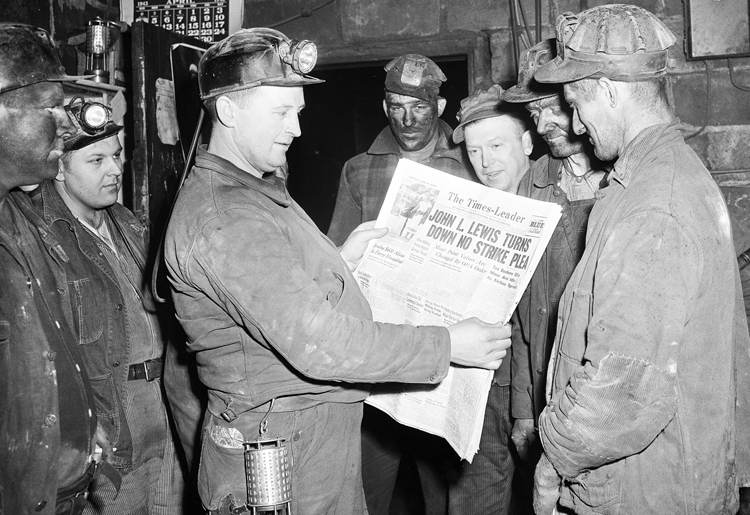
One of Pathfinder’s Books of the Month for November is Labor’s Giant Step — The First Twenty Years of the CIO: 1936-55 by Art Preis. He fought in labor battles in the 1930s, then became a staff writer for the Militant, covering the rise of the powerful industrial union movement. The excerpt tells of the successful United Mine Workers strike in the midst of World War II. The miners defied government threats to send troops, fought on and won a decisive victory. The Militant called this “a landmark in the history of the American class struggle.” Copyright © 1972 by Pathfinder Press. Reprinted by permission.
There were many signs of the growing restiveness of the industrial workers as 1942 drew to a close and during the opening months of 1943. …
The spreading coal strike forced [President Franklin Delano] Roosevelt to step forward personally to take public responsibility for leading the opposition to the miners. He telegraphed [UMWA President John L.] Lewis on April 29 that he would use “all the powers vested in me as President and Commander in Chief of the Army and Navy” if the strikes were not ended by the morning of May 1. Roosevelt’s threat brought an immediate defiant reply from the mine workers. Nearly 10,000 Ohio miners left the pits. By the morning of Saturday, May 1, every union soft coal mine in the country was closed.
The national strike of the miners was not only the largest coal strike the country had seen up to this time. It was the largest single strike of any kind the land had ever known. It was carried out with a dispatch, discipline and single-minded determination that had never been surpassed in the American labor movement.
The press did surpass itself in the volume of vituperation, slanders and threats hurled at the miners and Lewis. Lewis was linked with Hitler in newsreels, on the radio, in countless newspaper cartoons. Union leaders joined the chorus of anti-labor forces who were screaming for nothing less than the destruction of the miners union under the guise of aiding the war for “democracy.” UAW-CIO President R.J. Thomas said that the miners’ walkout was “a political strike against the President.”
On May 1 Roosevelt himself ordered government seizure of the struck coal mines and their operation under Solid Fuels Administrator Harold L. Ickes. Ickes “seized” the mines by promptly ordering the American flag to be flown over all mine properties and directing all mine owners and managers to run the mines as government agents in the name of the government — all profits to continue as usual. Ickes then declared the miners were working “for the Government” and ordered them back to work.
The miners didn’t budge. They waited for the decision of the union. On Sunday night of May 2 Roosevelt … speaking in a savage tone, attacked Lewis and the miners, claiming that the strike involved “a gamble with the lives of American soldiers and sailors.” …
This writer … toured the Western Pennsylvania mining area near Pittsburgh and wrote on May 3 for the May 8 Militant:
“The hope of the mine operators and every other boss in the country that President Roosevelt’s speech last night would send the coal miners scurrying back to the pits this morning in a demoralized rout has been completely smashed.
“Sticking by their guns in a magnificent display of union discipline and solidarity, and in the face of an unparalleled barrage of government threat and intimidation, the miners throughout this key soft coal area today held hundreds of local meetings and in an organized, deliberate fashion voted to return to work tomorrow pending the outcome of the 15-day mine truce announced by United Mine Workers President John L. Lewis.”
The Militant was the only significant press voice, in or out of the labor movement, that spoke unconditionally in defense of the mine strike.
The wartime miners strikes became the touchstone by which to judge the true loyalty of every union leader and working-class group toward the American workers. It revealed great masses of CIO workers in strong sympathy with the coal miners. But the whole top layer of the CIO bureaucracy opposed the miners in fear lest a UMW victory might force them to take more vigorous action against the wage freeze and thereby come in conflict with Roosevelt.
In Detroit on May 2, the day of Roosevelt’s radio call to the miners, a thousand delegates representing 350,000 members of the United Auto Workers in Michigan overrode their national officers and adopted by overwhelming vote a resolution to support not only the UMW’s demands but the strike as well. The UAW national leaders, which included President Thomas and Vice-President Reuther, introduced and backed a minority resolution opposing the strike. Thomas, Reuther and the Stalinist delegates spoke against Lewis and the strike. But the delegates would not be swayed. Only a half dozen or so — recognized Stalinists — openly voted against the majority resolution to back the coal strike. …
[T]he miners’ victory opened a whole new wave of labor struggle, mounting steadily through 1943, 1944 and 1945, reaching a titanic climax in the winter of 1945-46. The employers’ postwar plan to turn the war veterans against the workers and smash the unions was never able to get going.
The miners themselves were able to go on from victory to victory in the war and immediate postwar period, winning many new gains, such as health and welfare funds, retirement pensions and other conditions, which then became objectives of the CIO unions as well.
Above all, the miners demonstrated as never before the fact that nothing can produce coal — or any other form of wealth — but the labor of workers. When the miners said “you can’t dig coal with bayonets,” they were saying that organized labor, united and determined to defend itself and its rights, is invincible. That is why, in hailing the miners’ victory, The Militant of November 13, 1943, said:
“The miners strikes of 1943, taking place in the midst of the Second World War, will forever remain a landmark in the history of the American class struggle.”