
“U.S. economy grows at fastest pace in two years,” the BBC headlined a year-end report Dec. 23. Forbes followed suit, with a Dec. 28 article, “Strong GDP And Rising Profits Set Up A Resilient US Economy for 2026.”
President Donald Trump chimed in with a Dec. 17 speech, saying, “We’re poised for an economic boom the likes of which the world has never seen.”
But this up, up and away enthusiasm ignores the sharply class-divided reality between the ruling rich — which the capitalist media and the White House serve — and the working class.
These claims, based on averaging all “people” together, aim to hide the fact the top 10% of households today account for nearly half of all consumer spending. And workers know all too well where that leaves us.
Let’s just look at some of the facts. Prices for the basics working-class families need — from groceries to electricity, rent, child care, transportation, health care and more — have risen at least 25% over the past half decade, under both Democratic and Republican administrations.
At the same time, full-time jobs with decent pay and benefits are increasingly hard to get. Over the past year, bosses have shown the door to more than 1 million workers. And for those still on the job, the bosses are pushing punishing speedup.
The official U.S. unemployment rate rose to 4.6% in November, the highest in more than four years. But if you include the 5.5 million people working part-time hours because they want, but cannot get, a full-time job, or are only “marginally attached to the labor force,” the rate is 8.7%. The jobless rate for Blacks rose to 8.3% in November and for youth under 20 it shot up to 16.3%. And these figures don’t include the millions of “discouraged” workers the government doesn’t bother to count.
The Bureau of Labor Statistics reported Dec. 17 that real average hourly earnings for all workers with a job increased just 0.8% over the past 12 months. That’s well below the pace at which prices are rising. According to November’s Consumer Price Index, over the past year coffee is up 18.8%; steaks, 14.7%; motor-vehicle repairs, 9.7%; utility gas service, 9.1%; electricity, 6.9%; day care, 4.7%; and the list goes on.
Rising health care costs
Health care costs are also going through the roof. Among those hardest hit are older workers and those no longer part of the labor force, many of whom need quality care but can’t afford it. “Spending on at-home elder care shot up 7 percent from August to September, the largest monthly increase on record,” the Washington Post said Dec. 7. “From September 2024 to September 2025, home health care surged 12 percent.”
At the same time, the government cut Medicare funding for care by home health agencies by $220 million for 2026. It’s the fourth consecutive year of such cuts.
And insurance company bosses are celebrating the New Year by increasing monthly premiums for health care coverage, in some cases by astronomical amounts. Ellen Allen, head of West Virginians for Affordable Healthcare, told the Financial Times she had been paying $487.50 a month. But she’s now got a new health care plan, with lousier coverage, and is being charged $1,967.50 a month. She’s one of nearly 22 million people facing rate increases under the Affordable Care Act, better known as Obamacare.
Since 2020 the price of new cars and trucks in the U.S. increased 33%, with the average price of a new car now over $50,000. More workers getting cars, including used cars, find themselves saddled with big, high-interest loans and steeped in debt. In the third quarter of 2025 these debts totaled $1.66 trillion.
Class-divided system
The tiny minority who make up the obscenely wealthy folk of the U.S., a subset of whom comprise the capitalist ruling class, along with their upper-middle-class hangers-on, don’t confront any of these problems. They live in an entirely different class reality, one we hardly ever see, except on the society page or at something like the Met Gala in New York. They spend tens of millions of dollars, and in some cases hundreds of millions, on private luxury housing, places you find advertised in the Luxury Homes section of the Wall Street Journal.
They skip the lines at the airport, flying in private jets; stay at specialized villas you couldn’t get into; are chauffeured everywhere they go; dine in restaurants you’d be barred from if you had to ask what the food cost; and entertain in private salons. Even hospital wards they go to are private, hidden from view, free from worry about seeing you and yours.
They further enrich themselves by participating in a private invitation-only stock market just for the wealthy, like a $40 billion offering by OpenAI made available only to them. “The dynamic is exacerbating the wealth disparity in the U.S.,” crowed the Wall Street Journal, “as the growth in the net worth of the richest Americans is far outpacing all other income groups.”
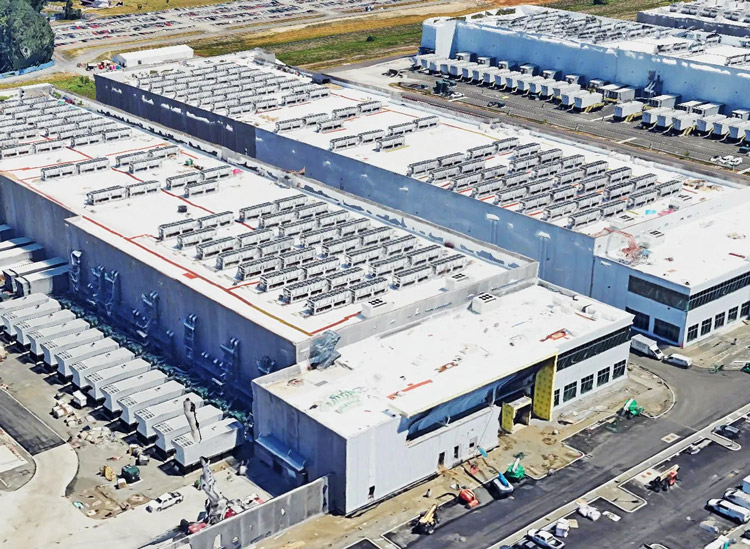
Huge amounts of capital are being invested in AI infrastructure and the massive data centers that suck up large amounts of power — helping boost your utility bills — in hopes of reaping a profit bonanza and reinvigorating their crisis-ridden capitalist system.
The so-called Magnificent Seven tech companies — Google parent Alphabet, Amazon, Apple, Meta, Microsoft, Nvidia and Tesla — are expected to spend more than $300 billion on AI in 2025 alone, reports Reuters, with this climbing to $500 billion in 2026. However, with all the big bucks pouring into this speculative orgy, even its participants admit it might all just go bust. Even if that’s how it turns out, Mark Zuckerberg, the CEO of Meta who is worth some $227 billion today, told the Financial Times you’ve still got to get in the game. “If we end up misspending a couple of hundred billion dollars, I think that is going to be very unfortunate.” But if you don’t try, you’ll never come out on top.
The only other problem is the profit-driven run after building data centers means the capital to build affordable housing for working people has virtually disappeared.