

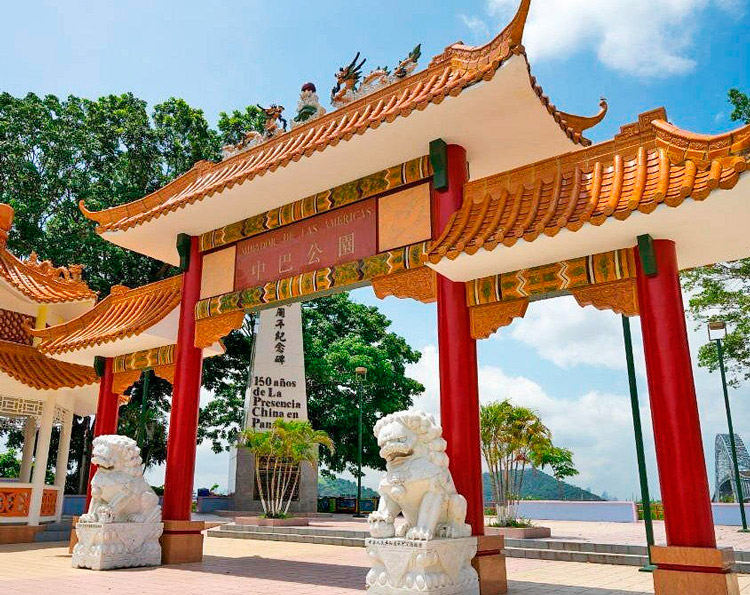
At night on Dec. 27, the mayor of Arraiján, an upscale suburb of Panama City, sent bulldozers to demolish a monument built in 2004 to pay tribute to the thousands of Chinese laborers who died building the first railroad crossing the Isthmus of Panama, as well as the Panama Canal.
The Chinese ambassador to Panama and members of the Chinese community were notified of the destruction by people who saw it driving by, and they rushed to the scene. But the destruction had been accomplished. By the next morning tons of debris had been carted off and all that remained was an ugly concrete slab.
Less than a year ago I visited the now-destroyed monument. Its large, colorful arch and somber obelisk were a dramatic and moving commemoration of the contribution of Chinese labor to the development of Panama and the expansion of international commerce. Perched on a hilltop overlooking the Pacific entrance to the canal, it offered spectacular views of the ocean and countryside, and of Panama City on the other side of the waterway.
The mayor, Stefany Peñalba, said it was done because the memorial had posed a “structural risk” and they had to “protect tourists.” When she raised the idea of “replacing” the monument with a park some months before, the Chinese Association of Panama offered instead to organize and finance any needed repairs to preserve the structures. Their offer was ignored.
The overnight destruction of a monument honoring the contribution of the Chinese was denounced not just by Chinese groups, but by community organizations all around Panama, cultural and civil liberties organizations, and even the president of Panama. “For us as Panamanians of Chinese descent, it’s painful. For all Panamanians, it’s painful,” Tony Jiang, the president of the Fayen Beneficial Society, said.
The destruction took place as the fight between the rulers in Washington and Beijing over control of the canal is escalating.
The Chinese presence in Panama, the largest in Central America, dates back 171 years. In 1854 the Panama Railroad Company, based in New York, brought in 700 Chinese men to labor building a railroad across the 50-mile isthmus. Thousands more Chinese contract workers were imported to work on an unsuccessful French effort to build a canal in the 1880s and on the U.S.-run canal construction between 1904 and 1914. The Chinese worked alongside a larger number of West Indian contract workers, the descendants of African slaves.
The Panama Canal was the deadliest construction project in modern history. Working conditions were brutal in every way. Nearly 30,000 laborers died — from disease, dynamite explosions and other “accidents,” hunger and suicide. Several thousand were Chinese.
The Chinese who survived often intermarried with the black Panamanians alongside whom they worked and lived. Their offspring were joined by other Chinese immigrants in the 20th century. Today 300,000 Panamanians, roughly 7% of the population of Panama, are of Chinese ancestry.