FORT WORTH, Texas — On Jan. 21, the Dallas County Commissioners Court voted unanimously to exonerate Tommy Lee Walker. Walker, a 19-year-old Black man, was convicted by an all-white jury of the rape and murder of Venice Parker, a 31-year-old white woman store clerk he had never seen or met, 72 years ago.
A video taken at the trial shows Walker, who vigorously protested his frame-up, saying, “I feel that I have been tricked out of my life.” He was strapped into an electric chair two years later and executed in May 1956.
The exoneration grew out of an investigation by journalist Mary Mapes, who published her conclusions in a 2016 article. It showed that Walker was nowhere near the site of the crime, but was with his girlfriend who went into labor.
Three miles across town Parker got off work and went to a bus stop to go home. She was beaten, raped and her throat was cut. Racist police claimed she told them the attacker was “a Negro,” but several witnesses there said her injuries prevented her from speaking.
Forced confession was only evidence
The police department and prosecutor’s office were notoriously racist. Homicide Bureau Chief Will Fritz was a known member of the Ku Klux Klan. Fritz spent hours browbeating Walker in the city jail without an attorney present, insisting the cops had the goods on him and he’d be executed if he didn’t confess. Out of fear he did so, but immediately retracted it. That so-called confession was the only evidence presented against him in court, besides the fact he was Black.
The defense put 10 eyewitnesses on the stand who testified Walker was with his girlfriend. The last thing Walker said before he was executed was that he wasn’t guilty.
The prosecutor was Henry Wade, a notorious racist who had 35 of his convictions overturned by exoneration. He wrote a memo instructing all the prosecutors to strike from juries, “Jews, Negroes, Dagos, Mexicans or a member of any minority race.”
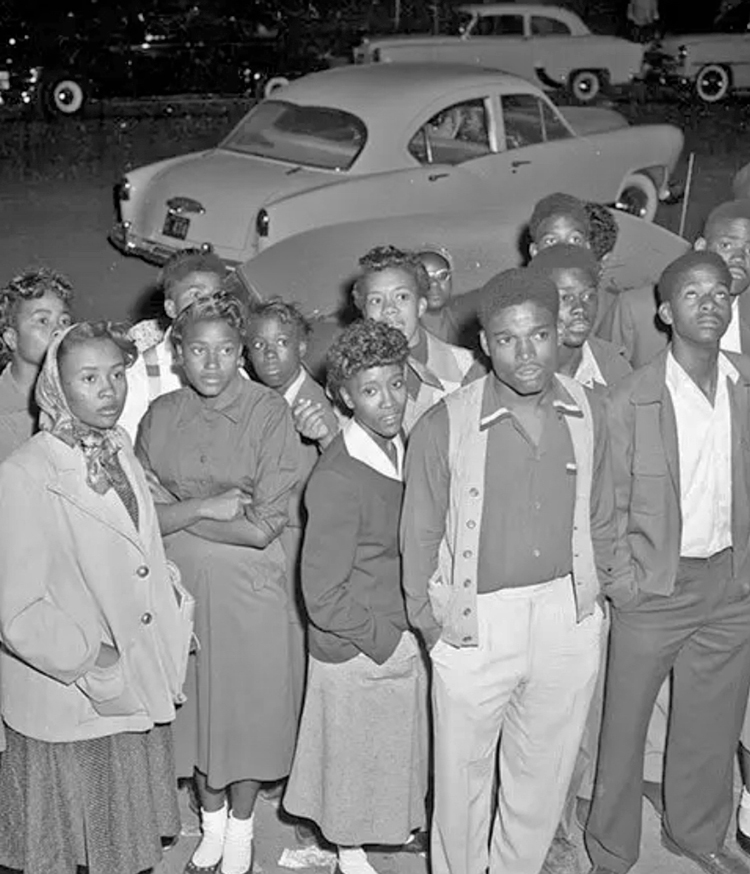
The Dallas Express, the Black community newspaper at the time, printed pictures of thousands of Black residents who came to stand outside the courtroom to bear witness every day of the trial. The paper printed each name of the 5,000 people who came to Walker’s funeral.
The mighty proletarian battles that overthrew Jim Crow segregation in the South, the Southwest and across the country transformed social relations in the U.S.
When the Dallas County Commissioners voted to exonerate there were a number of people present, including Walker’s son, Edward Smith, now 72, other members of Walker’s family, and Joseph Parker, the son of Venice Parker.
Smith and Parker embraced and they stood together arm-in-arm, celebrating a little piece of justice.