The victorious Montgomery, Alabama, bus boycott in 1956 marked a new stage in the mighty battle against Jim Crow and brought it to national attention. It demonstrated the unwavering courage of the Black population and the resourcefulness of a working-class political leadership that advanced the struggle against brutal retaliation and won the admiration and support of millions across the U.S.
The civil rights movement didn’t come out of nowhere. Its roots lay in the labor battles that forged industrial unions in the 1930s, many led by Black workers; in fights by Black workers and youth against the color bar in wartime industries; and the battle against segregation in the U.S. armed forces. After the war, mighty battles for colonial independence and national liberation swept Africa, Asia and the Americas laying the groundwork for a veritable social war to break out across the South.
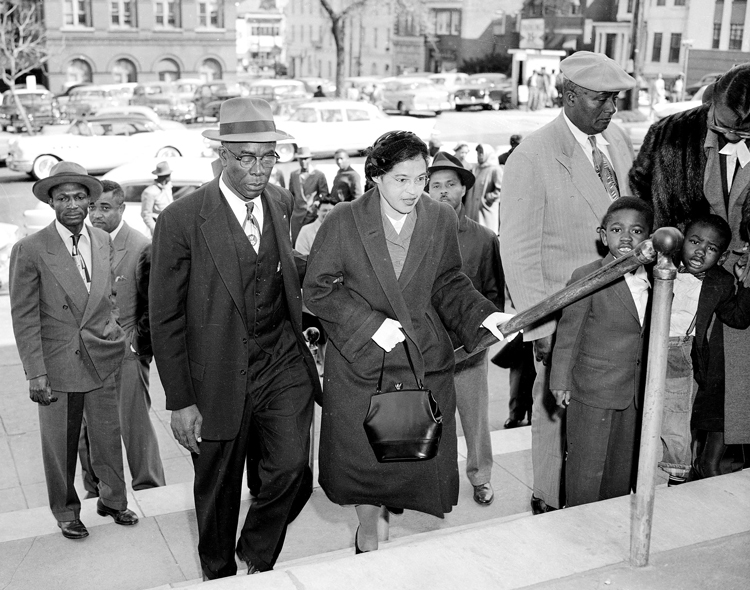
The Montgomery bus boycott was prepared years beforehand by the painstaking work of E.D. Nixon, a Pullman porter and experienced trade unionist. He had founded the Montgomery division of the Brotherhood of Sleeping Car Porters union in 1938. During the Second World War Nixon organized a march of 750 African Americans to the Montgomery County Courthouse to demand to register to vote. After the war he led the fight for the right to vote and became president of the NAACP branch there.
As civil rights battles began to spread by 1955, Nixon looked for a way to challenge the city’s segregated bus system, the main way most Blacks got to work. He considered launching a fight to end it. After 15-year-old Claudette Colvin was arrested for refusing to give her seat to a white man, he considered making her case the basis for the fight. But Nixon decided Claudette was too young.
Seamstress Rosa Parks had been Nixon’s secretary as president of the NAACP. “She’s reliable, nobody had nothing on her, she had the courage of her convictions,” Nixon said. Parks was arrested on Dec. 1, 1955, for refusing to give up her seat, and the fight was on.
Nixon got Parks a lawyer and put up bail for her release. He convinced her they could fight and win. He began reaching out to organize a one-day boycott of the bus system to launch the fight. Parks took Nixon’s proposals to her mother and husband and won them over.
Flyers announcing the boycott were distributed all across the Black community. Nixon got a journalist on the Montgomery Advertiser to write a front-page article. He convinced Black ministers to join him in organizing the action, including some who were skeptical. On the evening of Dec. 5, after the day-long boycott of the buses, they held a mass meeting to discuss what had been accomplished and what would come next. Hours beforehand they had formed the Montgomery Improvement Association and convinced Martin Luther King Jr. to serve as chairman.
As many as 5,000 attended the overflow event. A resolution to continue and strengthen the boycott until victory was met with shouts of joy. Three demands were adopted — the complete desegregation of the city’s buses, more courteous treatment of Black bus riders and the hiring of African American drivers.
For the next year 42,000 African Americans boycotted the city’s buses in the face of racist intimidation, arrests and night-riding terror. The day after the boycott started, cops began arresting Black cab drivers the movement had mobilized to get people to and from work.
Fight wins working-class solidarity
Decisive to the boycott’s success was establishing a centralized carpool so no one lost their jobs. By February 1956, 28 of the carpool’s drivers had been arrested for the unique crime of “conspiracy to destroy the bus company.” Each vowed they’d get arrested again and again if necessary. Many were veterans of the Korean War, who were used to standing up to pressure. Some Blacks waiting to get picked up to go to work were arrested for “loitering.”
The homes of Nixon and King were firebombed overnight on Jan. 30 and Feb. 1. No one was killed.
The fight for nationwide union solidarity was instrumental to the success of the boycott, providing cars donated to keep the carpool running.
Farrell Dobbs, the Socialist Workers Party national secretary and its presidential candidate that year, delivered the first station wagon to Montgomery and then toured the country to win unions and others to contribute more cars. “Not one single Negro should be compelled to walk because of lack of money for the carpool,” Dobbs wrote in a statement published on the front page of the March 19, 1956, Militant. Dobbs also called on unions to raise the $3,000-a-week needed for gas, tires and repairs, and the Militant reported on contributions from union locals around the country.
All told $415,000 was raised in the course of the boycott, according to Nixon, the Montgomery Improvement Association treasurer.
Dobbs spent five days in Montgomery reporting on the trials of MIA leaders for the Militant. He got to know Nixon, who impressed him as a fellow unionist and savvy fighter. He described how defendants used the trial to further expose segregation and reaffirm their determination to end it.
“I have seen nothing like the rank and file outpouring of grievances here since my days in the rising union movement of the Thirties,” Dobbs wrote in the April 2, 1956, Militant.
A victory and big step forward
Mass meetings continued regularly to debate the next steps forward, to denounce the indignities of Jim Crow and to answer claims by the press that the boycott was the work of “outsiders.” Friendly competition grew between rival groups of women over who could make and sell the most food to raise money for the carpool.
Through the Militant and other groups spreading the truth about the fight in Montgomery, workers everywhere learned more about the stakes in the battle against Jim Crow and the powerful fight to end it.
On Nov. 13, 1956, the U.S. Supreme Court upheld a lower court ruling striking down Alabama’s bus segregation laws. When that ruling went into effect, the Montgomery Improvement Association called a mass meeting and voted to end the boycott.
In the weeks afterward, four Black churches in the area were firebombed and African Americans were shot at as they rode on desegregated buses. Seven members of the Ku Klux Klan were arrested for these assaults, but no one was ever convicted.
The fight to break the back of Jim Crow continued, spreading rapidly to school desegregation efforts across the South, Woolworth sit-ins and the Freedom Rides. The movement became unstoppable. How the fighters in Montgomery were led to victory needs to be more widely known.
When the organizers of a meeting to celebrate the 10th anniversary of the boycott victory in Montgomery didn’t invite Nixon to participate, the Militant Labor Forum in New York organized a dinner and program to honor him and his wife, Arlette. SWP leaders Dobbs, Fred Halstead and Clifton DeBerry joined Nixon in speaking.
Nixon thanked the party and told the meeting, “The Negro in the South will not be sold for a quarter anymore. His eyes are wide open.”