Washington adds new bans on trade and travel to Cuba
The Office of Foreign Assets Control imposed expanded sanctions against Cuba that took effect Sept. 30, tightening Washington’s squeeze on the Cuban people and its drive to overturn the country’s socialist revolution. Foreign financial institutions were warned that they face increased risk of sanctions for transactions involving Cuba, with “previously permissible activities” now restricted. And new curbs on travel to Cuba were imposed.
Both direct and indirect financial transactions will come under even closer U.S. scrutiny. Indirect transfers occur when someone serves as an intermediary to send funds between a sanctioned entity in Cuba and another person. Restricted entities include anyone with a relationship to the Cuban military, intelligence, security services or people who work for them.
The new measures prohibit U.S. banking institutions from processing “U-turn” transactions, which occur outside the U.S., but involve a U.S. bank. The measure ends a primary international banking channel relied on by Cuba.
Under the new measures, U.S. banks are no longer allowed to open and maintain bank accounts for Cuban nationals who are independent private sector entrepreneurs unless they have a special license issued by the Office of Foreign Assets Control.
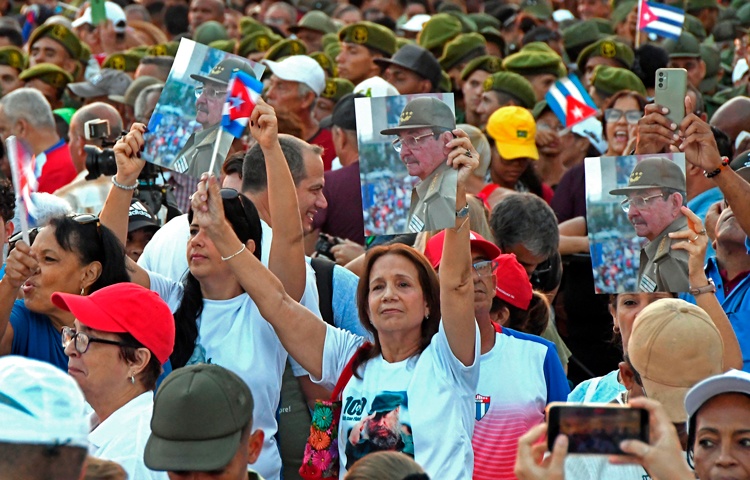
Washington claims its goal is to strengthen the private sector in Cuba. But “those actions against the Cuban private sector clearly demonstrate that their sole intention is to inflict maximum suffering on our people,” Cuban President Miguel Díaz-Canel told the media.
The new measures come on top of the punishing U.S. oil blockade implemented earlier this year and a raft of other measures aimed at isolating Cuba from world trade and international banking.
State Department spokesman Thomas Pigott tried to justify the latest restrictions Sept. 30 by repeating the baseless charge that Cuba is a threat to U.S. “national security.”
In 2014 France’s largest bank, BNP Paribas, was slapped with a $9 billion penalty and forced to plead guilty to ignoring U.S. sanctions laws by clearing U.S. dollar payments to Cuba and other sanctioned nations. Then Attorney General Eric Holder threatened, “Banks thinking about conducting business in violation of U.S. sanctions should think twice because the Justice Department will not look the other way.”
New constraints on travel to Cuba
Travel is now restricted to 12 categories and certain stated conditions. Travelers are advised to be sure their activities meet all U.S. regulations in advance or apply for a specific license from the Office of Foreign Assets Control.
Group people-to-people travel and tourist activities are now eliminated. Attending or organizing professional meetings or conferences is banned.
Traveling to Cuba to conduct professional research must be closely related to the traveler’s profession, background and expertise. Authorized educational activities with an accredited academic institution is permitted, as is travel to engage in religious activities.
Full-time and freelance journalists are authorized to travel if it’s directly related to journalistic activity in Cuba, but their schedule of activities “must not include free time or recreation in excess of that consistent with a full-time work schedule,” says the Office of Foreign Assets Control.
All forms of licensed travel must not involve lodging, paying for lodging, or making any reservation for a third party to stay at any property owned or controlled by the Cuban government or any of its officials, a Cuban Communist Party member or a close relative. Travelers should be fully aware of the Cuba prohibited accommodations list before leaving. And keep careful records of all expenses for years.
Food, medicine, medical devices as well as replacement parts, components and software updates for medical devices still can be sent to Cuba.
Bob Schwartz, executive director of Global Health Partners, told the Militant they so far have not experienced any negative impact from the new restrictions. Global Health Partners provide much-needed medicine and medical equipment to Cuban medical facilities. They were able to ship a 40-foot container of medical supplies to Cuba at the end of August and are planning to ship another this month.
To donate money to get medical supplies to Cuba, go to https://ghpartners.org/cuba-2026.