One of the central aims of the U.S. capitalist rulers’ escalating attacks on Cuba is to cripple its popular healthcare system, and they’re doing everything in their power to do so. In response, the Cuban government and people are organizing to preserve this gain by turning Cuba’s entire national health system into a space for teaching. Some 10,000 new medical students began courses Sept. 1, determined to continue a crowning achievement of the socialist revolution — every person’s right to healthcare offered with human solidarity.
Unable to open classrooms under normal conditions due to prolonged blackouts and lack of public transportation — a result of Washington’s brutal oil blockade of Cuba — “the university will go beyond its walls” to train future health workers, Tania Ponce, head of the teaching department at the Enrique Barnet University Polyclinic, said in Santa Isabel de las Lajas, Cienfuegos province, Sept. 28.
Instead of traveling to one of the 33 medical schools and faculties located in provincial capitals, students will attend intensive seminars once a week near where they live, and learn directly from doctors and instructors in hospitals and clinics in the same area.
First-year students will learn in the 450 neighborhood polyclinics that dot the country. Those in the final stage of their studies, in addition to their hospital residency, will also provide care in area senior centers and maternity homes.
“Today we become part of a common project to train upright professionals capable of upholding the most wonderful health system our people have known,” said Daniel Alejandro, president of the Federation of University Students (FEU) at the Medical Science University of Havana, at a public event launching the initiative.
José Ángel Portal Miranda, Cuba’s minister of health, gave special recognition to a group of 34 medical and nursing students who had volunteered at the Pediatric Teaching Hospital in Centro Habana during their vacation.
“The experience is quite intense because of the difficulties our country is confronting with shortages of medicines and other necessities,” said Haila Izaqui Marroquí, a fourth-year medical student.
Impact of U.S. blockade
The oil blockade and sanctions systematically imposed by the Donald Trump administration over the last year have sharply increased the human cost the Cuban people are paying for the U.S. rulers decades-old moves to overthrow the Cuban Revolution.
In January, the Trump administration threatened tariffs against any country that supplies oil to Cuba. With the exception of one Russian oil tanker Washington permitted to reach Cuba in March, there have been no fuel deliveries to the Cuban government.
Every medical service — from surgeries to blood bank supplies, ambulance access, child vaccinations, cancer treatment and even having a skilled attendant present for childbirth — is affected by Washington’s brutal measures.
Cuba’s historic infant mortality rate of 4.8 per 1,000 live births — levels that match those of developed countries — has now doubled. “This means the deaths of children that could have been avoided, and that we know how to avoid,” said Cuban President Miguel Díaz-Canel in August.
Challenges faced by Cuban medical professionals include an acute shortage of medications, caused by Cuba’s inability to purchase raw materials for its pharmaceutical industry. State-run pharmacies where medications are sold at subsidized prices have not been able to stock medications for some time. Cubans have been forced to turn to medicines imported and sold by private individuals at exorbitant prices via internet apps, with no government oversight.
After widespread discussion in Cuba, the government recently adopted a series of measures aiming to mitigate the blockade’s impact on the population. Among them, private pharmacies are now authorized with some regulations.
Amid the collapse of domestic production of medicines, donations by international solidarity groups have become a lifeline for hospitals and patients. Some of these medications are distributed by community youth networks led by the Union of Young Communists (UJC) and university and high school student federations. They organize to visit elderly residents living alone, pregnant women and families with special needs, to help them with the many challenges they confront.
Healthcare born with the revolution
Cuba’s medical system, at no cost to individuals and their families, is a conquest of its socialist revolution. Healthcare is not a commodity bought and sold for profit. It is a right whose goal is to save lives, and medical students are taught those values.
Immediately after the Jan. 1, 1959, overthrow of the U.S.-backed dictatorship of Fulgencio Batista, led by Fidel Castro and the July 26 Movement, half of the 6,000 doctors practicing in Cuba left the country, lured by tempting job offers by the U.S. government. This was just one of the moves by the U.S. rulers designed to cause pain and suffering to the Cuban people.
The Cuban leadership, however, pressed forward to fulfill the right of every person to healthcare, a right the Cuban people have long fought to extend to sister peoples in other countries.
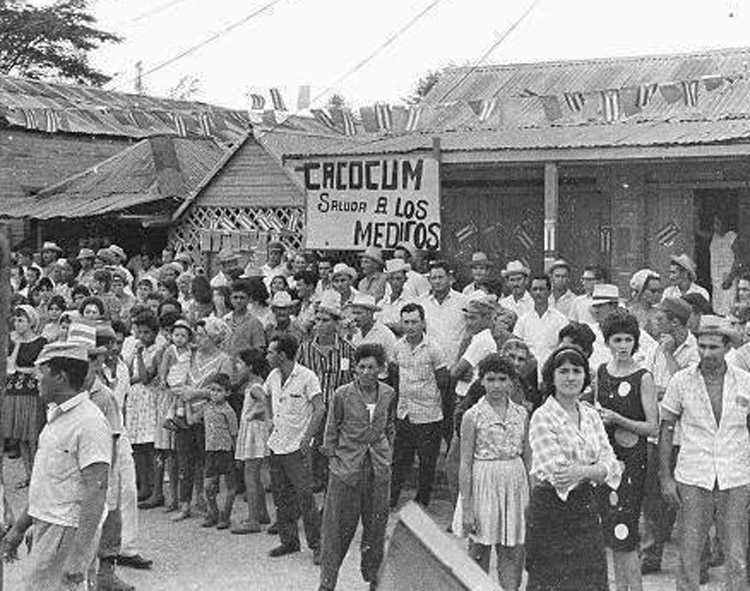
In 1965, Cuba graduated 400 doctors and 26 dentists, the first generation of health professionals trained under the new government. Imbued with revolutionary spirit, the students decided to hold their graduation ceremony on the summit of Pico Turquino, the highest mountain in Cuba. This is in the heart of the Sierra Maestra, the stronghold of the revolutionary struggle against Batista.
Castro, who backed the students’ proposal, did the five-day march to the Turquino top with them, accompanied by peasants from the area who helped the new doctors and dentists make the climb. Castro liked it because he believed “climbing mountains forges men and women,” Oscar Díaz Díaz, one of the graduates, said in a 2025 interview.
The group was “the first to give up the private practice of the profession that existed before the revolution,” said Díaz. “We went up the Turquino convinced we would reach the top, and looking forward to making these conquests widely available inside and outside of Cuba.”