
The U.S. government’s denial of visas for Cuban athletes leading to the 2028 Summer Olympics and Paralympic Games in Los Angeles is being challenged by the Let Cuba Play! campaign.
As part of its economic and political war against Cuba, Washington has denied visas to nearly 100 Cuban athletes, coaches and officials since early 2025. This includes blocking their participation in qualifying matches, not inviting them to the World Baseball Classic this March and banning Cuban Olympic Committee officials from attending regional meetings in Miami and Puerto Rico.
The Cuban men’s basketball team was prevented from competing in the International Basketball Association AmeriCup Olympic qualifier in Puerto Rico last February. “Cuba does not ask for privileges,” the Cuban Baseball and Softball Federation said. Its athletes “will not bow to political exclusions.”
“We know there are many people throughout the world that support solidarity among its peoples,” José Luis Bos Rodríguez, a former Cuban baseball player, coach, and former manager of the Cazadores de Artemisa team, told the Militant by phone from Cuba Dec. 25.
“Cuban athletes and ballplayers face unjust discrimination,” he said. “It’s well known that the governments have differences, but the people are not responsible for them. We say let them play, whether it’s for the Olympic Games or the World Baseball Classic.”
Let Cuba Play! encourages anyone who supports the right of Cuban athletes to compete to get out the word about the campaign. Join in urging the International Olympic Committee to push back against all efforts to close the games to any of the world’s athletes. Information on getting involved can be found at www.letcubaplay.com.
Why the ban on Cuba?
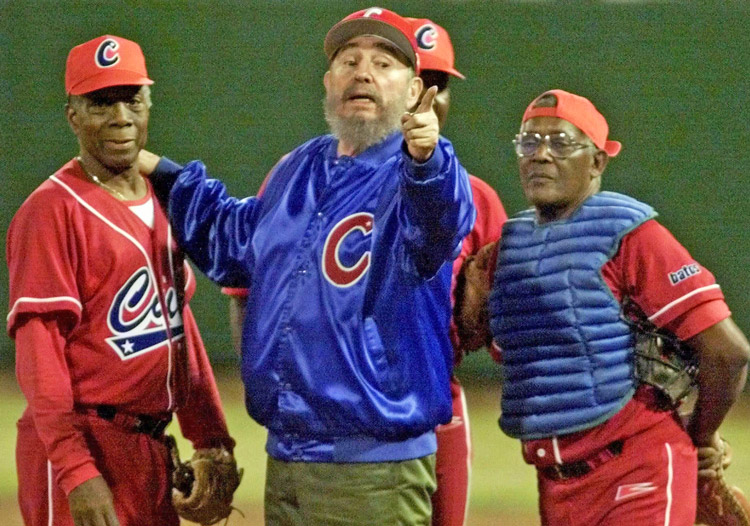
The U.S. imperialists “are afraid of our victories and intend to convert a sports event into a battlefield against our revolution,” President Fidel Castro told Cuban athletes leaving for the Central American and Caribbean Games in Jamaica in 1961. “They will try to create for it and our athletes the greatest difficulties.”
After the overthrow of the dictatorship of Fulgencio Batista in 1959, Castro, and the revolutionary government he led, organized workers and peasants to overturn capitalist rule. Athletics, which prior to the revolution had been controlled by the wealthy for profits, was transformed. Access to playing sports was opened to all, a move joyfully welcomed by working people of all ages.
Physical education became part of the school curriculum and tens of thousands of teachers were trained. Sports facilities were built throughout the country.
Unlike in the U.S. and other capitalist nations, Cuban sports are not profit-driven. Athletes are not paid huge salaries or enriched by corporate endorsements. Cubans can attend a game or tournament for free or at a tiny cost.
Cuba has opened its doors to training athletes from other countries and sent thousands of coaches and trainers to dozens of underdeveloped countries.
Join in the campaign!
Tom Headley in Washington, D.C., contributed to this article.