“No economy in the world, not even the most developed one, could have resisted what this small island has been able to resist,” Ariadna Cornelio Hitchman, head of legal affairs for U.S. relations in Cuba’s foreign ministry, said on television May 5.
The U.S. government deliberately “causes the situation that Cuba is facing” with a blockade on oil delivery and other sanctions, “so they can then blame the Cuban government,” she said, refuting claims made by White House officials that Cuba is a “failed state.”
“It’s a false argument,” she said.
The cumulative impact of the decadeslong U.S. trade and financial restrictions on Cuba, including the oil blockade imposed in January, has a devastating effect on all aspects of life for millions of Cubans and on the country’s industrial and agricultural production.
“If we are a failed state, let us fail on our own, and lift the blockade,” is a widespread sentiment expressed by working people in Cuba who defend the country’s sovereign right to decide their own social and political system.
There are some in Cuba who look to Washington’s efforts to bring capitalist relations back to the island as a road to relieve the crisis. The big majority understand that there is no future for working people in Cuba without fighting along a course of working-class solidarity against the U.S. rulers’ attempts to reimpose its domination and plunder of the country.
This attitude was captured when a boatload of humanitarian aid from Mexico arrived May 18. Niurvis Fabre, a 52-year-old teacher, told the Associated Press she celebrated its arrival. She doesn’t expect to receive any of it, given her younger age, but said she is content “as long as the aid goes to the people who really need it.”
The sugar industry is one of the pillars of Cuba’s economy that has been severely battered by Washington’s suffocating measures in recent years. Workers have been engaged in a titanic effort to stop the decline of the country’s sugar production, which has registered the lowest production levels in decades.
State companies are unable to purchase the fuel, steel, fertilizers, herbicides, spare parts and other materials needed. The effect has rippled throughout the country, especially hitting the lives of people in communities reliant on local sugar mills.
Due to the lack of fuel, the Melanio Hernández sugar mill, in Sancti Spiritus province, shut down its boilers in March after processing only just over 40% of the projected harvest for this year. The Melanio was one of the few — and most efficient — sugar mills still operating on the island.
Sugar workers not sitting idly by
As the mills are forced to close, sugar workers are not sitting idly by to “see what happens.” They are seeking ways to find useful alternatives they can work on.
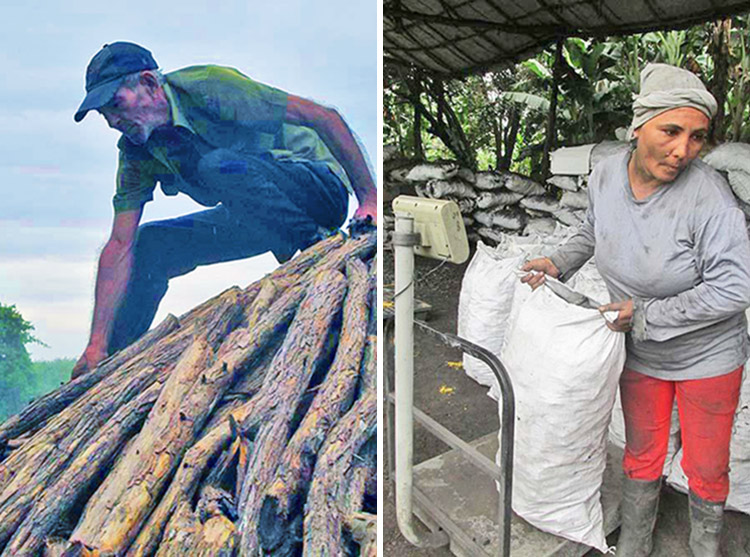
Thousands in mills and on sugar-growing farms where production had to be cut back have been temporarily redeployed to food, tobacco and charcoal production, without giving up on restarting sugar production when conditions allow.
Azcuba, Cuba’s state sugar monopoly, along with the National Union of Sugar Workers, the Association of Sugar Technicians of Cuba and other organizations are working together to find alternatives for the affected workers. Their goal is that workers remain employed and producing to help counter Washington’s stranglehold.
“We have thrown ourselves into charcoal production,” Reidel López Santana, Azcuba’s director in Ciego de Ávila province, told the Cuban daily Granma March 21. In recent years, charcoal exports to countries in Europe have become a growing source of foreign revenue for Cuba. The charcoal is made from marabú, an invasive shrub that has spread over large areas of uncultivated lands.
While not a solution to the consequences of Washington’s blockade, this charcoal production is helping bring in hard currency, provide employment and clear agricultural land for use.
Before the latest escalation of sanctions, workers in sugar mills were already organizing brigades to farm and process food for the mills’ employees and their families to combat chronic shortages and reduce reliance on imports, and now are stepping up their efforts.
With the shutdown, workers at the Ciro Redondo sugar mill in Ciego de Ávila province “have found an original alternative,” said Granma. “They are applying their skills to the restoration of recreational areas for the community,” said López Santana. They are using their workshops to fix domestic appliances for the community.