
President Donald Trump announced Oct. 9 an agreement he had reached with Russian President Vladimir Putin for Moscow to immediately supply 2.25 million barrels of diesel to U.S. and global markets. Washington’s surprise announcement aims to bring down energy prices, which have skyrocketed since its war on Iran began, affecting costs in the U.S., from farming to trucking to ordinary life. The administration also fears persistently high prices will weaken support for Republican candidates in November’s midterm elections.
As criticism of the diesel deal mounted, Trump announced that Moscow and Kyiv had agreed to an energy ceasefire “effective immediately.”
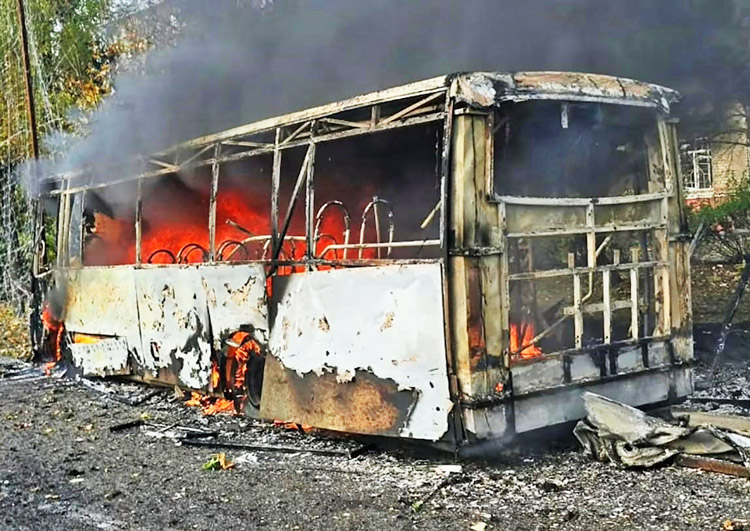
After the announcement, Moscow launched further airstrikes overnight, including attacks on Ukrainian energy facilities. “This is Putin’s answer to Trump,” Ukrainian President Volodymyr Zelensky said.
Ukraine should “get a new leader who can make a deal,” Trump declared with imperial arrogance, in response to Zelensky’s criticism of the diesel arrangement.
Trump turned reality on its head, claiming that Zelensky was to blame for failing to end the war, despite the fact that there is no letup in Moscow’s bombardment, with the Putin regime acting on its belief it can use its greater resources to grind Ukraine into submission.
Trump also alleged Kyiv’s strikes on Russian oil refineries — a necessary part of its war of defense — were to blame for soaring diesel prices in the U.S. In fact, the price spike is mainly a consequence of the choking off of global crude oil shipments through the Strait of Hormuz this year and attacks on refineries in the area.
Zelensky reiterated that he was open to stopping airstrikes against Russian refineries if Moscow stops bombing Ukraine’s energy grid. But Kyiv has rejected Washington’s pressure to unilaterally cease its own strikes.
Behind Trump’s attempts at a deal to end the Russia-Ukraine war is the U.S. rulers’ longstanding efforts to draw the Putin regime closer to Washington and away from Beijing, as their rivalry with the Chinese rulers intensifies. But Moscow has repeatedly rebuffed ceasefire proposals, insisting it must conquer Ukraine despite being unable to do so over almost five years of war.
Trump faced calls from both Republicans and Democrats to reverse the diesel deal, which they complain undercuts the impact of the sanctions the U.S. and other imperialist powers have imposed against Russia. These hurt the working people there the hardest.
Trump, like every president, acts for the imperialist interests of the U.S. rulers in the face of today’s deepening conflicts against their rivals over trade, resources and influence. Washington cares nothing about working people in Ukraine, nor their courageous defense of the country’s national sovereignty, let alone the interests of workers and farmers in the U.S. who face increasing assaults on living standards, jobs and rights.
As Trump administration officials pushed Kyiv to halt its strikes on Russian oil refineries and pressed European powers to lean on Ukraine to give in to U.S. demands, Washington is threatening to cut off intelligence sharing with Ukraine. It also threatens to end Ukraine’s access to U.S. weapons, such as the Patriot missile defense system. Kyiv relies on both to intercept Moscow’s deadly ballistic missile strikes.