

Hamas is purchasing and storing advanced weapons abroad for use in future pogroms against Jews. It has no intention of accepting the U.S.-imposed “peace” deal, ceding its armed control over Gaza. And it has not backed off its goal of destroying Israel and eliminating the Jews living there.
After the U.N. Security Council passed a resolution Nov. 17 backing President Donald Trump’s so-called peace plan, Hamas responded, reiterating that resisting Israel’s “occupation by all means is a legitimate right.” That’s its justification for its Oct. 7, 2023, pogrom that killed 1,200 Jews and others in Israel and an announcement it will do so again. The Chinese and Russian governments abstained on the resolution.
The Israel Defense Forces reports Hamas operatives have been violating the ceasefire almost every day by crossing the “yellow line” into the 53% of Gaza that is under Israeli-control.
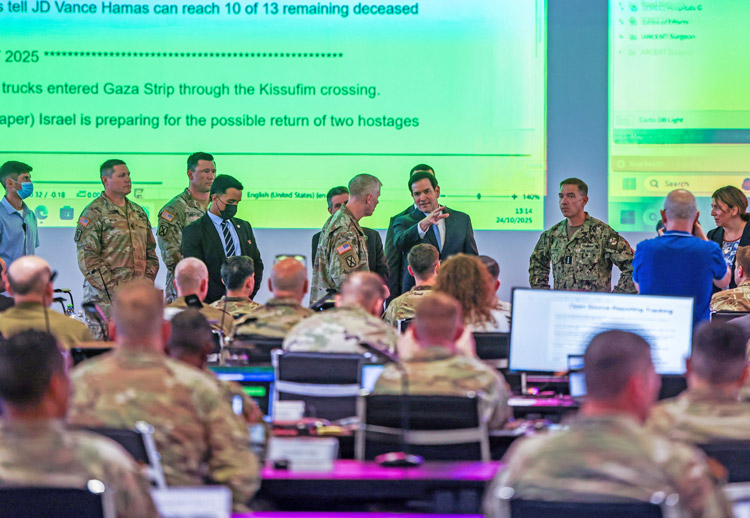
U.S. officials are shuttling between Jerusalem, Doha, Ankara and Cairo, seeking to keep the ceasefire in place by pressing Israel to hold off destroying Hamas. Their plan includes a “transitional government” and an “International Stabilization Force” made up of foreign troops to police Gaza.
Washington claims to be trying to “balance” the needs of all parties. But the U.S. rulers are only interested in one party — the U.S. capitalist class, its plunder of the region and its need for alliances with governments in the region, including Tehran.
Hamas — backed by the reactionary Iranian regime — says it opposes any international force. Hamas official Osama Hamdan says the group never agreed to disarmament. No Arab government is going to send in its troops to do battle with the Jew-hating group.
Israel Prime Minister Benjamin Netanyahu has made it clear that Gaza “will be demilitarized and Hamas will be dismantled, either the easy way or the hard way,” whatever the “plans” of the White House.
Meanwhile, Hamas is taking advantage of the tenuous truce to reassert its control, collect taxes, levy fees on imported fuel and cigarettes and fine merchants it claims are overcharging customers.
Hamas keeps brutalizing Gazans
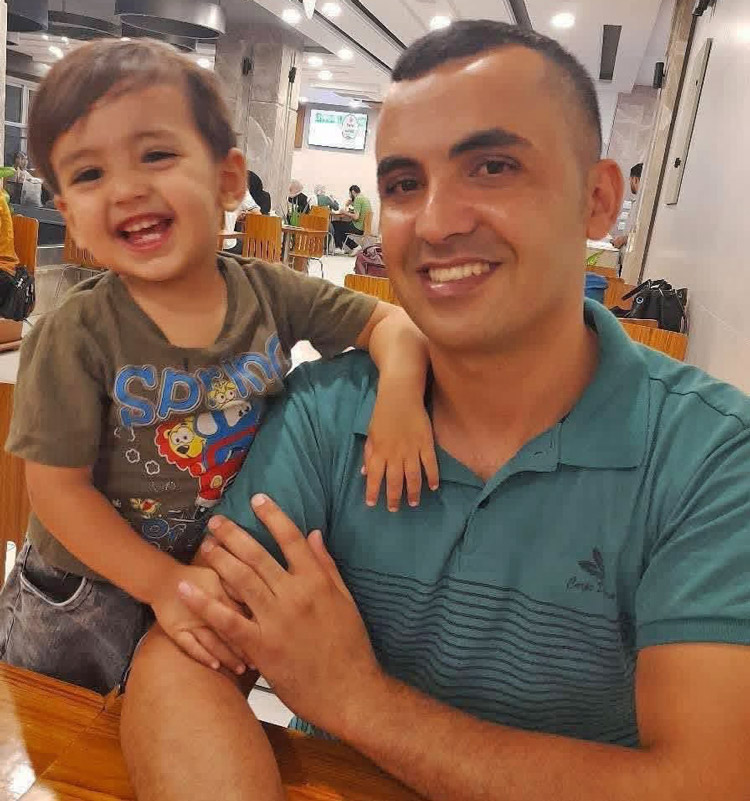
Hamas continues to beat, torture, kill or detain Palestinians to prevent any opposition to its dictatorial rule. Its thugs abducted Mahmoud Moeen Khilla from his workplace in Gaza City and tortured him for eight hours Nov. 12, dumping his lifeless body in front of al-Shifa Hospital. Hamas later said it was an “unfortunate incident” and cynically offered its “sincere condolences” to his family.
On Nov. 17, the Abdul Salam Yaseen Company, which runs water-desalination plants all over Gaza, shut down its operations after Hamas thugs detained operation director Mohammad Abu Awda at work. Hundreds of thousands of Gazans rely on the plants for clean water.
The company issued a statement condemning the arrest and demanding Abu Awda’s release. Within 24 hours, he was freed and the company resumed operations. But the company issued another statement offering an “explicit apology for any confusion” caused by its earlier comments, saying the arrest was “nothing more than a misunderstanding” and pledging its “full respect to the relevant authorities” — Hamas.
‘Most people in Gaza oppose Hamas’
“It’s a mistake to treat all of Gaza like it’s Hamas and Hamas like it is all of Gaza,” said lawyer Moumen al-Natour during an Oct. 23 interview on the Live From the Table podcast. Natour was a central organizer of protests for democratic rights in Gaza in 2019 and earlier this year organized marches there of thousands demanding “Hamas, Out! Out!”
He was asked if videos from the Oct. 7 pogrom showing crowds of Gazans cheering Hamas as it paraded Israeli hostages through the streets reflected the views of most Gazans. “How many people did you see in those videos,” al-Natour asked. “Hundreds? There are 2 million people in Gaza.”
When asked about Israel’s war against Hamas, he replied, “War is horrible. But you cannot take Hamas from the scene without a war. No one can degrade its capability without a war.”
“Most people are against Hamas,” he said. “They don’t want a temporary peace. We need a peace that lasts forever with the Israelis.”
Getting the boot of Hamas off the back of the people of Gaza would remove the biggest obstacle to working people there being able to organize in defense of their own class interests and to forge ties with working people in Israel and throughout the region.
Strife, divisions in the West Bank
The West Bank is another battleground in the fight to defend Israel as a refuge for Jews. Unlike Gaza, Israeli settlements dot the territory. Tehran arms Hamas and Islamic Jihad units there in the hope of creating another outpost to use in its war to destroy Israel. About 40% of the territory is under the civil control of the Palestinian Authority and 60% under Israeli control. There have been decades of disputes over land rights, access to water and roads.
In 2023 there were an average of 214 terror attacks per month spearheaded by Hamas and Islamic Jihad on Jewish residents of the West Bank. Israel Defense Forces stepped up its operations against the Jew-hating terror there, and the number of terror attacks has now dropped to 57 a month.
But a small and persistent minority of residents of Israeli settlements attack Palestinian farmers and workers. In October — olive-picking season — the Israel Defense Forces “recorded 86 incidents of ‘nationalist crime’ compared with 25 in the same period last year.”
While some of those attacking Palestinians have been arrested, in many cases Israeli soldiers have looked the other way, including when those attacked are Israeli Jews and others who have volunteered to help farmers complete the harvest. And sometimes Israeli troops prevent the farmers from going to their plots, saying they are “security zones.”
A mosque in Deir Istiya, a Palestinian village in the West Bank was torched and defaced Nov. 12. The day before dozens of Israeli rightists carried out arson attacks on Palestinian factories and farmland between Nablus and Ulkarem. They also attacked IDF soldiers who were trying to stop them.
Netanyahu told a cabinet meeting that Israel “will take very forceful action against the riots against” Palestinians and IDF soldiers “because we are a nation of laws.”
The situation in the West Bank cannot be definitively addressed until Hamas both in Gaza and elsewhere is destroyed. This will open up space for forging ties between Jewish, Arab and other workers and farmers.