Over 3,800 meatpacking workers, members of United Food and Commercial Workers Local 7 at JBS in Greeley, Colorado, voted by almost 99% Feb. 4 to authorize a strike, but a strike deadline has not been set. They are fed up with conditions in the plant that threaten life and limb, a blistering speed on the line and other degradations from management.
JBS is the largest beef and pork meatpacking company in the world. The Greeley plant butchers at least 10,000 cows daily.
“This strike authorization is the direct result of JBS’s unlawful and bad-faith conduct,” Local 7 President Kim Cordova told the press.
What is different about this strike vote is that the majority — between 80% and 90% — of workers in the plant are immigrant workers, including large numbers of Haitians, Beninese, Somalis, Burmese and others. Some have papers, some don’t.
Over 1,000 Haitians are able to work and live in Greeley because the government granted Haitians Temporary Protected Status after a series of disasters on the island, government crises and widespread gang terrorism.
In fact, the strike vote came one day after the government had said it was going to terminate TPS for Haitians. That night U.S. District Court Judge Ana C. Reyes ruled this was illegal, an example of “hostility to nonwhite immigrants,” allowing Haitians with TPS to stay and work in the U.S. The Donald Trump administration is appealing the ruling.
Despite their status and the fact the government is stepping up Immigration and Customs Enforcement raids and deportations across the country, these workers were not cowed or hiding at home in fear. They are determined to fight for a decent living and some respect from the bosses, and they’re willing to take to the picket line if the company refuses to meet their demands.
This is especially true of the Haitian workers. Many of them were ensnared into coming to Greeley to work by false offers of free housing and special treatment. In fact, their housing was in tiny rooms with one bed in a failed motel, where up to 11 workers were put, men and women alike. They were put on a midnight shift, where the line speed was pushed up to 370 cows an hour, 70 more than on the day shift, and sometimes more. Their safety training was conducted in English and Spanish, languages they don’t speak.
Long fight for safety, respect
Last December a number of Haitian workers filed a federal lawsuit against JBS for this discriminatory and abusive treatment. The bosses have faced a number of lawsuits by workers over safety, discrimination and other issues. In 2021 they had to pay $5.5 million for discrimination against Muslim workers who were denied time and a place to pray.
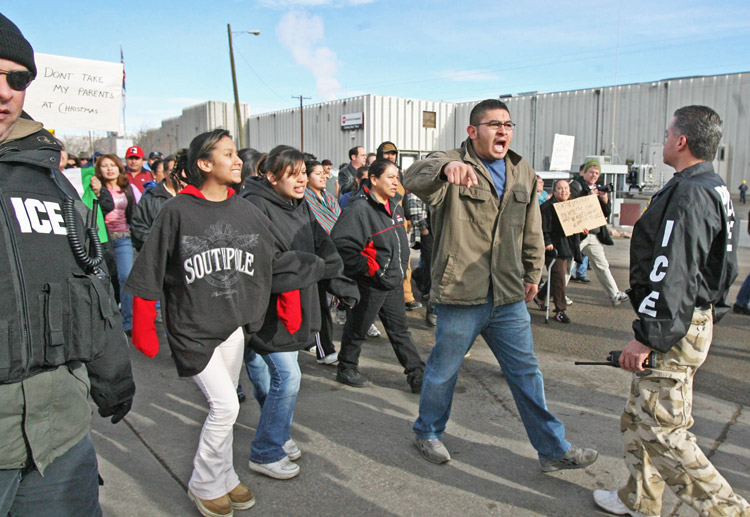
Workers in the plant have also had to confront ICE before, when it was owned by Swift. ICE arrested 273 workers there in a raid in 2006. When they learned about the raid, dozens of workers’ relatives and supporters headed to the plant to protest.
In recent weeks workers “began coordinating short work stoppages on the line,” High Country News reported, “letting beef slide by on the conveyer belt uncut and untrimmed while banging their meat hooks on the sides of the metal work stations.”
The secret ballot vote on a strike authorization was held at the DoubleTree Hotel and took all day. The union organized members and others to translate information on the ballot in Haitian Creole, Spanish, Beninese and a number of other languages spoken by workers. Union representatives assured workers it was a secret ballot, with two choices — STRIKE/HUELGA or NO STRIKE/NO HUELGA.
“We have been bargaining for eight months and JBS has prevented us from reaching a contract,” union member Leticia Avalos told the press. “They continue to increase chain speeds and create dangerous working conditions.
“JBS has left us no alternative but to authorize a strike,” she said, “Enough is enough.”
Union representative Tchelly Moise told High Country News the union has ordered 4,000 strike picket signs.