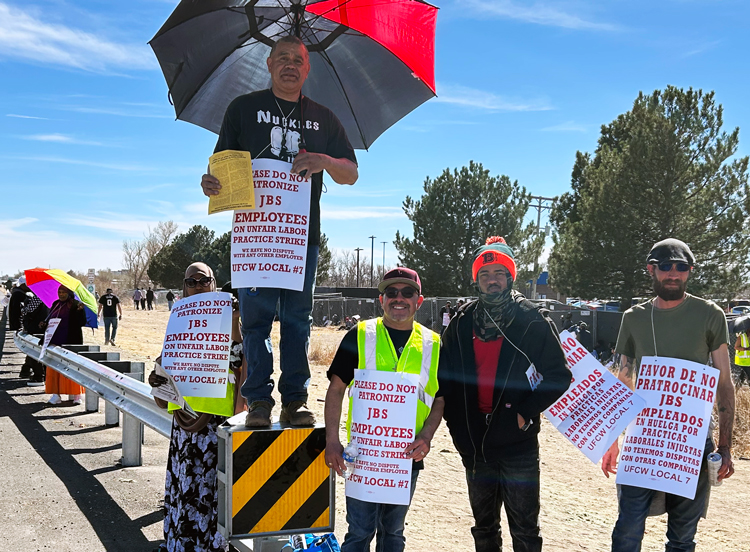
GREELEY, Colo. — Some 3,800 meatpacking workers, members of United Food and Commercial Workers Local 7, went on strike at the big JBS plant here March 16. This is the first walkout at a U.S. beef slaughterhouse since 1985 when workers at Hormel in Austin, Minnesota, struck for over a year. Workers here set up mass pickets all around the plant, winning support from workers driving by.
Workers said the conditions in the plant are terrible. “The company speeds up the chain to make us put out eight hours of meat in seven hours,” a worker named Eisrael Mendez told us. “That way workers only get seven hours pay.”
“It’s not safe in the plant, the conditions are dangerous,” Farah, a worker from Ethiopia with seven years at JBS, told the Militant. “They care for beef, but not the people. They don’t respect us.”
The plant slaughters 5,000 to 6,000 head of cattle a day, 6% to 8% of the entire beef production in the U.S.
This labor battle deserves solidarity from workers everywhere!
Strikers on first shift told the Militant they meet every day at Island Grove Regional Park at 5 a.m., then go together to picket at the plant. “There are two shifts of pickets each day,” Ramon Zuninga, Local 7 secretary treasurer, said.
During the workweek leading up to the strike deadline, bosses in the plant stopped the line to have workers brought to meetings to try and browbeat them from joining the strike, the union reported in flyers. UFCW stewards were barred from participating.
The majority of workers in the plant are immigrants. The union flyers were printed in English, Spanish, French, Haitian Creole, Burmese (for workers from Myanmar) and Somali.
Then many individual workers were called into one-on-one meetings with supervisors, who told them they would be disciplined, possibly fired, if they missed any time by going on strike.
The workers aren’t the only targets of the JBS bosses. “Make no mistake, JBS chose this strike in an effort to lower worker wages nationwide,” Local 7 President Kim Cordova said in a statement to the press when the strike started. “Just as the company has squeezed entire communities of ranchers across the country.”
The company has a long history of exploitation of its workers. The Department of Labor ruled last year that JBS relied for years on migrant children to work there.
Children as young as 13 were hired through an outside sanitation outfit to staff the overnight cleaning shift, including cleaning dangerous powered equipment.
The company agreed to pay $4 million for what they did.
A spokesperson for the company told the Denver Gazette they’re standing by their contract offer, describing it as “fair.”