
The deepening worldwide capitalist economic crisis is bearing down hard on the working class, with decent jobs in the U.S. increasingly hard to find and prices for basic necessities continuing to rise, from groceries to electricity, housing, health care, child care, elder care, fertilizer for family farmers and more.
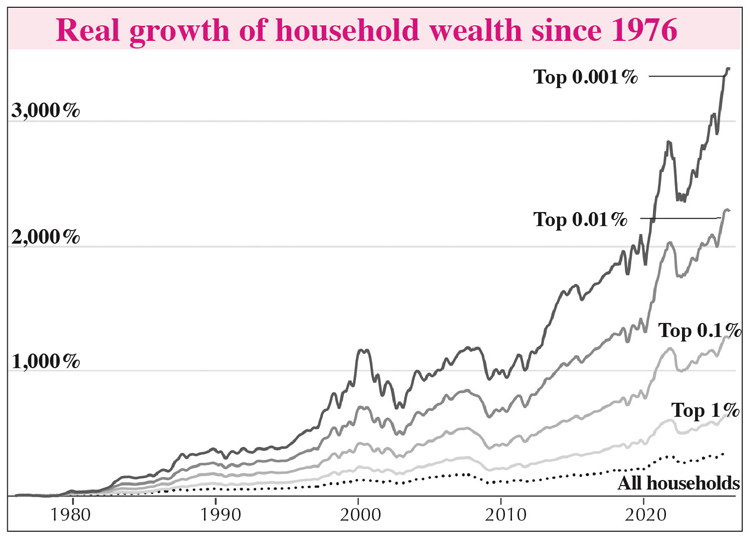
At the same time, the wealthy rulers and their upper-middle-class hangers-on are doing extremely well, a reflection of the increasing class differentiation intrinsic to the workings of the capitalist system. They’re enriching themselves through stock market speculation, buying and selling luxury housing, and many other perks offered exclusively to them.
The bosses have put a clamp on hiring, seeking instead to boost profits through speeding up production with fewer workers at the expense of workers’ lives and limbs. In 2025 bosses laid off 1.2 million workers. In February jobs declined by 92,000.
They’ve also stepped up assaults on union workers, pushing hard to speed up work, lower wages, and attack benefits, schedules and safety at the huge JBS packinghouse in Greeley, Colorado, the BP refinery in Whiting, Indiana, United Farm Workers union members in California and elsewhere.
Long-term unemployment rises
At the same time, the number of workers unable to find a job long-term is on the rise. In February 1.9 million people, about 25% of those on the government’s unemployment rolls, have been without a job for 27 weeks or more. With unemployment benefits running out after 26 weeks or less in almost every state, nearly 37% of workers who’ve been getting unemployment checks were cut off in February. But they’re still without work.
The government’s official unemployment figure, at 4.4% in February, does not include many who it counts as having “dropped out” of the labor force because they’ve been unable to find a job for so long. This figure has risen sharply over the past two years, with 3 million more workers eliminated from unemployment figures.
Things are no better at the store. The price for ground beef has risen 51% since 2020, going up 15% in 2025 alone. Electricity rates rose 6% and natural gas nearly 10% over the past year, making the cost of heating your home or apartment over the past winter unsustainable for 20% of the population.
Diesel fuel now costs over $5 a gallon, 40% higher than before the U.S. rulers’ war on Iran began. This is a crushing blow to owner-operator truck drivers, who have to cover their gas and repair bills themselves.
Working farmers are also being driven deeper into debt by the rising cost for diesel, which powers their machinery, and especially for fertilizer. Nitrous fertilizer shot up 22% from February 2025 to February 2026, and by 40% in just the past month.
The government tries to blame rising prices for food on the farmers, but that’s a lie. “The farmer’s really not seeing an increase in our goods sold, but everybody’s seeing the increase at the grocery stores,” Josh Boxell, who grows corn and soybeans in Indiana, told CNN.
Meanwhile, health care costs are soaring. Over 100 million people are in debt due to medical expenses, forcing many workers to go without needed care.
Older workers, who have to turn to assisted-living facilities or nursing homes for housing and care, are unable to cover the huge costs imposed by the giant real estate investment trusts that profit from operating many of these facilities. The median cost for a shared room in nursing care today is $115,000 per year.
With an average of 10,000 people turning 65 every day, many workers try to get by with help from family and friends while living at home. “Americans are now providing more than $1 trillion in unpaid family caregiving a year,” a March 26 MarketWatch report said.
Record credit card debt
Increasing numbers of working-class families who find themselves unable to cover their bills are using their credit cards to get by. A record 111 million people in the U.S. could not pay off their credit-card bills in full at the end of last year, MarketWatch said, owing more than $1 trillion. This is a huge profit bonanza for the giant banks, which charge an average annual interest rate of over 22%.
There’s a sharpening class differentiation in the U.S. today, with workers finding it harder and harder to get by versus the capitalist ruling class as well as their well-remunerated upper-middle-class supporters making out like bandits.
“They’re Rich but Not Famous — and They’re Suddenly Everywhere,” headlined a March 24 Wall Street Journal article describing part of this development. “There are about 430,000 U.S. households worth $30 million or more,” the article states. “Over the past few decades, the growth in the number of very rich households has surpassed general population growth.”
The Journal gloats over record-high bonuses that average nearly $250,000 each paid out to Wall Street’s New York City investment bankers.
Those at the top end of the profit class live in a completely different world. The Financial Times, which follows such matters closely, ran an article titled “Ferrari flies personalised supercars to super-rich Middle East buyers” March 26. These cars are loaded with special perks meant to meet the needs of each individual billionaire. Despite obstacles imposed by the war raging in the region, luxury-car producers find a way to deliver.