
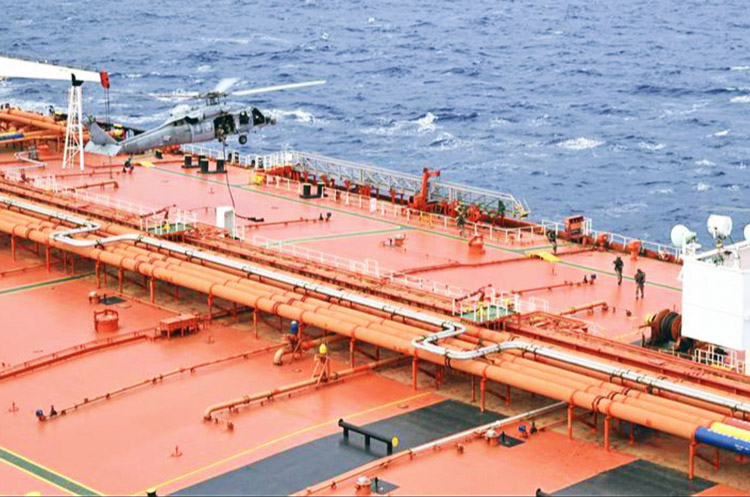
President Donald Trump announced an indefinite extension of the U.S. ceasefire with Tehran April 21, but said the U.S. blockade of ships to and from Iranian ports will continue. Washington’s war violates Iran’s sovereignty and is aimed at strengthening U.S. imperialism’s domination and plunder of the Middle East and pushing back inroads by its rivals, especially Beijing.
The attacks on Iran have “nothing to do with the U.S. administration’s pretext of promoting peace, prosperity and ‘freedom,’ for those who live in Iran or elsewhere in the region,” said a Socialist Workers Party National Committee statement March 1. “It is a blow to the aspirations for peace held by workers and millions of other oppressed and exploited people in the United States.”
Washington hopes that its shock and awe bombing of Iran and now its naval blockade will force a wing of the Iranian regime to become more subservient to U.S. imperialism, like what happened in Venezuela after U.S. forces kidnapped Venezuelan President Nicolás Maduro.
Trump said he extended the ceasefire at the request of the government of Pakistan, which brokered past negotiations, to give time to the “seriously fractured” regime in Tehran to respond to U.S. demands. The Islamic Revolutionary Guard Corps announced earlier that Tehran would not attend talks planned for April 22.
During the 40-day war Tehran’s navy was decimated, except for small speedboats, along with its air defenses and air force as well as most of its ballistic missiles and 40% of its missile launchers.
Already high prices for basic necessities in Iran have skyrocketed as a result of the war, and hundreds of thousands of workers have lost their jobs.
Tehran’s threats have kept most ships from attempting to pass through the Strait of Hormuz, while the U.S. blockade in the Gulf of Oman of ships to and from Iranian ports is a serious blow to Tehran. Some 90% of Iran’s economy depends on international sea trade.
Under the terms of the April 7 ceasefire, the Strait of Hormuz was supposed to reopen. Instead, some 20,000 seafarers on 2,000 ships — including oil and gas tankers, cargo ships and six tourist cruise liners — are still trapped.
Iranian boats fired at two Indian-flagged ships near Oman April 18. The next day, U.S. Marines boarded an Iranian-cargo ship in the Arabian Sea after blowing a hole in its engine room.
Prior to extending the ceasefire, President Trump had threatened to restart the war and destroy Iran’s electrical generation plants and bridges — a move that would severely worsen the devastating conditions working people face.
The war has driven a wedge between the regime in Tehran and the governments of the nearby Gulf States — Oman, Saudi Arabia, the United Arab Emirates, Kuwait, Bahrain and Qatar. During the war, Tehran directed significant attacks on oil and gas facilities and U.S. bases in these countries whose governments had tried to maintain a stance of neutrality.
Israel’s defensive war
Israel and Washington are not fighting the same war. Israel, a country of just 10.2 million that provides Jews with an unconditional refuge, faces attacks from all sides by forces allied with Tehran that share the goal of destroying it. For Israel, preventing Tehran from having ballistic missiles and nuclear weapons and defeating and dismantling its proxy forces is a life-and-death question. Washington doesn’t have these concerns. The U.S. rulers aim to advance their own imperialist interests.
While Israel’s defense systems shot down as much as 90% of the missiles Tehran and Hezbollah launched, some 66 missiles — many with cluster bomblets that strike over a wide area — hit the tiny country. More than 7,000 civilians were wounded and 20 killed.
Despite big blows dealt by Israel to Hamas since it carried out the Oct. 7, 2023, pogrom that killed more than 1,200 people in Israel, Tehran’s “axis of resistance,” including Hamas, Hezbollah and Tehran-created militias in Iraq, still look to future massacres of Jews.
That’s what’s at stake in Lebanon, where Israeli forces have now occupied a swath of the southern part of the country to make it harder for Hezbollah to threaten Israel’s existence.
First protests in Iran since the war
Severely weakened, the reactionary regime in Iran fears the widespread opposition to its rule among working people more than it fears attacks from Washington. Despite the massacre of over 7,000 protesters nearly two months before the start of the war, working people and university students were beginning to organize new actions against the regime. The outbreak of the war pushed that movement off the streets.
The regime has arrested more than 3,600 people since the start of the war, including over 760 since the start of the ceasefire.
In an April 21 statement, the prisoner-based “Tuesdays Against the Death Penalty,” which has been organizing weekly hunger strikes in dozens of prisons for two years, noted that the regime has executed at least a dozen political prisoners in just one month. It is “desperately trying to accuse” the political prisoners of “ties to Israel, in order to justify its executions under wartime conditions.” These “baseless accusations,” the group says, “only intensify public outrage.”
One indication of the fear and weakness of the regime, the statement says, is that it refuses to give the bodies of those executed to their families. They fear the funerals will become protests.
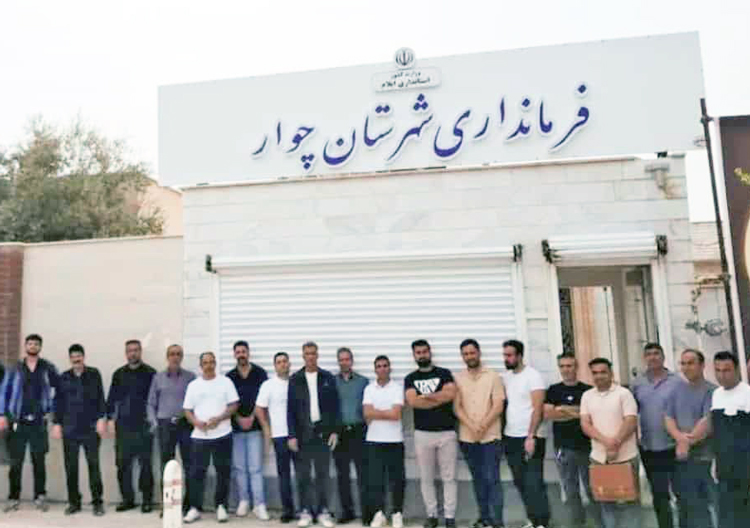
The war has accelerated the capitalist economic crisis in Iran. The government-funded Iranian Labour News Agency has been running daily reports of workers complaining about rising prices, job losses, unpaid wages, and poor working conditions. It reported April 21 that contract workers in the Tangeh Bijar gas field said that “since the start of the war, we have all been unemployed and there is no news of work, and apparently no one remembers us!”
Despite the regime’s increased repression and the destruction caused by Washington’s war, working people joined three modest protests last week. Applicants for teaching positions demonstrated in front of the Ministry of Education in Tehran April 19 to demand they be hired. The Retirees Unity Group reported April 21 on a recent protest by laid-off contract workers from the Ilam Gas Refinery at government offices in Ilam province.
Retirees in Shush in Khuzestan province protested the delay in a promised 60% increase to wages and social security benefits.