Tehran is continuing to arrest union activists and impose its strict internet shutdown, in a doomed attempt to prevent working people and oppressed nationalities from organizing to defend their interests amid the lull in the war. Opponents of the reactionary capitalist regime are finding ways to get around the online restrictions and to take to the streets.
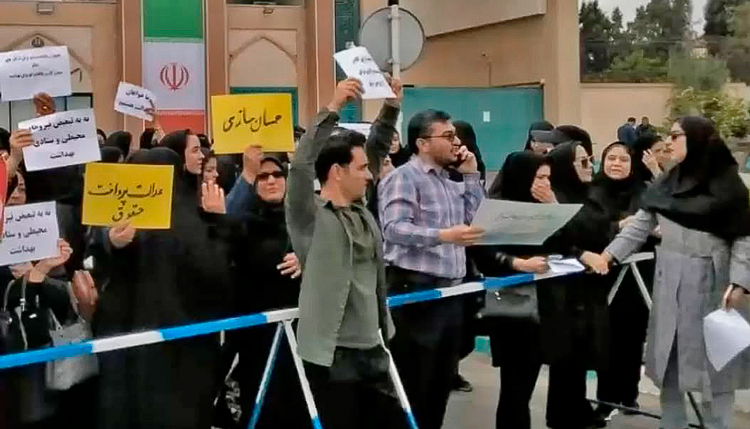
Dozens of workers from the Yazd Provincial Health Center protested in front of the governor’s office April 24 and 25, demanding better working conditions and higher wages.
“What has drawn the most indignation from the protesters is the lack of response to their demands,” reported the Retirees Unity Group. “When the response of officials is silence, the protests do not fade. They spread further.”
Several dozen truck drivers protested April 25 for several hours outside the prosecutor’s office in Tabriz. They had paid Global Euro Asia for imported trucks to replace their old ones, but the trucks were never delivered and their money never returned.
The week before, teachers protested in Tehran demanding the government hire them for open teaching positions, retirees protested in Shush for an increase in pension benefits, and laid off oil contract workers demanded they be brought back to work.
An estimated 1 million people have been laid off as a result of the 40-day war, exacerbating an already deep capitalist crisis and debilitating inflation.
“When a government resorts simultaneously to poverty, fear, censorship and repression to control society, it shows its weakness more than its strength,” said an internet report connected to small merchants at Tehran’s bazaar. Merchants there had helped kick off countrywide protests last December.
One sign of the regime’s weakness is that it stopped sending its hated “morality” police onto the streets to enforce the reactionary dress code for women. It is not uncommon to see women with and without the mandatory hijab headscarf walking together.