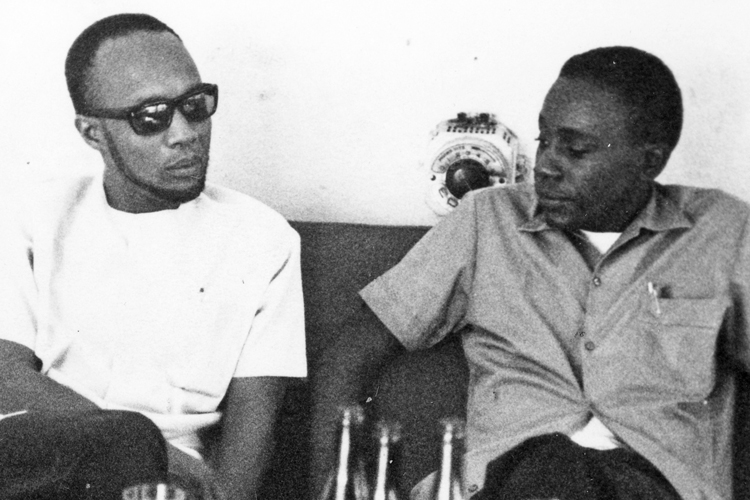
OSLO, Norway — “On behalf of the Cape Verde Organization here in Oslo — Welcome!” Danny Venancio Soares said as he opened a meeting here April 22 to present Pathfinder Press’ newest book, Cuba and the Independence War in Guinea-Bissau and Cape Verde: The Fall of the Last Colonial Empire in Africa by Víctor Dreke.
Among the 40 people present were six teachers from Hellerud High School, where the meeting was held, members of the Education Union and 10 young workers who attend evening classes there.
“The liberation of Cape Verde and Guinea-Bissau was a fight for our dignity, identity and to shape our own culture,” Soares said, as he and two others from the organization, Tiffany da Silva Lopes and Dionick Lopes Morias, turned the meeting over to moderator Rahwa Tilahun Yohaness, deputy chief of the Norwegian Council for Africa, the other sponsor of the meeting. Yohaness gave a special welcome to Hugo Ramos Milanés, Cuba’s ambassador to Norway.
“This book speaks to working people resisting the effects of today’s crisis-driven world disorder and wars,” said Jonathan Silberman, director of Pathfinder Books in London and a leader of the Communist League there, to open the program. “Millions are weighing if it is possible to prevent another world war. The book emphatically says — yes we can! If the independence struggle in Guinea-Bissau and Cape Verde waged by impoverished peoples could overcome national and tribal enmities encouraged by Portugal’s colonial empire’s 500 years of domination and brutality and win — so can we!”
Cabral was central leader of struggle
Speakers spoke in front of a slide show put together by the organizers with photos and quotes from the book, prominently featuring Amílcar Cabral, the central leader of the African Party for the Independence of Guinea and Cape Verde (PAIGC).
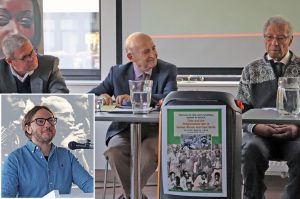
“In Amílcar Cabral, and Cuban leader Fidel Castro, the book shows the sort of leadership that is needed. They shared confidence in the capacities of ordinary men and women to change the world in which we live and change ourselves in the process,” Silberman said. “They also shared the importance of drawing women into political leadership. That’s what Cuba’s socialist revolution shows.
“There are no better examples of this transformation than Víctor Dreke and the other combatants interviewed in the book,” he added.
Christopher Lillehagen Hansen, editorial member of the Norwegian Council for Africa’s online magazine Afrika.no, spoke about Cabral’s character. “Hide nothing from the masses of our people,” Cabral had said. “Tell no lies. Expose lies whenever they are told. Mask no difficulties, mistakes, failures. Claim no easy victories.”
Cabral said he became a guerrilla leader only because the Portuguese colonialists repressed all peaceful opposition, Lillehagen pointed out.
‘Liberation of humanity’
Before the meeting began, António Barbosa da Silva, born in Cape Verde, told the Militant he was forced into the Portuguese air force at the age of 17 and spent five years in the Portuguese military, including two in northern Angola. “They sent the Angolans to Cape Verde and us to Angola,” he explained.
The liberation struggle was not a war against the Portuguese people, Cabral insisted, nor against white people, but against colonial oppression, part of achieving the “liberation of humanity.” Cabral advised people in Guinea-Bissau and Cape Verde to learn Portuguese well, Barbosa said, “as a tool of communication at home and internationally.” The guerrillas treated the Portuguese prisoners of war with dignity and respect and released them to the Red Cross.
He stressed Cabral’s view that to win independence is one thing, “but it is difficult to preserve true independence.”
Barbosa pointed to the major contribution revolutionary Cuba made to several of the liberation movements in Africa in the 1960s and ’70s. Some 425,000 Cuban volunteers joined Angola’s struggle against successive invasions by U.S.-backed apartheid South Africa.
Cuban Ambassador Ramos had been part of Cuba’s Angola mission and became Cuba’s deputy ambassador there in 1991. In 2024 he joined Dreke as part of a Cuban delegation to Guinea-Bissau to celebrate its 50-year anniversary of winning independence.
He opened his remarks by reading a message from Dreke. “More than 400 Cubans participated as volunteer combatants and doctors between 1966 and 1974,” Dreke wrote to the meeting. “This book tells an important part of that history, a history that should be known by young people all over the world.”
‘Fidel and Amílcar’
“Cuba has been linked to the African liberation movement as a way of paying our debt — an unpayable debt — resulting from the historical events that have bound our peoples together since the times of slavery,” Dreke said. “During the historical moments in the 1960s we had the opportunity to participate as volunteers in the independence and liberation struggles of the African peoples.” This was done “at the request of the movements or governments that sought our cooperation.”
“Africa and Cuba became united through the figures of two outstanding leaders: Fidel and Amílcar. That relationship has continued throughout all these years.”
Ramos traced Cuba’s internationalism and its connection to Africa back to Cuba’s own struggle for independence. “People talk about solidarity today and it is often reduced to humanitarian aid. But internationalism goes far beyond,” he said.
Quoting Fidel Castro, Ramos said, “We share what we have, not what we have left over.”
In a lively discussion following the presentations, several participants raised the importance of culture. “We have to create a new culture, also based on our traditions, but respecting everything that the world today has conquered,” Silberman said, quoting Cabral. That was also Castro’s standpoint, who emphasized, “We don’t tell the people: ‘Believe!’ We tell them: ‘Read!’”
Over 20 copies of the book were sold both to participants in the meetings and as part of its preparation. After the program many people stayed to talk further. The next step, they agreed, is to stay in contact and work to get the book around further, in Norway and beyond.