
After another round of drone and airstrikes and counterstrikes, the U.S. and Iranian governments sent representatives to Qatar to seek negotiations June 30. Having dealt big blows to Tehran’s military in repeated missile and drone attacks beginning in February, the U.S. rulers are trying to force a deal on the Iranian regime that brings a measure of stability for U.S. imperialism to advance its plunder of the oil, gas and labor resources of the region.
Tehran’s faction-ridden regime has chafed at Washington’s key demands of unimpeded maritime traffic through the Strait of Hormuz and restrictions on Tehran’s nuclear enrichment program. And it says it will never allow Israel to destroy Hezbollah, Tehran’s proxy in Lebanon. So far no lasting ceasefire has been reached.
In contrast, Israel is fighting a defensive war to prevent Tehran and its proxies from carrying out their long-standing threats to annihilate Israel and the Jews — and everyone else who lives there — a new Holocaust.
One indication of what the U.S. rulers want is the Donald Trump administration’s announcement that it has established direct communication with the Islamic Revolutionary Guard Corps, the real power in Iran. The Times of Israel reported that this “deconfliction channel,” announced by Vice President JD Vance, “includes representatives from Iran’s Islamic Revolutionary Guard Corps and the U.S. Army’s Central Command (Centcom), who will sit together in Qatar.” However, an IRGC official claimed it’s not true.
Washington is demanding Tehran dilute the enriched nuclear material it possesses and agree not to enrich more over the next decade or so. It accepts the regime’s claim it has no plans to produce nuclear weapons, despite its longstanding efforts to do so.
Vance and Trump say that Tehran has agreed to inspections from the International Atomic Energy Agency. Iranian officials say they agreed to this, but only after a final agreement is signed, and all the U.S. rulers’ punishing sanctions on Iran are lifted.
U.S.-Israel ‘friction’ in Lebanon
The Trump administration sees Israel’s efforts to defend itself from Hezbollah as an obstacle to its own goal of finalizing an agreement with Tehran. It keeps pressing Israel to wind down its military operations in Lebanon, which can only prolong the threat to Jews and other Israelis from Hezbollah.
In early March, days after the U.S. war against Iran began, Hezbollah began firing missiles and drones at northern Israel. To counter these attacks, the Israel Defense Forces occupied a wide swath of southern Lebanon and launched airstrikes targeting Islamic Revolutionary Guard Corps commanders based in Beirut.
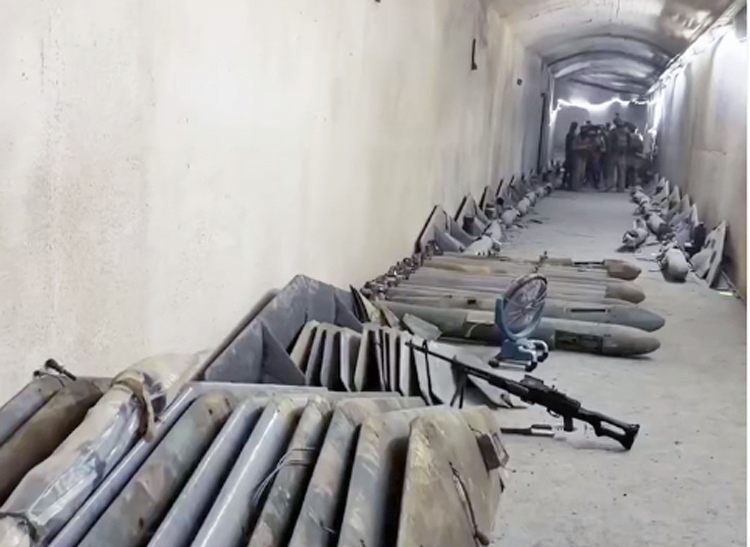
In the western and southern areas occupied by Israeli troops, Israel’s defense minister, Israel Katz, said almost all of Hezbollah’s infrastructure, including tunnels and weapons stores, has been destroyed, and in the eastern areas, 73%.
“There will be friction” with Washington, Katz said. “I suggest people not hold their breath waiting for the area from which Israel will withdraw. It will not happen.”
“If Iran fires missiles at Israel, Israel will strike Iran with force,” he told reporters. “That is not conditional on anything.”
“This has also been made clear to the Americans,” he added. But that doesn’t stop Washington from pressing to hold Israel back.
Israel drives against Hezbollah
Hezbollah is better armed and financed and has more combat-hardened fighters than the official Lebanese army. But the Lebanese government is made up of competing bourgeois forces — from the Sunni, Shia, Christian and Druze communities — many of which oppose Hezbollah and would like to see it weakened further.
After four days of talks, the Israeli, Lebanese and U.S. governments signed a “trilateral framework deal” June 26 recognizing Israel’s right to maintain its troops in southern Lebanon. The deal says that in two small areas the Israel Defense Forces will pull back if the Lebanese army pushes Hezbollah out. Washington claims authority to verify and oversee the accord’s implementation.
“We will maintain” IDF forces in southern Lebanon “until Hezbollah disarms and as long as there is a threat to the State of Israel,” Israeli Prime Minister Benjamin Netanyahu said in a statement after the agreement was signed.
However, Hezbollah leader Naim Qassem denounced the deal, declaring it “null and void,” as did his allies in the Lebanese government.
Israel’s death toll from the attacks by Hezbollah over the past few months includes at least 32 soldiers and four civilians. While Hezbollah does not release figures on its casualties, Reuters reported May 4 that several thousand Hezbollah fighters had been killed in the fighting, and 1 million people residing in Lebanon have been displaced.
Hamas rearms during Gaza ceasefire
Meanwhile, July 2 marks 1,000 days since the Oct. 7, 2023, pogrom, where Hamas death squads, backed by the reactionary regime in Tehran, murdered 1,200 people, mostly Jewish civilians, and raped and mutilated dozens of women.
The ceasefire imposed by the U.S. government in Gaza nearly nine months ago has prevented Israel from dismantling Hamas. Taking advantage of the uneasy ceasefire, Hamas is rearming and tightening its dictatorial rule over the Palestinians living there.