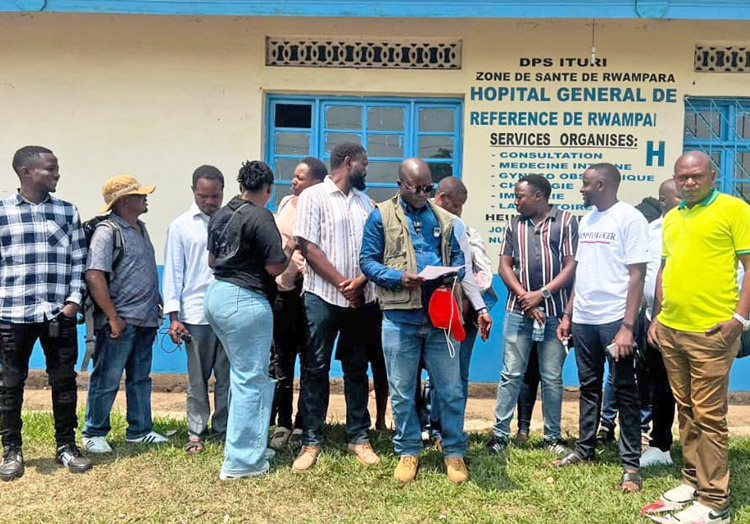
In the face of government indifference to the deadly impact of the spread of the Ebola virus in the northeast Democratic Republic of Congo, doctors, nurses and other medical personnel went on strike July 7 over the fact they’ve never been paid and the abysmal working conditions they face as they fight to save lives.
The epidemic is all the more challenging as the center of the outbreak is in areas where reactionary Islamic rebels have been battling Congo’s army for control over the country’s rich natural resources, including gold mines.
Little to nothing is being done by the imperialist powers — from the U.S. to France to U.K. — to try to stem the fastest spreading Ebola outbreak ever recorded.
The outbreak is being driven by the rare Bundibugyo species of Ebola, for which there are no approved vaccines or treatments.
Since mid-May the Ebola virus in the Democratic Republic of Congo has killed 600 people, the World Health Organization reported July 9. This is 100 more than the figure it reported three days earlier. By July 14 deaths had risen to 754 out of 2,011 confirmed cases.
This is in sharp contrast to what revolutionary Cuba did 12 years earlier, sending skilled medical volunteers to counter a spreading Ebola epidemic in several West African countries.
“We should be paid for this work that we are doing. We work every day — there is no day that we are on break,” doctor Blaise Mugisa, told the Washington Post. He works at Rwampara hospital in Ituri province, one of the areas hardest hit by the virus. “We leave home early in the morning, and we come late at night. Our families we leave at home have nothing to eat,” he said.
Doctors and other healthcare workers say they have not been provided with adequate supplies and gear to properly treat Ebola patients. In some cases, Mugisa said, they’ve been treating patients for months before they realized what the virus was. Under these conditions increased numbers of doctors and nurses have been infected. At Rwampara hospital, five doctors and 17 nurses have died since the outbreak.
Mugisa told the Post that in addition to losing doctor friends, his extended family has been devastated — losing 23 members since the outbreak began, some of whom he treated himself.
A report recently released by the U.S. Centers for Disease Control and Prevention acknowledged that this Ebola outbreak could become the most devastating in history.
The CDC said more people are needed in its Ready Responder program. But so far this fiscal year, they’ve taken on only 38 new hires, and they’re far away from doing anything. The CDC says it currently has 27 staff in the Congo assisting “case investigations and contact-tracing” and others providing “technical assistance,” but no one offering direct medical treatment to patients.
Cuban volunteers set different course
Compare this to what the Cuban volunteers did in 2014-15 in leading the effort worldwide to uproot the Ebola epidemic from Liberia, Sierra Leone and Guinea.
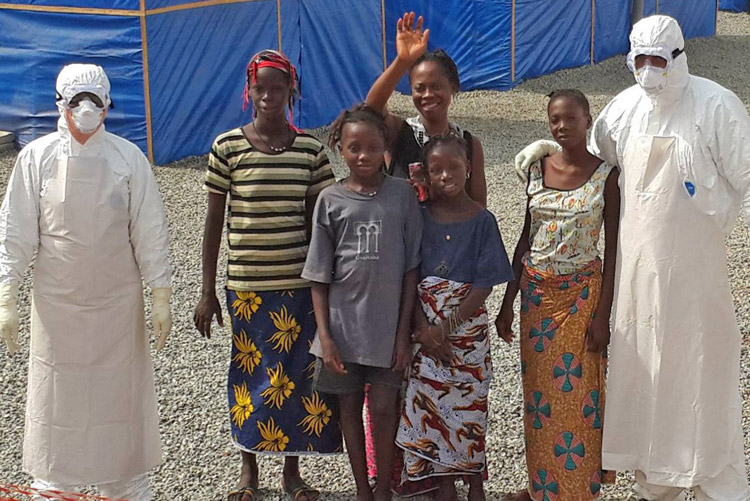
In August and September 2014, the World Health Organization and the governments of these countries issued an international appeal for help in combating the first Ebola epidemic. Cuba’s revolutionary government responded rapidly.
Within three days of a call to Cuban President Raúl Castro from Ban Ki-moon, then secretary-general of the United Nations, more than 12,000 Cuban medical professionals volunteered.
From those volunteers, 256 Cuban doctors, nurses and healthcare technicians were selected and trained for the mission. They were given intensive training in handling the highly lethal virus and within weeks were on their way.
Instead of providing doctors, the U.S. rulers sent 500 soldiers to Liberia to build hospitals and other facilities and to look out for Washington’s interests. Their eyes were firmly focused on maintaining capitalist stability, not saving lives.
The story of what the Cubans accomplished over the next eight months in virtually eradicating this disease is described in the book Red Zone: Cuba and the Battle Against Ebola in West Africa by Enrique Ubieta Gómez.
Cuba “provided what was most needed and what no other country even tried to deliver: hundreds of doctors, nurses, technicians, and public health specialists on the ground, caring for thousands of desperately ill human beings and their families and communities traumatized by the killer disease,” Mary-Alice Waters and Róger Calero write in the book’s Preface.
Their efforts were a product of the transformation of working people made possible by carrying out a socialist revolution and by the proletarian internationalist course advanced by the revolution’s leadership.
“The medical personnel who will go anywhere to save lives, even at risk of losing their own, are the greatest example of solidarity a human being can offer, above all because they aren’t motivated by material interest,” Fidel Castro, the central leader of the Cuban Revolution, said at the opening of Cuba’s Ebola mission in October 2014.
U.S. rulers slander Cuban doctors
This has been true from the earliest days of Cuba’s medical missions in the 1960s to the dozens of countries where Cuban doctors provide care today.
President Donald Trump’s administration, as part of the capitalist rulers’ drive over decades to overturn Cuba’s socialist revolution, is slandering these medical missions today and pressuring governments to end them. Secretary of State Marco Rubio claims the contributions of Cuban doctors abroad are “forced labor,” part of a system of “state-sponsored human-trafficking brigades.”
His claims are exposed as a bald-faced lie by the experiences of millions of workers and farmers worldwide who have gotten desperately needed care from Cuban medical personnel.
“My dad could hardly see, but thank God his eye turned out well,” José Enamorado, a plaintain farmer in Honduras, told the Wall Street Journal. He said his father received free cataract surgery from Cuban doctors last year that otherwise would have been unaffordable at $2,000. “The Cuban doctors brought hope to a lot of people.”