The 1963 March on Washington inspired Blacks as well as workers of all colors around the country. On its heels, leaders of the Student Nonviolent Coordinating Committee began to discuss organizing a Freedom Summer project all across Mississippi.
The goal was to draw tens of thousands of Blacks in small towns and big cities into the fight to uproot racial segregation in a state where it was deeply entrenched. SNCC’s leaders were convinced that nowhere was off-limits in the struggle to end Jim Crow, despite the murderous assaults that civil rights fighters faced.
African Americans, 45% of Mississippi’s population, had been systematically denied the right to vote. Only 12,000, some 5%, were registered statewide and virtually zero in rural counties where Blacks were often a majority.
SNCC decided to test the ground for the Freedom Summer as elections for Mississippi’s governor neared in the fall of 1963. Given the exclusion of Blacks from the right to vote, they couldn’t express their interests in the official state election. So SNCC and its allies organized their own election, called the Freedom Vote. A coalition of civil rights groups nominated NAACP leader Aaron Henry for governor, promoting a program of voting rights for all Blacks, an increase in the minimum wage, and loans for farmers.
For weeks they campaigned across the state, discussing the ongoing battle to end Jim Crow and urging people to vote for Henry. On election day they set up ballot boxes in churches, pool halls and other places. The willingness of African Americans to fight for the right to vote was reflected in the 83,000 Black Mississippians who turned out to vote for Henry.
SNCC had previously sent volunteers to McComb, Mississippi, in 1961 to work on a voter registration drive alongside Black rail workers, who led the NAACP chapter there. As they were making headway, Herbert Lee, a Black farmer who backed the effort, was shot dead by segregationist State Rep. E.H. Hurst in front of a dozen people. Hurst was acquitted by an all-white jury. Given the flagrant refusal of authorities to protect Blacks there, SNCC was forced to retreat from McComb for the time being.
The April 13, 1964, Militant described the launch of the Mississippi Freedom Summer to register voters and hold freedom schools, pickets and other protests across the state, with some 1,000 student volunteers from northern colleges, mostly Caucasian, coming to join the effort.
But the Justice Department, under Democratic Party President Lyndon Johnson, made clear it would provide no protection to civil rights campaigners.
Murder of civil rights volunteers
On June 21, the day after the campaign began, three civil rights volunteers — James Chaney, Andrew Goodman and Michael Schwerner — disappeared, and were feared murdered by the Ku Klux Klan near Philadelphia, Mississippi. After a local cop came forward to talk to the FBI, their bodies were dug up. President Johnson’s “administration shares responsibility for what has happened to the three young men” because it refused to protect them, Clifton DeBerry, Socialist Workers Party candidate for president, said June 29.
Over the course of the Freedom Summer racist thugs carried out 80 beatings, 70 firebombings and 35 shootings. They were reinforced by state and local cops, who arrested more than 1,000 civil rights fighters. The bodies of three other Blacks were discovered, each of whom had been lynched.
But the Freedom Summer was greeted with enthusiastic support from Blacks across the state. It included educational programs on Black and African history.
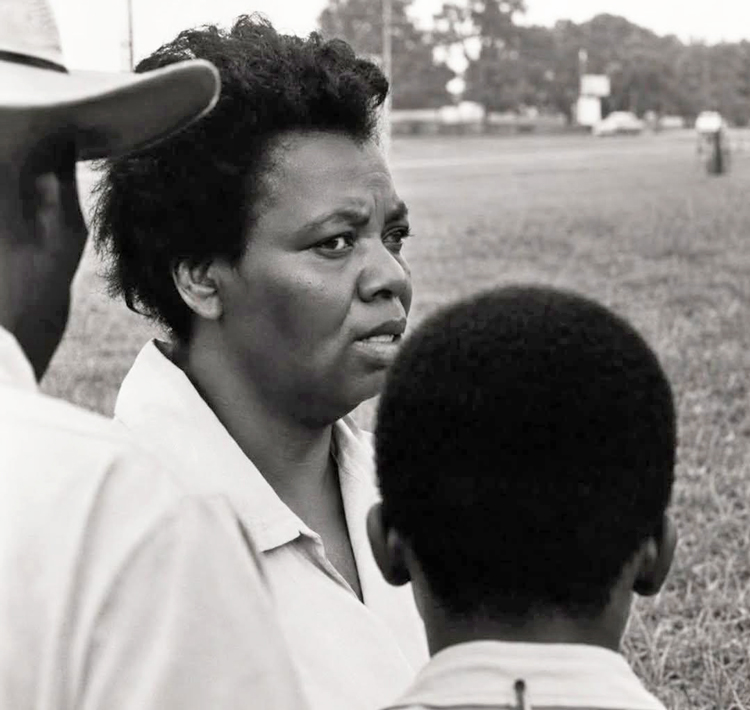
The refusal of growing numbers of African Americans to back off from the fight to tear down Jim Crow was typified by Laura McGhee. She opened her small farm outside Greenwood, Mississippi, to SNCC for rallies and meetings, and put her farmland up as security to bail out civil rights fighters from jail time and again. Her sons were arrested on numerous occasions at sit-ins.
When her farm was targeted in a drive-by shooting, one of her sons shot back at the car. The local sheriff demanded McGhee instruct him never to do that again. McGhee told the sheriff, “He won’t shoot anymore,” and added, “but I’m going to sleep all day and stay up at night to protect my children. If anyone shoots at my house, I’m shooting back.”
The Militant reported McGhee was jailed Aug. 20 on charges she struck a cop. She later recalled the cops were trying to prevent her from visiting her son who was in jail. “I admired my children for having the courage to go through with it, whatever way it turned out,” she said.
In 1965, when federal authorities finally came to Greenwood to register voters, many of McGhee’s neighbors refused to sign up unless she went with them.
Battle in McComb
SNCC returned to McComb during the Freedom Summer. At first its Freedom House was bombed and Black churches burned down. With state and federal authorities refusing to provide protection, Blacks in the area organized nightly armed guards. Initially, most Blacks were leery of joining the voter registration drive.
After the Freedom Summer ended, several SNCC activists decided to stay in McComb. When the Society Hill Baptist Church there was bombed Sept. 20 several hundred Black residents poured into the streets to protest, many armed. A boycott of white-owned businesses began. By the end of September more than 200 Blacks had been arrested, but not a single Klansman. Klan bombings of Black churches and homes continued.
Under pressure from media reports about the extent of Klan assaults, Mississippi Gov. Paul Johnson announced Sept. 29 he would send in the National Guard if authorities in McComb did not put an end to the Klan violence. Within a single day, 11 Klansmen were arrested and stockpiles of their weapons seized. The bombings stopped.
With the Klan pushed back, fighters for Black freedom had more space. High school students from McComb began leading protests outside the courthouse in Magnolia for voting rights in early 1965.
During the Freedom Summer over 800 delegates and other Black rights fighters in Mississippi organized a Freedom Democratic Party state convention, electing their own delegates to attend the Democrats’ national convention and fighting to oust the state’s all-white, pro-segregation delegation.
The Mississippi Freedom Democratic Party delegation was led by longtime Black rights fighter Fannie Lou Hamer. It was able to win the right to give testimony to the national convention about why it should be seated. Hamer was watched by millions on TV when she described the assaults and reprisals she and others had faced trying to register to vote.
When Democratic Party officials rejected the MFDP’s motion to oust the official Jim Crow delegation, the MFDP announced its own candidates and called on Congress to refuse to seat any of those elected on the Jim Crow ticket.
Spreading across the state, the Freedom Summer took the fight against Jim Crow into rural areas and brought new forces into the movement. When the fall semester started at public schools in Philadelphia, Mississippi — the town where Chaney, Goodman and Schwerner were murdered — high school students proudly turned out wearing “One Man One Vote” buttons.