The Alternative for Germany (AfD) party scored its best election returns ever Sept. 6 in the former East German state of Saxony-Anhalt, one of the areas of the country hardest hit by the capitalist crisis. It polled almost 44% of the vote, nearly double its total from five years ago, fueling an agitated response from liberal commentators and politicians alike.
The conservative Christian Democratic Union, which had governed the state most of the time since the country’s reunification in 1990, fell to a historic low of just over 17% of the vote, only half its total in 2021.
The AfD needs three more seats to form the government there. It’s courting conservative members of parliament willing to breach what the main capitalist parties call a “firewall” — their joint refusal to work in any way with the AfD.
The AfD is a right-of-center capitalist party that was founded in 2013 based on scapegoating of immigrants for the problems workers face and opposition to the euro. It opposes the German government’s aid to Ukraine and favors stronger ties with Moscow, while at the same time backing the German rulers’ rearmament program.
Unemployment in Saxony-Anhalt is 8.1%, well above the national rate, and wages are among the lowest anywhere in the country. No other state in Germany has witnessed such a severe population decline since German reunification. It has plunged from 2.9 million to 2.1 million.
Facing worsening conditions and with no working-class party to vote for that has a serious program to meet today’s capitalist offensive, many working people were looking for change and the AfD promised that, in contrast to more of the same from the established ruling parties. Nationally, the AfD is now Germany’s most popular party, polling at 28%, while support for the ruling Christian Democrats has fallen to 20%.
Upheaval in German ruling parties
“This is the worst election defeat the CDU has suffered in years — or even decades,” Chancellor Friedrich Merz told the press. His Christian Democratic Union heads a governing coalition with the Social Democratic Party.
The AfD is strongest in the east, which was part of the former Soviet bloc dominated by Moscow. But it is also drawing more support in western Germany, especially in areas where once strong manufacturing is in crisis.
While the German capitalists have ruled over the strongest economy in Europe for years, today they face deepening challenges. Their only solution to the economic stagnation is to intensify the exploitation of working people at home and prepare for future wars abroad.
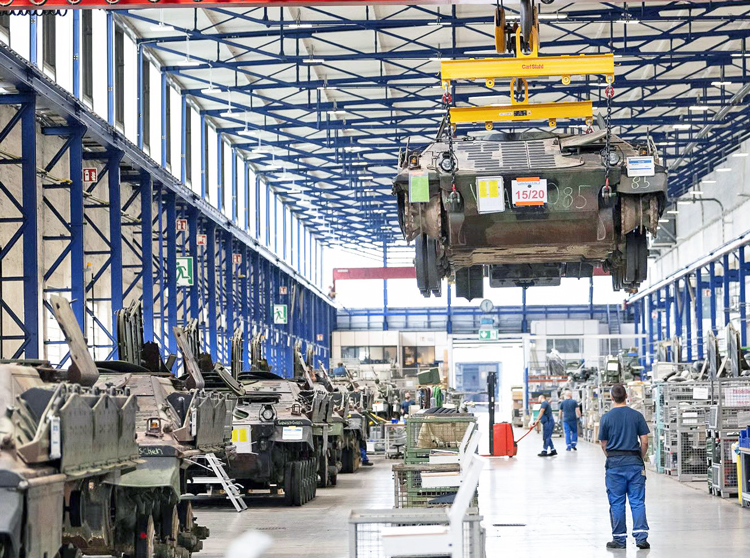
They see a future of deepening conflicts and are building what they boast will be the strongest army in Europe, and at the same time, are moving to turn state expenditures from welfare to warfare. Car plants, like those of VW where 50,000 workers face layoffs, are being converted to arms production.
Liberals and middle-class radicals expressed alarm at the Saxony election result. CBS News declared it could result in “the first far-right state government since the Nazi era.”
Spanish Prime Minister Pedro Sánchez said the AfD vote is “a warning that the far-right threat is gaining ground,” adding “a progressive coalition government,” is “more necessary than ever.”
The Saxony vote was a victory for “the neo-Nazi, anti-European and pro-Putin far right,” French Foreign Minister Jean-Noel Barrot declared. Claims in Europe that “fascism” is on the rise have the same ring as the crusade against President Donald Trump from the left of capitalist politics in the U.S.
Do German rulers need fascism now?
The reality is that many working people in Saxony voted for the AfD in protest against rising joblessness and declining living standards. They are not searching for a resurrection of a Fuhrer, but for jobs, better wages and a more secure future.
Conditions in the class struggle in Germany and elsewhere in Europe today are not like those in the early 1930s when Hitler’s Nazis took power.
At that time, the country’s ruling capitalists faced depression conditions on top of brutal post-World War I repayments imposed by their imperialist rivals in London and Paris. They turned more and more to Nazi street gangs that used Jew-hatred as a tool to divert attention from the capitalist rulers’ responsibility for the crisis. Nazi thugs targeted the labor movement and communists for attacks. It was only the refusal of the Stalinist Communist Party and the Social Democratic Party to lead a united defense against the Nazi terror — a historic betrayal of working-class interests — that made it possible for Hitler to rise to power.
The AfD’s political rise followed former Chancellor Angela Merkel’s 2015 decision to open Germany’s borders to some 1 million asylum seekers, mostly from the Middle East, sharpening competition for jobs. A series of Islamist attacks in recent years were used by AfD leaders to boost their call for more deportations of immigrants.
After reunification at the end of the Cold War, the entire state-owned economy in former East Germany was rapidly privatized in a looting spree by big business dubbed “shock therapy.” Today social services are decaying and wages in the eastern part of the country are at least 20% below those in the west. The AfD has also won support from people in neglected rural areas.
In the March state elections in Baden-Wurttemberg — the home in southern Germany to Mercedes-Benz and Porsche — the AfD doubled its share of the vote to 19%. Working people across Germany have faced years of rising fuel costs, exacerbated by the loss of cheap gas from Moscow after its 2022 invasion of Ukraine. The effects of this crisis in the east has been compounded by Berlin’s closures of nuclear power plants three years ago, in the name of fighting “climate change.”
The crisis of Germany’s imperialist rulers is deepening in an increasingly unstable world. So too will resistance by millions of working people to being saddled with the burden bosses are trying to foist on our backs.