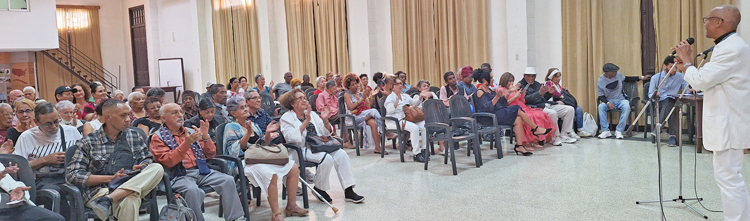
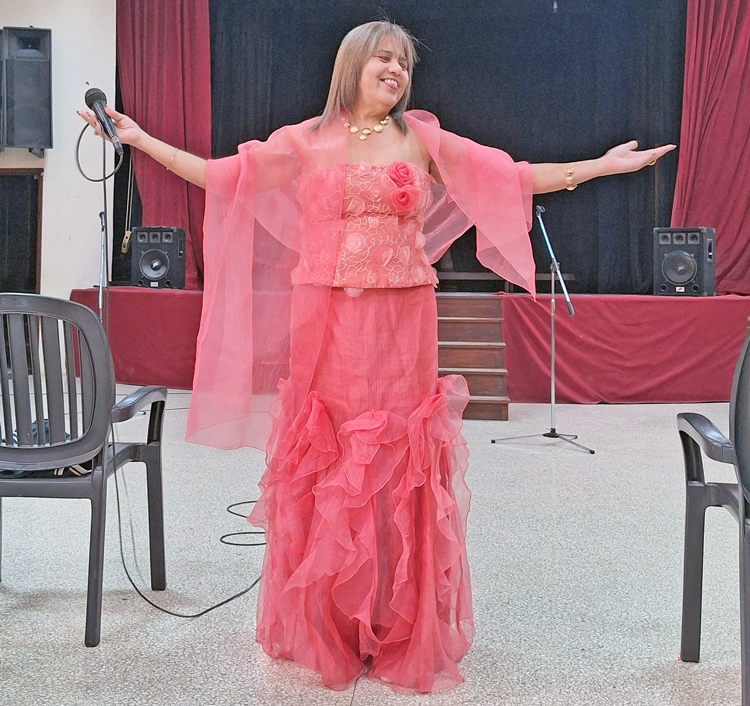
HAVANA — Militant reporters joined 75 people for a poetry reading at a popular cultural center here Feb. 13. The next day we were invited to a Valentine’s Day peña (cultural performance) hosted by members of the University for Older Adults. The following day we went to the Chinese New Year celebration in Havana’s historic Chinatown.
Cultural and other events like these happen every day in Havana and throughout Cuba. They are just one expression of the dignity of the Cuban people and the determination of millions here to stand up to Washington’s latest efforts to bring down their socialist revolution.
At the poetry recital, many participants took the microphone to share their poems. The event had originally been planned as part of the annual Havana International Book Fair. After the fair was suspended — one of many steps by the Cuban government to save fuel and other resources in the face of Washington’s brutal oil blockade — it was turned into a community activity. Other music, dance and theater events are also being shifted to venues closer to where artists live, making them more accessible to people in their own neighborhoods.
Alpidio Alonso, Cuba’s minister of culture, told the audience, “We’re reorganizing everything we can to maintain projects like this one. There will be no blackout of culture. We’ll continue to defend our sovereignty, our country, our revolution. Poetry is a trench in our struggle.”
Afterward, Omar Herrera, 69, one of those who read his poetry, told the Militant, “Trump says Cuba is a danger. He’s right. We are a danger. We’re an example to the world.”
The Valentine’s Day celebration brought together 100 people, mostly older residents of central Havana. They listened to musical performances and joined in lively singing and dancing. The event was held in the same venue where many of them take history, English and other classes offered by the University for Older Adults, a nationwide educational movement based in communities across the island.
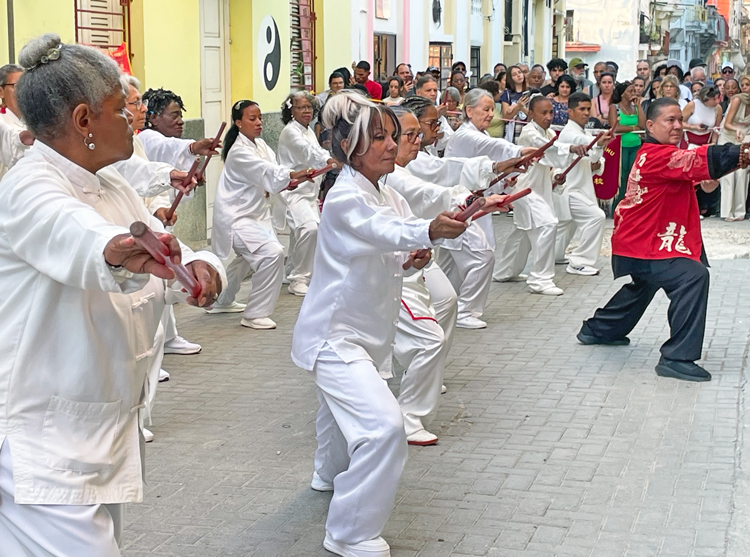
The next day, Chinatown resident Margarita Colón invited us to join her on her stoop for a front-row view of the Lunar New Year celebration. Some 150 people gathered in that historic neighborhood, coming from all around Havana despite the U.S. oil blockade-induced transportation difficulties they face. On a cordoned-off street, dozens of artists of all ages and skin colors, dressed in traditional colorful outfits, performed Chinese dances, music and wushu (martial arts).
Roberto Vargas Lee, director of the Cuban Wushu School, concluded the program. “The culture we are celebrating here is as much Chinese as it is Cuban,” he said. “It’s important for the culture of humanity, for peace and solidarity.”