
The Turn to Industry: Forging a Proletarian Party by Socialist Workers Party National Secretary Jack Barnes is one of the Books of the Month. Barnes has led the political course of the SWP to build a communist party whose members and leaders in their large majority are workers and unionists and whose goal is to organize workers to forge and strengthen the trade unions and lead the working class and its allies toward a successful socialist revolution. This book describes this perspective. Copyright © 2020 by Pathfinder Press. Reprinted by permission.
The Turn to Industry: Forging a Proletarian Party is about the working-class program, composition, and course of conduct of the only kind of party worthy of the name “revolutionary” in the imperialist epoch. The only kind of party that can recognize the most revolutionary fact of this epoch — the worth of working people, and our power to change society when we organize and act against the capitalists and all the economic, social, and political forms of their class rule.
This book is about building such a party in the United States and in other capitalist countries around the world. It is about the course the Socialist Workers Party and its predecessors have followed for one hundred years and counting.
“We will not succeed in rooting the party in the working class, much less in defending the revolutionary proletarian principles of the party from being undermined, unless the party is an overwhelmingly proletarian party, composed in its decisive majority of workers in the factories, mines, and mills,” emphasized resolutions adopted by the SWP convention in 1938. The party must become “an inseparable part of the trade unions and their struggles.” It must be an inseparable part of daily battles waged by the working class and other exploited producers to defend ourselves and our families against the brutal consequences of capitalist oppression.
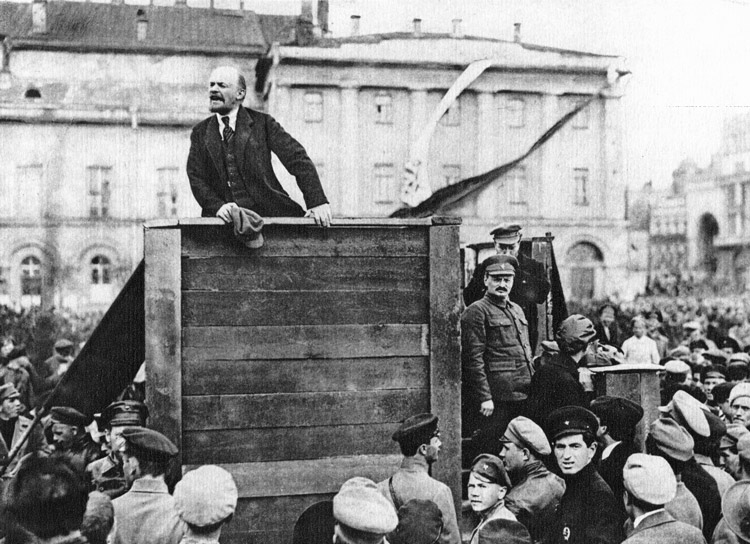
That orientation — the course of the Bolsheviks under V.I. Lenin in leading the workers and peasants to power in October 1917 — has been our strategic course since a communist party was founded in the United States two years later, along with others affiliating to the new Communist International. The new party had one sole aim — emulating the Bolsheviks’ example. The SWP is the direct descendant of that party.
With the rise of industrial capitalism some two hundred fifty years ago, conflicts between workers and employers increasingly took on “the character of collisions between two classes,” explained Karl Marx and Frederick Engels in the Communist Manifesto, the founding program of the revolutionary workers movement. In face of the capitalists’ cutthroat drive for profits, workers have no choice but to “club together in order to keep up the rate of wages” and resist employers’ push to extend the workday and speed up production, with cold disregard for our health and safety. Inevitably, workers “begin to form combinations (trade unions)” against the employing class.
Some two centuries of class-struggle experience have confirmed that such “combinations” take many initial forms — from acts of resistance on the job; to battles against company lockouts; to strikes, organizing drives, and campaigns to expand union power. …
Over the years since the SWP made what has become known as the turn to industry, the imperialist order has sunk into deeper and deeper crisis: declining profit rates; intensifying global capitalist competition; stagnation in capital investment to expand plant, equipment, and industrial employment; mounting pressures toward currency wars; and unending military conflicts. Workers and our families face attacks by the capitalist class, its government, and its Democratic and Republican parties, with their “socialist” wings, on our living and job conditions — on our very life and limb.
The rulers’ blows don’t fall evenly or with the same force on all sections of working people. Inequalities are widening not only between social classes but within the working class itself. …
But the necessity — and opportunities — for working people, nonunion and union alike, to be bold, to organize ourselves, and to mobilize mutual solidarity have seldom been greater. And necessity is pushing us in that direction. …
The Turn to Industry: Forging a Proletarian Party stands on the revolutionary continuity of the Socialist Workers Party, explained and defended some eight decades ago in In Defense of Marxism by Leon Trotsky and The Struggle for a Proletarian Party by James P. Cannon. The articles and correspondence in those two books record the successful effort to maintain a communist course in face of an opposition in the party and its youth organization that began bending to imperialist pressure and public opinion during Washington’s buildup to enter World War II.
“The opposition is under the sway of petty-bourgeois moods and tendencies. This is the essence of the whole matter,” Trotsky wrote in December 1939 in one of his articles collected in In Defense of Marxism. “Any serious factional fight in a party is always in the final analysis a reflection of the class struggle.” That’s why, as Trotsky explained in a letter written a few weeks later, “The class composition of the party must correspond to its class program.”
Trotsky had become by mid-1917 a central part of the Bolshevik leadership forged by Lenin that led the workers and peasants of Russia in making the October 1917 revolution and two years later launching the Communist International. In 1929, some half a decade after Lenin’s death, Joseph Stalin banished Trotsky from the Soviet Union for leading the fight to continue Lenin’s proletarian internationalist policies. Trotsky did so in direct political opposition to the rising petty bourgeois layers in the USSR whose privileges and interests were increasingly safeguarded by Stalin. Proletarian revolutionists the world over, including Cannon and other leaders of what became the Socialist Workers Party, joined with Trotsky in founding a new world communist movement loyal to Lenin’s course.