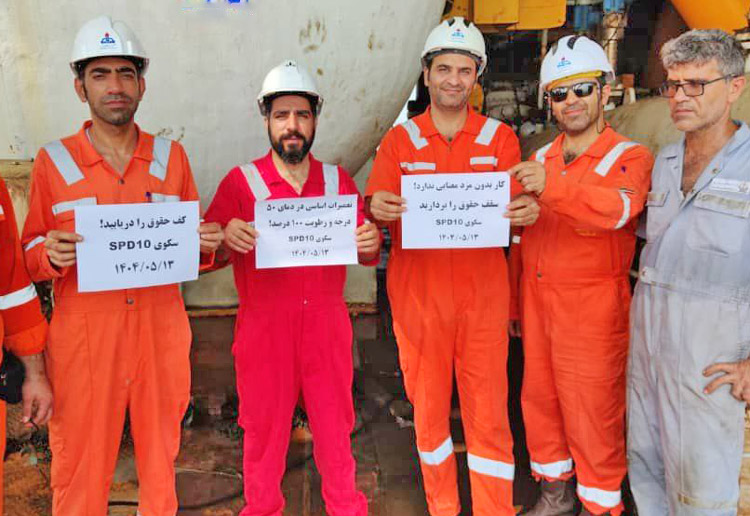
Oil workers at 50 refineries and offshore platforms in Iran took to the streets Aug. 4 demanding higher wages, benefits and job safety. Above, Pars Oil and Gas Company platform. In the wake of the 12-day war between Israel and Tehran, Afkarnaft, an organization of directly hired oil workers, said weekly protests will continue until their demands are met.
Ahead of the protest one worker posted an open letter to the country’s minister of oil on Afkarnaft’s online site. “We spent every second under the roar of drones flying overhead and the sound of anti-aircraft fire” during the war, he said. Bank workers got bonuses of 120%, but our salaries “were lower than any other month.” Next time, he said, “we’ll pretend to be sick and won’t show up to work.”
Afkarnaft reported July 29 that five oil workers had “died in the past week due to work-related accidents,” including three from an explosion during maintenance work at the Abadan refinery, Iran’s largest.
In Gachsaran, contract construction worker Saber Asayesh died after a large pipe fell on him. The Council for Organizing Protests of Contract Oil Workers said the bosses had ordered workers to lift the pipes by hand instead of with a crane. They then delayed for “four agonizing hours” getting a helicopter to fly him out, which was being insisted on by his co-workers. But the specialized hospital for oil workers turned him away because he was a contract worker. He died from blood loss on the way to another hospital. “Is a human life valued based on the type of contract they hold?” said the council.
“Why is there no thorough investigation into the causes of these fatal accidents and no improvement in safety levels?” Afkarnaft demanded.