
As part of a brutal war between gangs and vigilante forces in Haiti, some 70 people were killed days before a United Nations-backed peacekeeping force began arriving, supposedly to quell gang violence. Intervention by an earlier U.N.-supported mission had utterly failed to prevent government forces from losing control of much of the country to criminal gangs, with devastating consequences for working people.
The most recent massacre took place in Artibonite, a rural region known for its agricultural production, March 29-30. Control of the area is critical in a country where millions face food shortages. Dozens of houses were burned down and 6,000 people fled during the fighting. The gang that is alleged to have carried out the attack was formed after a former member of parliament, Prophane Victor, began arming a gang of young men in the region.
Rival gangs have grown in power since the assassination of President Jovenal Moise in 2021. They now control 90% of Port-au-Prince, the capital, and are extending their terror to other areas. Vigilante groups formed to combat the rise of gangs exacerbate the violence Haitian toilers face, closing off neighborhoods and hunting down suspected gang members before cutting off their limbs or executing them.
Haitian cops and Kenyan police, part of the U.N. Multinational Security Support Mission, say they were “delayed” in reaching the area where the fighting took place.
“The people of the Artibonite region are held hostage between the armed self-defense brigades and armed gangs,” Bertide Horace, a community leader there, told the New York Times. “The self-defense brigades are also terrorizing the population.” The state’s absence “leaves the population to fend for itself.”
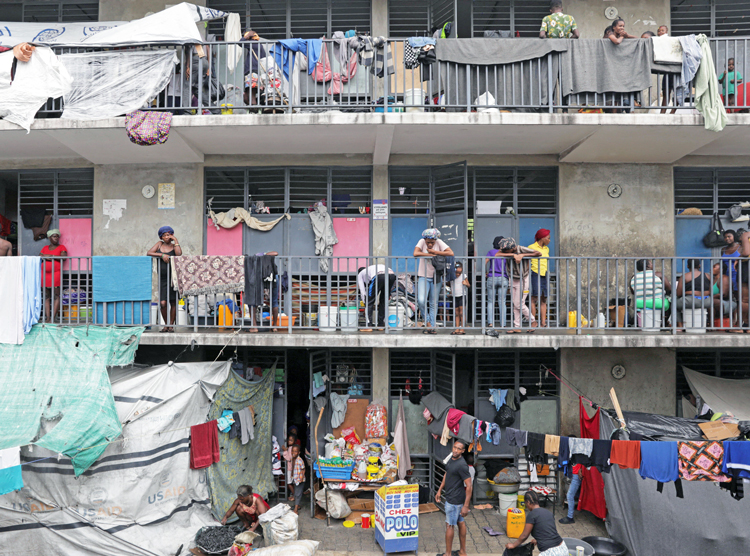
As a result of the violence, more than 1.4 million Haitians — out of the population of 12 million — have fled their homes, often for overcrowded informal settlements without access to clean water and sanitary facilities. Cholera is on the rise.
Despite the presence of the U.N.-backed forces since 2024, over 8,000 people were slaughtered in gang-related violence in the first 11 months of 2025, up from 5,600 the previous year.
The use of gangs in Haitian politics is nothing new. From 1957 to 1986 the dictatorship of Francois Duvalier and his son, Jean-Claude, used the brutal Tonton Macoutes paramilitaries to wipe out their rivals and terrorize working people. Washington was the Duvaliers’ most important supporter.
US rulers back intervention
With Washington’s go-ahead, the U.N. decided last year to replace its understaffed and ineffectual Multinational Security Support Mission with a more militarized Gang Suppression Force, double the size. It will have broader powers, including the right to operate outside the authority of the Haitian police and army. Despite the plan being adopted last September, the full 5,550-member GSF is not due to get to Haiti until fall. An advanced number of its forces from Chad arrived April 1.
Washington has long considered the Caribbean part of its domain and seeks to dominate what happens there.
Haiti’s Transitional Presidential Council was put together by President Joseph Biden’s administration and charged with holding elections by February 2026. That’s come and gone with no vote.
Shortly before the council was due to be dissolved Feb. 7, a majority of its members voted for the removal of U.S.-backed Prime Minister Alix Didier Fils-Aime. Secretary of State Marco Rubio condemned the vote, deployed a warship to waters near Port-au-Prince and revoked the visas of four of the council’s members. Fils-Aime remains in office.