
Shaky ceasefire agreed on, but fighting still continues
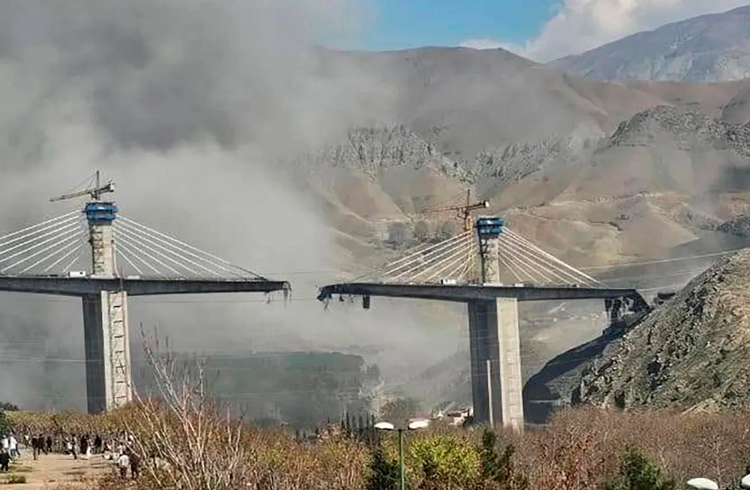
Tehran and Washington agreed to a two-week ceasefire April 7 just an hour before the deadline set by President Donald Trump. He threatened the U.S. military would bomb Iran’s electric power stations, bridges and factories if Tehran did not agree to reopen the Strait of Hormuz.
Tehran and Washington both claimed victory and have given conflicting accounts of what was agreed. Secretary of War Peter Hegseth said the Strait of Hormuz is now open. Iranian officials said the opening was “limited, under Iran’s control.”
But just hours later, Tehran said it was keeping the strait closed, and fighting continued.
And even if the strait is reopened, it’s not clear this will include ships carrying cargo linked to Israel. Tehran says it will board every vessel, supposedly to look for weapons.
At Trump’s request, Pakistan Prime Minister Shehbaz Sharif brokered the deal. Sharif said all parties had “agreed to an immediate ceasefire everywhere, including Lebanon.” But Israeli Prime Minister Benjamin Netanyahu said it “does not include Lebanon” and Trump agreed. Hours later, Israel struck 100 Hezbollah targets there, the largest operation since the war began Feb. 28. Hezbollah refuses to disarm and has rebuilt its forces to attack Israel.
The bourgeois press calls the conflict a “joint U.S.-Israeli war.” In reality Washington and Israel were fighting two different wars with different goals. The U.S. rulers are seeking to advance their domination over the plunder of the resources and labor of the Middle East.
Israel is defending its existence as a refuge from Jew-hatred and pogroms in the face of a multifront war led by the reactionary regime in Iran and its proxy forces like Hezbollah and Hamas.
This ceasefire, like the “deal” imposed by Washington in Gaza, postpones the decisive battles. Israeli officials were not happy about the ceasefire deal, the Wall Street Journal reports. They were not consulted about the talks and got word about the deal “at a late stage.”
According to the Iranian Human Rights Activists Agency, more than 1,600 civilians were killed in Iran since Feb. 28. The U.S. attacks and violation of Iran’s sovereignty — like its threats to destroy basic infrastructure where workers live — have nothing to do with aiding the fight of the peoples of Iran for democratic rights.
Trump repeatedly made it clear that the U.S. capitalist ruling class is not looking for “regime change” in Iran; its goal is a government that will collaborate with Washington.
Trump contrasted his decision to seek a deal with the Iranian regime with the course of President George W. Bush during the U.S. war that overthrew Saddam Hussein in Iraq in 2003. Bush, Trump said, made the mistake of firing Iraqi generals, the police and other officials needed by the new regime that Washington imposed. Many of those ousted went on to help form Islamic State.
Prior to the ceasefire Trump said he would really like to take control of Iran’s oil — like he says Washington has done in Venezuela, lauding his good relations with its current government, after the U.S. forces’ bloody assault there earlier this year.
Trump: Whole world is watching
The Trump administration — using Iran as a proving ground for new weapons and military tactics — hopes to send a message not just to Iran’s rulers, but to U.S. imperialism’s rivals around the world as competition heats up amid the worldwide capitalist crisis.
“The whole world is watching,” Trump boasted in his April 1 speech on the war, “and they can’t believe the power, strength and brilliance” of the U.S. military.
But that “power, strength and brilliance” is not as convincing as the U.S. rulers may believe.
Since Feb. 28, Tehran launched over 400 ballistic missiles at Israel and more than 3,500 short-range missiles and drones at Saudi Arabia, the United Arab Emirates, Kuwait and Qatar. While Washington and Israel have dealt devastating blows to Tehran’s military capabilities, it was still firing up to 15 ballistic missiles a day at Israel just prior to the ceasefire. Hezbollah in Lebanon — created, financed and trained by Tehran — often fired up to 100 smaller missiles at Israel a day.
Even while Trump was ramping up threats to bomb Iran back to the “stone age” — part of his negotiating tactics — he lauded Tehran’s draft 10-point plan for ending the war as “a workable basis on which to negotiate.”
Tehran’s proposals include it supervising shipping through the Strait of Hormuz and collecting fees in bitcoin; its “right to enrich uranium” perhaps with limits; the lifting of all sanctions; withdrawal of U.S. combat forces from the region; and a ceasefire in Lebanon, the Journal reports.
Israel’s defensive war
Ever since the counterrevolutionary regime was consolidated in Iran in the early 1980s — pushing back the gains made by working people during the 1979 revolution that overthrew the U.S.-backed dictatorship of the shah — wiping out Israel has been Tehran’s overriding goal.
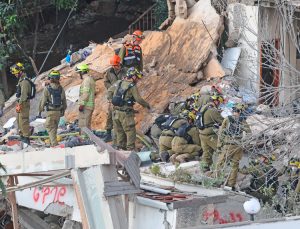
The daily missile and drone attacks from Tehran and Hezbollah on residential neighborhoods and industries killed 18 civilians and wounded thousands in Israel since the start of the war, Jews and Arabs alike. While Tehran’s capacities have been significantly set back, it will now attempt to rebuild its ballistic missile capacity and seek ways to construct a nuclear weapon.
Israel’s defensive war targeted military sites, the regime’s repressive apparatus — especially the Islamic Revolutionary Guard Corps and Basij thugs — and industrial sites tied to Tehran’s ballistic missile and nuclear program.
Prior to a series of attacks April 7 to prevent the Guard Corps from moving weapons, Israel warned Iranians to “refrain from using and traveling by train.” Israel frequently warned civilians in Iran before attacking, hoping to minimize casualties.
Tehran threatens protesters
Despite the regime’s call for national unity “regardless of your political beliefs” during the war, Tehran continued to arrest union leaders, students and others who oppose its anti-working-class course. It has executed at least 10 political prisoners in the last few weeks and will try to use the ceasefire to consolidate its rule after months of protests.
At the start of the war the regime blocked almost all internet connections, especially with the outside world, in an attempt to prevent working people, oppressed nationalities and its other opponents from organizing.
Even some organizations affiliated to the regime are complaining about the government’s treatment of workers. The bombings of oil facilities in Mahshahr “reveals a bitter and deep class-based truth: in times of crisis and war, it is the blood of the worker that pays the price for the continued survival of a nation’s economy,” the Iranian Labour News Agency reported April 7.